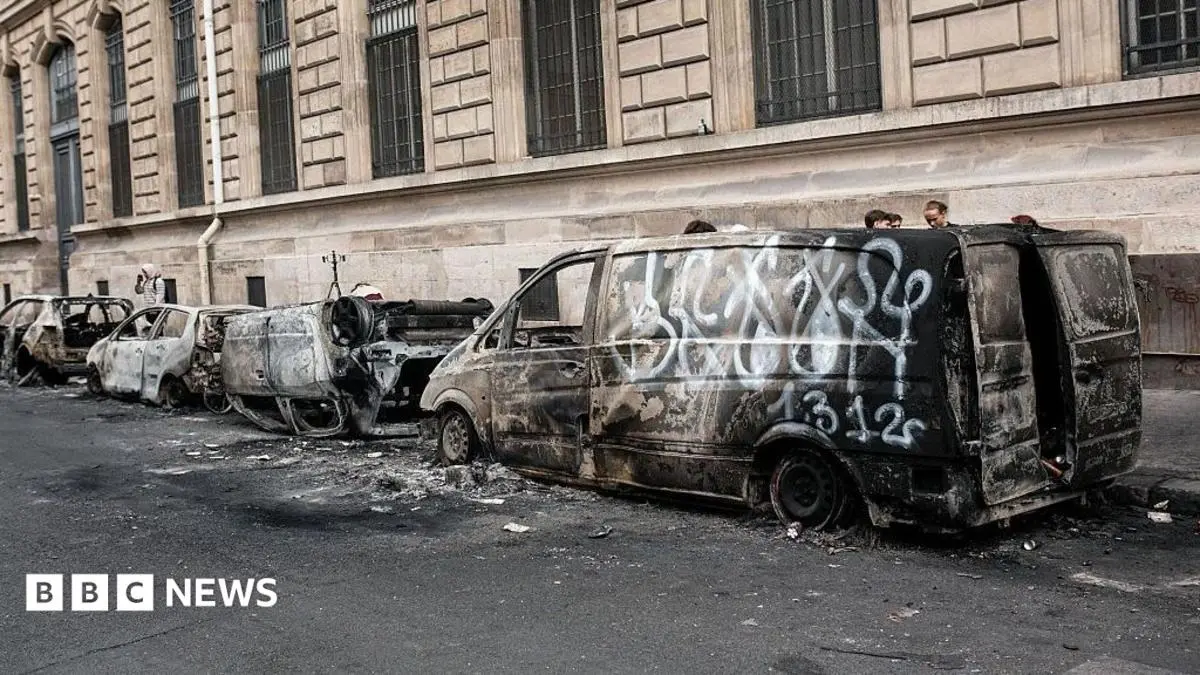
A series of targeted night-time curfews imposed across key urban areas in France successfully brought about a much-needed period of calm overnight, following a turbulent weekend marked by widespread rioting, public disruptions, and commercial looting, Prime Minister Sébastien Lecornu announced. The strategic implementation of localized restrictions across affected cities appears to have effectively curtailed the violent flare-ups that had gripped several major population centers over the preceding days, marking a notable shift in the national security situation as authorities move to stabilize public order.
The overnight quiet followed days of intense disturbances that saw law enforcement agencies struggling to contain crowds and protect property in multiple parts of the country. According to official assessments provided by the Prime Minister, the decision to deploy focused, geographically specific curfews rather than a single uniform national measure proved instrumental in suppressing overnight violence. By tailoring night-time restrictions to specific districts and high-risk urban sectors, authorities were able to break up the momentum of gathering groups, protect high-density commercial centers, and restore peace to residential streets that had previously seen heavy turmoil.
In the capital, security efforts were concentrated primarily on central Paris, where local authorities instituted strictly enforced curfews across several key neighborhoods that had emerged as hotspots during the weekend disturbances. Among the primary areas subjected to these movement restrictions was the historic Place de la République, a major central square that had served as a primary gathering point for large crowds of protesters over the course of the weekend. The curfew in this area effectively prohibited unauthorized public assemblies and late-night presence, preventing the re-emergence of the volatile crowds that had repeatedly clashed with security personnel and disrupted traffic in the preceding days.
A similar level of enforcement was directed toward the nearby Les Halles district, a dense commercial and transit hub located in the heart of Paris. Known for its expansive subterranean shopping complex, pedestrian arcades, and high foot traffic, Les Halles had faced significant vulnerabilities during the weekend wave of unrest, as commercial establishments and retail storefronts across the country fell target to opportunistic looting. The establishment of targeted curfew hours across the Les Halles shopping area allowed security forces to secure commercial facades, restrict non-essential foot traffic after dark, and deter potential looters from infiltrating the multi-level retail precinct.
The urban containment strategy was by no means limited to the French capital, reflecting the broad geographical footprint of the weekend unrest. Parallel restrictions aimed at regulating public gatherings and restricting the night-time movement of young people were rapidly implemented across major regional cities in both the southern and northern regions of the country. In the south, municipal and regional authorities introduced localized curfew protocols across key urban centers, including Marseille, Bordeaux, Nice, and Lyon. Each of these major southern hubs had experienced varying degrees of disruption over the weekend, prompting regional leadership to enforce strict night-time limits on public activity to prevent renewed violence.