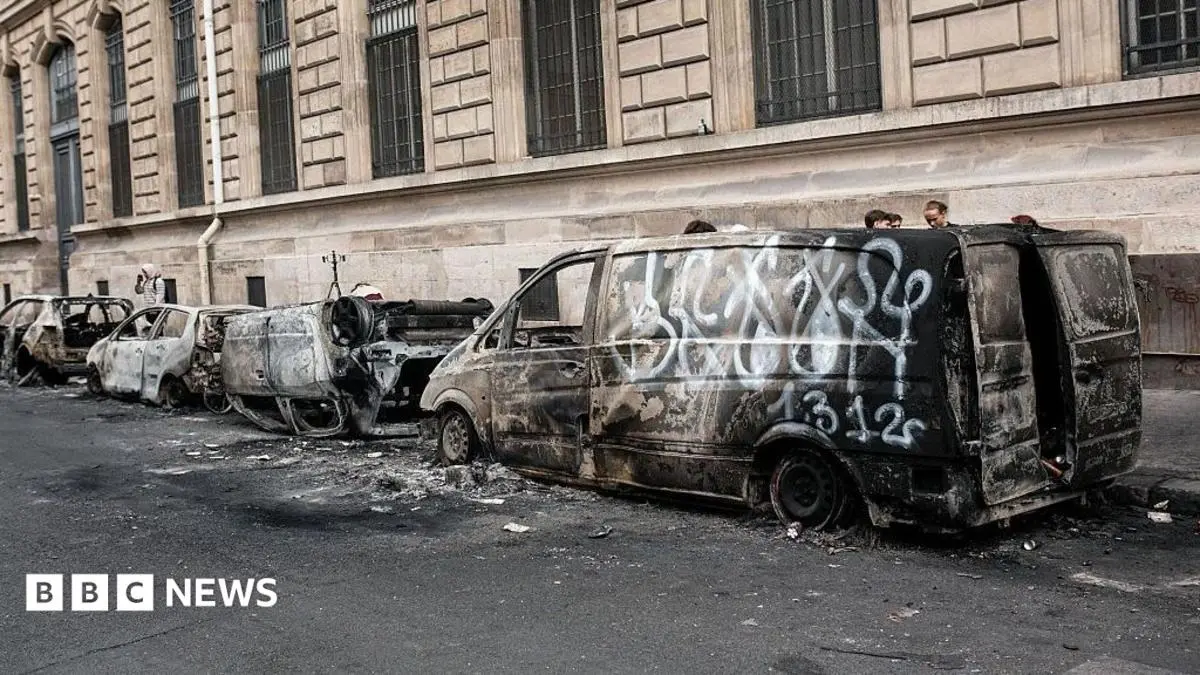
A series of targeted night-time curfews imposed across key urban areas in France successfully brought about a much-needed period of calm overnight, following a turbulent weekend marked by widespread rioting, public disruptions, and commercial looting, Prime Minister Sébastien Lecornu announced. The strategic implementation of localized restrictions across affected cities appears to have effectively curtailed the violent flare-ups that had gripped several major population centers over the preceding days, marking a notable shift in the national security situation as authorities move to stabilize public order.
The overnight quiet followed days of intense disturbances that saw law enforcement agencies struggling to contain crowds and protect property in multiple parts of the country. According to official assessments provided by the Prime Minister, the decision to deploy focused, geographically specific curfews rather than a single uniform national measure proved instrumental in suppressing overnight violence. By tailoring night-time restrictions to specific districts and high-risk urban sectors, authorities were able to break up the momentum of gathering groups, protect high-density commercial centers, and restore peace to residential streets that had previously seen heavy turmoil.
In the capital, security efforts were concentrated primarily on central Paris, where local authorities instituted strictly enforced curfews across several key neighborhoods that had emerged as hotspots during the weekend disturbances. Among the primary areas subjected to these movement restrictions was the historic Place de la République, a major central square that had served as a primary gathering point for large crowds of protesters over the course of the weekend. The curfew in this area effectively prohibited unauthorized public assemblies and late-night presence, preventing the re-emergence of the volatile crowds that had repeatedly clashed with security personnel and disrupted traffic in the preceding days.
A similar level of enforcement was directed toward the nearby Les Halles district, a dense commercial and transit hub located in the heart of Paris. Known for its expansive subterranean shopping complex, pedestrian arcades, and high foot traffic, Les Halles had faced significant vulnerabilities during the weekend wave of unrest, as commercial establishments and retail storefronts across the country fell target to opportunistic looting. The establishment of targeted curfew hours across the Les Halles shopping area allowed security forces to secure commercial facades, restrict non-essential foot traffic after dark, and deter potential looters from infiltrating the multi-level retail precinct.
The urban containment strategy was by no means limited to the French capital, reflecting the broad geographical footprint of the weekend unrest. Parallel restrictions aimed at regulating public gatherings and restricting the night-time movement of young people were rapidly implemented across major regional cities in both the southern and northern regions of the country. In the south, municipal and regional authorities introduced localized curfew protocols across key urban centers, including Marseille, Bordeaux, Nice, and Lyon. Each of these major southern hubs had experienced varying degrees of disruption over the weekend, prompting regional leadership to enforce strict night-time limits on public activity to prevent renewed violence.
In Marseille, France’s prominent southern port city, and in Lyon, the nation’s third-largest metropolitan area, local authorities utilized the targeted curfew framework to clear sensitive public streets and protect commercial districts from overnight damage. Similar operational measures were enacted across Bordeaux, in the south-west, and along the French Riviera in Nice, where localized orders were put in place to manage public spaces, curb group formations, and ensure that late-night crowds could not gather unchecked in urban centers or beachfront arcades.
Simultaneously, local governments across the northern territory executed matching security protocols to address unrest in northern metropolitan areas. In Lille, a major city situated near the northern border, as well as in several neighboring northern towns, targeted curfews were deployed to regulate nighttime public presence. These northern industrial and urban centers, which had similarly witnessed scenes of looting and public disorder over the weekend, applied localized restrictions to secure vulnerable neighborhoods, safeguard municipal infrastructure, and maintain order across residential quarters.
A central element of the curfew orders across all participating municipalities was the specific focus on restricting the movement of young people during night-time hours, along with enforcing strict bans on public gatherings in high-risk zones. Security assessments conducted over the weekend indicated that group gatherings late at night frequently escalated into rapid acts of vandalism, street destruction, and store break-ins. By targeting the legal framework of these movement controls specifically toward youth movement and public assembly, authorities sought to eliminate the organizational dynamics that allowed chaotic street gatherings to form, migrate, and escalate into larger riots.
Addressing the national response, Prime Minister Sébastien Lecornu publicly expressed his gratitude to the thousands of security personnel tasked with managing the crisis on the ground. In his remarks, Lecornu praised both police officers and members of the National Gendarmerie for their tireless work in enforcing the overnight curfews and maintaining a strong, visible presence across affected cities. The combined deployment of urban police forces and national gendarmes—a military-status force tasked with public safety and regional security—provided the physical enforcement necessary to ensure that the newly enacted curfew orders were respected by the public.
Lecornu highlighted that the dedicated efforts of law enforcement officers were directly responsible for turning the tide following the weekend’s destruction. Police patrols and gendarmerie units were deployed in heavy concentrations near central transit hubs, retail quarters like Les Halles, public squares such as Place de la République, and key arterial roads across major provincial cities. Their proactive stance in monitoring streets, dispersing illegal gatherings early, and enforcing compliance with curfew times succeeded in maintaining a firm handle on public order throughout the night, preventing the widespread property damage that had characterized the prior forty-eight hours.
Looking ahead to the coming days, the Prime Minister clarified that the ongoing application of curfew measures will remain dynamic, adaptive, and highly responsive to evolving conditions on the ground. Addressing the potential for continued restrictions, Lecornu stated that decisions regarding whether to maintain, adjust, or lift curfews for Tuesday night would be determined systematically based on where such measures remain strictly necessary. Rather than applying a blanket policy across the entire national territory, the government is maintaining a flexible containment strategy that allows security measures to be calibrated to the specific threat level of each individual municipality and region.
Elaborating on the administrative process behind these security decisions, Lecornu took to social media to outline how operational choices are being formulated. In a post published on the platform X, formerly known as Twitter, the Prime Minister emphasized that operational choices regarding night-time restrictions are being made directly "on the ground." This administrative model relies heavily on close coordination between regional prefectures—the administrative representatives of the central government—and local city mayors, who possess direct knowledge of their respective communities and localized security dynamics.
This decentralized decision-making process ensures that municipal leaders and regional prefects retain the operational authority to assess local safety conditions in real time. Under this localized framework, mayors and regional officials in cities such as Paris, Marseille, Lyon, Bordeaux, Nice, and Lille can evaluate the immediate security environment within their jurisdictions and decide whether the continuation of curfews on Tuesday night is warranted. If local conditions in a specific city remain volatile, municipal leaders have the authority to re-impose night-time movement limits; conversely, where calm has been securely restored, localized restrictions can be eased accordingly.
As France emerges from a high-tension weekend defined by civil unrest and widespread destruction of commercial property, the successful implementation of targeted curfews marks a critical operational turning point for law enforcement and government officials. By combining localized movement restrictions, targeted limits on youth gatherings, and a heavily reinforced security presence comprising police officers and national gendarmes, state authorities managed to secure a quiet night across major metropolitan regions stretching from the northern urban hubs to the southern coast. The coming days will test the resilience of this localized strategy, as regional authorities and local mayors continue to assess street-level conditions on the ground to determine the appropriate security posture for Tuesday night and beyond.