On a crisp autumn day in 1937, the literary world was introduced to a character who would eventually become one of the most recognizable figures in modern fiction. Today, September 21, marks the anniversary of the publication of J.R.R. Tolkien’s The Hobbit, a work that not only launched the career of one of the 20th century’s most influential authors but also laid the foundational stones for the entire genre of high fantasy. Published by George Allen & Unwin Ltd. of London, the book arrived with little fanfare outside of academic and literary circles, yet it carried within its pages a depth of world-building and linguistic sophistication that was entirely unprecedented for a children’s story.
The story of how The Hobbit came to be is nearly as legendary as the tale of Bilbo Baggins himself. John Ronald Reuel Tolkien, then a Professor of Anglo-Saxon at Oxford University, was a man deeply immersed in the philology and mythology of Northern Europe. His professional life was spent dissecting the nuances of Old English, Old Norse, and Middle English texts like Beowulf and Sir Gawain and the Green Knight. However, in his private life, he was a creator of worlds. For years, he had been developing a private mythology, a collection of stories and languages that would eventually become The Silmarillion.
The specific spark for The Hobbit occurred during a mundane moment of academic labor. While grading a stack of school certificate exams, Tolkien found that one student had left a page blank. In a sudden burst of creative impulse, he scribbled a single sentence on that empty space: "In a hole in the ground there lived a hobbit." At the time, Tolkien did not know what a hobbit was or why it lived in a hole, but that sentence became the seed from which the entire legendarium of Middle-earth would grow.
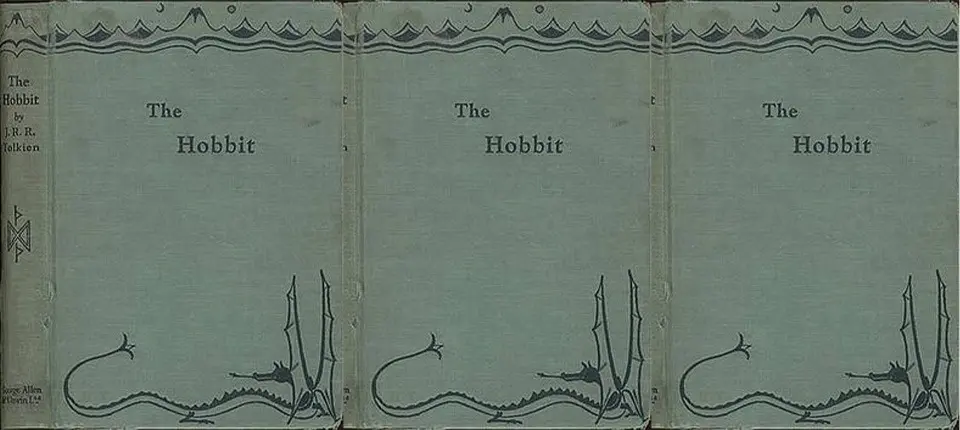
When The Hobbit was released on September 21, 1937, it was presented as a children’s book. The initial print run was modest, consisting of only 1,500 copies. These original editions featured Tolkien’s own illustrations, including the iconic dust jacket design of the mountains and the map of Thror, which encouraged readers to follow the journey of the protagonist across the Wild. The narrative followed Bilbo Baggins, a comfortable and unadventurous "hobbit" who is thrust into an epic quest by the wizard Gandalf and a company of thirteen dwarves led by Thorin Oakenshield. Their goal was to reclaim the Lonely Mountain and its vast treasure from the dragon Smaug.
The book’s reception was overwhelmingly positive. Reviewers praised its imaginative scope and its unique blend of whimsical humor and ancient, epic stakes. C.S. Lewis, a close friend of Tolkien and a fellow member of the informal literary group known as the Inklings, wrote a glowing review for The Times Literary Supplement. Lewis astutely predicted that the book would become a classic, noting that it was a story that could be enjoyed by children and adults alike—a "myth-making" achievement that felt both new and timeless.