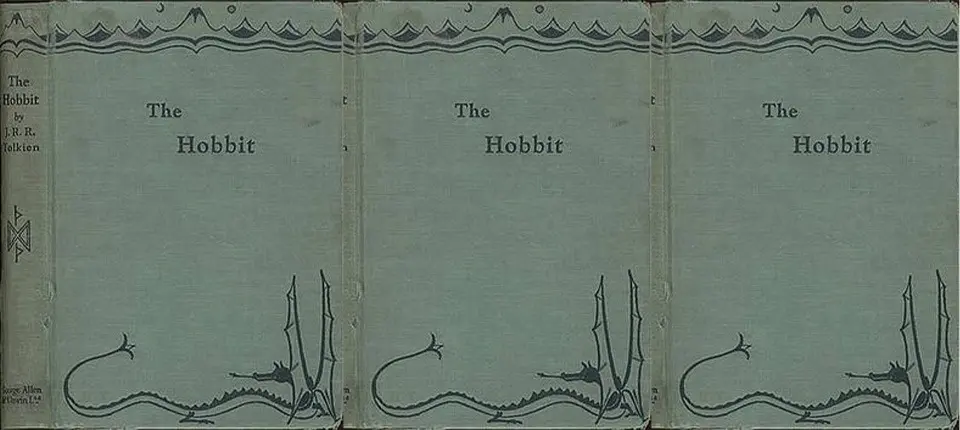
The success of the first edition was so immediate that the initial 1,500 copies were sold out by December 1937. The publisher, Stanley Unwin, quickly realized they had a hit on their hands and pressed Tolkien for a sequel. This request would eventually lead to the seventeen-year development of The Lord of the Rings, a much darker and more complex work that expanded the small-scale adventure of Bilbo into a global struggle between good and evil.
However, the The Hobbit we read today is not exactly the same version that appeared on shelves in 1937. As Tolkien began writing The Lord of the Rings, he realized that the nature of the "One Ring" needed to be far more sinister than he had originally imagined. In the first edition of The Hobbit, the character Gollum was somewhat more benevolent, and the "riddle game" ended with Gollum willingly offering the ring to Bilbo as a prize. To align the book with the darker themes of the sequel, Tolkien revised the fifth chapter, "Riddles in the Dark," in 1951. In the revised version, Gollum is obsessed with the "Precious," and Bilbo’s acquisition of the ring is a more desperate and suspicious event. This revision is a rare example of an author retroactively changing a published work to maintain the integrity of a growing mythological canon.
The enduring appeal of The Hobbit lies in its masterful pacing and its "everyman" protagonist. Unlike the heroes of ancient sagas who are often demigods or kings, Bilbo Baggins is a lover of domestic comforts—tea, seed cake, and a pipe by the fire. His transformation from a timid homebody into a courageous, though still humble, adventurer provides a blueprint for the modern fantasy hero. He does not defeat his enemies through brute strength, but through wit, luck, and the moral fortitude to do what is right even when he is afraid.
Furthermore, Tolkien’s academic background lent the book a sense of "depth" that other children’s stories lacked. The languages spoken by the characters, the songs they sang, and the history of the ruins they passed through all felt as though they belonged to a real, lived-in world. Tolkien believed in the concept of "sub-creation," the idea that a writer should create a secondary world that operates with its own internal logic and consistency. By applying the rigors of philology to his fiction, he created a setting that felt ancient and storied, even to readers who knew nothing of his academic work.
Over the decades, The Hobbit has been translated into over sixty languages and has sold more than 100 million copies worldwide. Its influence is visible in almost every corner of popular culture, from the tabletop gaming mechanics of Dungeons & Dragons to the sprawling cinematic universes of modern film. The book has seen numerous adaptations, including a 1968 BBC radio drama, a 1977 animated television special by Rankin/Bass, and Peter Jackson’s high-budget film trilogy released between 2012 and 2014. While the film adaptations expanded the relatively slim novel into an epic cinematic event, the core of the story remains the quiet, personal growth of its main character.