On a crisp autumn day in 1937, the literary world was introduced to a character who would eventually become one of the most recognizable figures in modern fiction. Today, September 21, marks the anniversary of the publication of J.R.R. Tolkien’s The Hobbit, a work that not only launched the career of one of the 20th century’s most influential authors but also laid the foundational stones for the entire genre of high fantasy. Published by George Allen & Unwin Ltd. of London, the book arrived with little fanfare outside of academic and literary circles, yet it carried within its pages a depth of world-building and linguistic sophistication that was entirely unprecedented for a children’s story.
The story of how The Hobbit came to be is nearly as legendary as the tale of Bilbo Baggins himself. John Ronald Reuel Tolkien, then a Professor of Anglo-Saxon at Oxford University, was a man deeply immersed in the philology and mythology of Northern Europe. His professional life was spent dissecting the nuances of Old English, Old Norse, and Middle English texts like Beowulf and Sir Gawain and the Green Knight. However, in his private life, he was a creator of worlds. For years, he had been developing a private mythology, a collection of stories and languages that would eventually become The Silmarillion.
The specific spark for The Hobbit occurred during a mundane moment of academic labor. While grading a stack of school certificate exams, Tolkien found that one student had left a page blank. In a sudden burst of creative impulse, he scribbled a single sentence on that empty space: "In a hole in the ground there lived a hobbit." At the time, Tolkien did not know what a hobbit was or why it lived in a hole, but that sentence became the seed from which the entire legendarium of Middle-earth would grow.
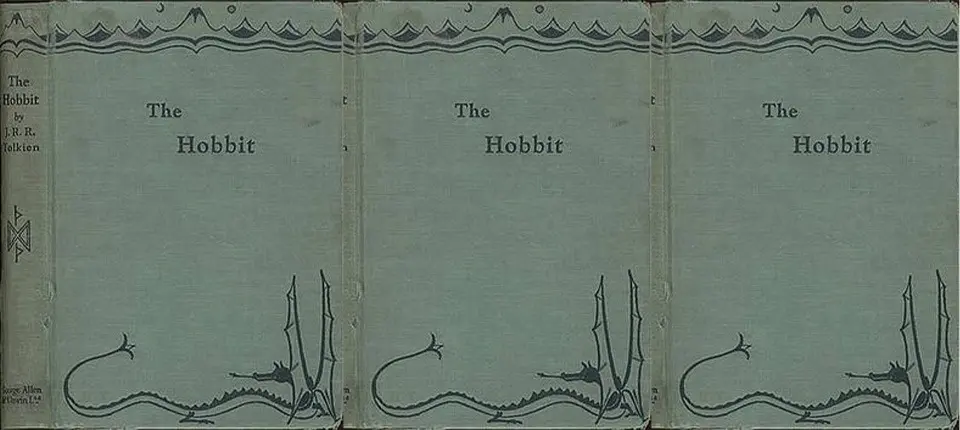
When The Hobbit was released on September 21, 1937, it was presented as a children’s book. The initial print run was modest, consisting of only 1,500 copies. These original editions featured Tolkien’s own illustrations, including the iconic dust jacket design of the mountains and the map of Thror, which encouraged readers to follow the journey of the protagonist across the Wild. The narrative followed Bilbo Baggins, a comfortable and unadventurous "hobbit" who is thrust into an epic quest by the wizard Gandalf and a company of thirteen dwarves led by Thorin Oakenshield. Their goal was to reclaim the Lonely Mountain and its vast treasure from the dragon Smaug.
The book’s reception was overwhelmingly positive. Reviewers praised its imaginative scope and its unique blend of whimsical humor and ancient, epic stakes. C.S. Lewis, a close friend of Tolkien and a fellow member of the informal literary group known as the Inklings, wrote a glowing review for The Times Literary Supplement. Lewis astutely predicted that the book would become a classic, noting that it was a story that could be enjoyed by children and adults alike—a "myth-making" achievement that felt both new and timeless.
The success of the first edition was so immediate that the initial 1,500 copies were sold out by December 1937. The publisher, Stanley Unwin, quickly realized they had a hit on their hands and pressed Tolkien for a sequel. This request would eventually lead to the seventeen-year development of The Lord of the Rings, a much darker and more complex work that expanded the small-scale adventure of Bilbo into a global struggle between good and evil.
However, the The Hobbit we read today is not exactly the same version that appeared on shelves in 1937. As Tolkien began writing The Lord of the Rings, he realized that the nature of the "One Ring" needed to be far more sinister than he had originally imagined. In the first edition of The Hobbit, the character Gollum was somewhat more benevolent, and the "riddle game" ended with Gollum willingly offering the ring to Bilbo as a prize. To align the book with the darker themes of the sequel, Tolkien revised the fifth chapter, "Riddles in the Dark," in 1951. In the revised version, Gollum is obsessed with the "Precious," and Bilbo’s acquisition of the ring is a more desperate and suspicious event. This revision is a rare example of an author retroactively changing a published work to maintain the integrity of a growing mythological canon.
The enduring appeal of The Hobbit lies in its masterful pacing and its "everyman" protagonist. Unlike the heroes of ancient sagas who are often demigods or kings, Bilbo Baggins is a lover of domestic comforts—tea, seed cake, and a pipe by the fire. His transformation from a timid homebody into a courageous, though still humble, adventurer provides a blueprint for the modern fantasy hero. He does not defeat his enemies through brute strength, but through wit, luck, and the moral fortitude to do what is right even when he is afraid.
Furthermore, Tolkien’s academic background lent the book a sense of "depth" that other children’s stories lacked. The languages spoken by the characters, the songs they sang, and the history of the ruins they passed through all felt as though they belonged to a real, lived-in world. Tolkien believed in the concept of "sub-creation," the idea that a writer should create a secondary world that operates with its own internal logic and consistency. By applying the rigors of philology to his fiction, he created a setting that felt ancient and storied, even to readers who knew nothing of his academic work.
Over the decades, The Hobbit has been translated into over sixty languages and has sold more than 100 million copies worldwide. Its influence is visible in almost every corner of popular culture, from the tabletop gaming mechanics of Dungeons & Dragons to the sprawling cinematic universes of modern film. The book has seen numerous adaptations, including a 1968 BBC radio drama, a 1977 animated television special by Rankin/Bass, and Peter Jackson’s high-budget film trilogy released between 2012 and 2014. While the film adaptations expanded the relatively slim novel into an epic cinematic event, the core of the story remains the quiet, personal growth of its main character.
As we look back from the perspective of 2026, the significance of September 21, 1937, remains undiminished. The publication of The Hobbit was the moment that fantasy literature stepped out of the shadows of folklore and fairy tales to become a serious and respected form of literary expression. It reminded readers that the "small" people of the world—those who prefer peace and quiet to gold and glory—are often the ones capable of changing the course of history.
The legacy of the book is also tied to the landscape of Oxford, where Tolkien lived and worked. To this day, fans travel to the city to visit the Eagle and Child pub, where the Inklings met to read their drafts aloud, or to see Tolkien’s grave in Wolvercote Cemetery. The book is more than just a story; it is a piece of cultural heritage that continues to inspire new generations of writers to look at a blank page and wonder what might be living in a hole in the ground.
In an age of rapid technological change and increasingly complex narratives, The Hobbit retains its power because of its simplicity and its heart. It is a story about the importance of friendship, the dangers of greed, and the realization that the world is much larger and more dangerous than one might suspect from the safety of a comfortable parlor. As Gandalf famously tells Bilbo, the world is not in his books and maps, but "out there."
The anniversary of its publication serves as a reminder of the power of a single idea. What began as a distracted scribble on a student’s exam paper became a gateway to another world. J.R.R. Tolkien’s "little book" proved that there is no such thing as a small story, and that even the smallest person can have the greatest impact on the world around them. As the literary community celebrates this date, the journey that began in Bag End continues to resonate, proving that some stories truly are timeless.