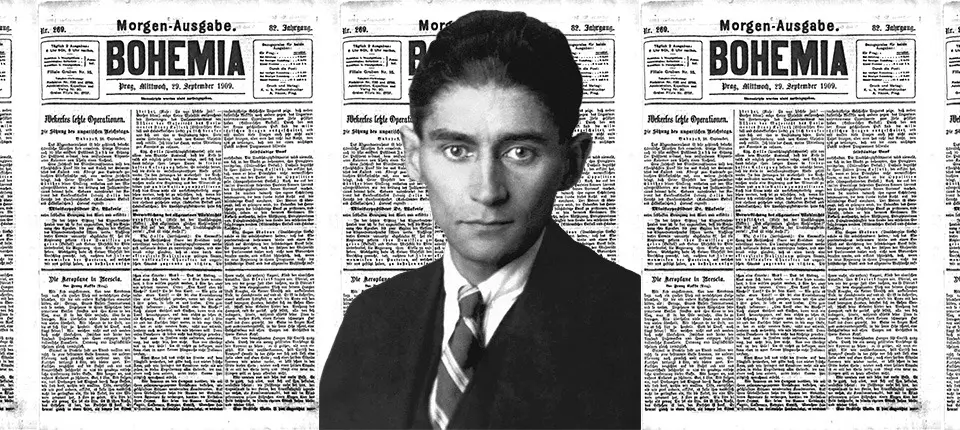
On September 29, 1909, the Prague-based German-language newspaper Bohemia published a piece of reportage that would, in retrospect, capture a pivotal moment in both technological history and the evolution of modern literature. The article, titled "The Aeroplanes at Brescia" (Die Aeroplane in Brescia), was written by a twenty-six-year-old insurance lawyer and aspiring author named Franz Kafka. While Kafka is today synonymous with the labyrinthine bureaucracies and existential anxieties of the twentieth century, this early work offers a rare glimpse into his engagement with the burgeoning world of high technology and the spectacle of the modern age.
The publication of "The Aeroplanes at Brescia" represents one of the earliest examples of a major literary figure grappling with the phenomenon of flight. In September 1909, the world was still reeling from the shock of the new; it had been less than six years since the Wright brothers first took to the air at Kitty Hawk, and only two months since Louis Blériot had successfully crossed the English Channel. When Kafka, accompanied by his close friend Max Brod and Max’s brother Otto, traveled to northern Italy to witness the "Circuito Aereo di Brescia," he was not merely a tourist but a witness to a transformation in the human experience of space and time.
The "Best of the Literary Internet" frequently looks back at these milestones to understand how the giants of literature were shaped by their contemporary surroundings. For Kafka, the Brescia air show was more than a display of mechanical prowess; it was a sensory assault that demanded a new kind of descriptive language. At the time, Kafka was employed at the Workers’ Accident Insurance Institute in Prague, a position that required him to document industrial injuries and the failings of machinery. In Brescia, however, he saw the machine in its most aspirational and aestheticized form.
The trip to Italy was intended as a brief holiday for the young men from Prague. They arrived in Brescia during a period of intense international excitement. The air show was the first of its kind in Italy, attracting an estimated 50,000 spectators, including members of the European aristocracy, socialites, and intellectuals. Among the crowd were figures such as the composer Giacomo Puccini and the flamboyant poet Gabriele D’Annunzio, the latter of whom actually secured a flight as a passenger—an event Kafka noted with his characteristic eye for detail.
In "The Aeroplanes at Brescia," Kafka’s prose deviates from the dense, metaphorical style that would later define masterpieces like The Trial or The Metamorphosis. Instead, he adopts the persona of a journalist, yet one who cannot help but infuse his reportage with a sense of wonder and alienation. He describes the airfield not as a place of triumph, but as a dusty, chaotic landscape where the human form seems dwarfed by the scale of the sky and the fragility of the wooden-and-canvas flying machines.