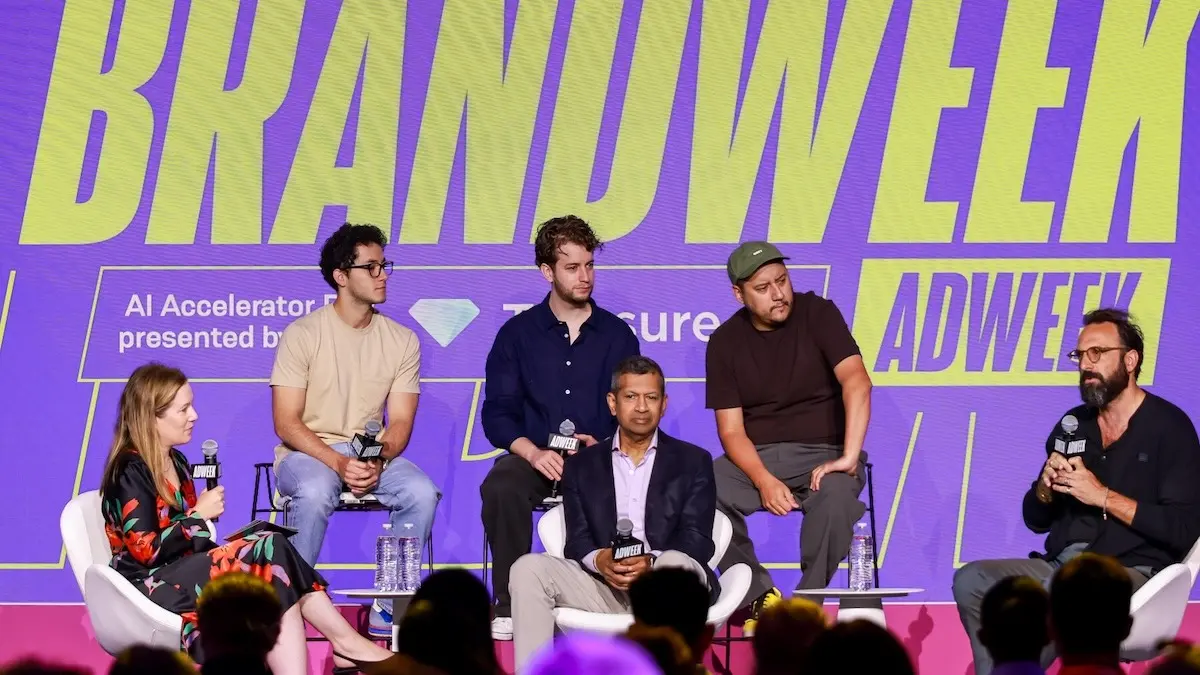
In the bustling atmosphere of Midtown, where the intersections of commerce and creativity often collide, the conversation surrounding artificial intelligence has shifted. What was once a discourse dominated by existential dread and technical jargon has evolved into a more nuanced exploration of craft, expression, and the enduring necessity of the human touch. This evolution was on full display during a recent fireside chat at Brandweek 2026, an event hosted by ADWEEK House, where industry leaders gathered to dissect the current state of AI-driven storytelling.
The session, co-hosted by Higgsfield AI, brought together some of the most influential voices in the modern media landscape. Zoë Ruderman, Chief Content Officer of ADWEEK, led a deep-dive conversation with Mahi de Silva, the co-founder and Chief Strategy Officer of Higgsfield AI. Their discussion aimed to move past the speculative debates that have characterized the last several years of the "AI revolution" and instead focus on the tangible ways in which AI-native creative suites are being integrated into the professional workflow.
The timing of the discussion is significant. As the advertising industry moves deeper into the late 2020s, the novelty of generative AI has largely worn off, replaced by a demand for utility, reliability, and creative control. For Higgsfield AI, a platform that has spent the last year and a half positioning itself at the center of this transition, the goal is no longer just to prove that the technology works, but to prove that it belongs in the hands of the world’s most sophisticated storytellers.
A new language for creators
Higgsfield AI entered the market approximately 17 months ago, a period during which the public perception of AI shifted almost monthly. In those early days, as de Silva recalled, the platform was often dismissed by the creative community as little more than a "toy." This skepticism was not unique to Higgsfield; it mirrored a broader industry-wide doubt regarding whether machines could ever produce anything of professional-grade quality or if they were merely capable of producing uncanny, unpolished simulations.
However, as the technology matured and creators began to experiment with its capabilities, that perception began to change. According to de Silva, the realization that Higgsfield was a serious tool came when users stopped looking at it as an automated replacement and started viewing it as an extension of their own creative intent.
"It’s not here to replace you," de Silva emphasized during the talk. "It is a new language for creators, and it’s a new form of expression—the ability for them to fully realize what’s in their brain without the physical limits of cameras, lighting, location, and budget."
This concept of AI as a "language" suggests a fundamental shift in how creative work is produced. In traditional advertising, the gap between a creative idea and its execution is often filled with logistical hurdles. A director might envision a specific sunset in a specific desert, but the realities of travel, weather, and production costs frequently force compromises. De Silva argues that AI-native tools remove these barriers, allowing the creator to communicate their vision directly to the screen.