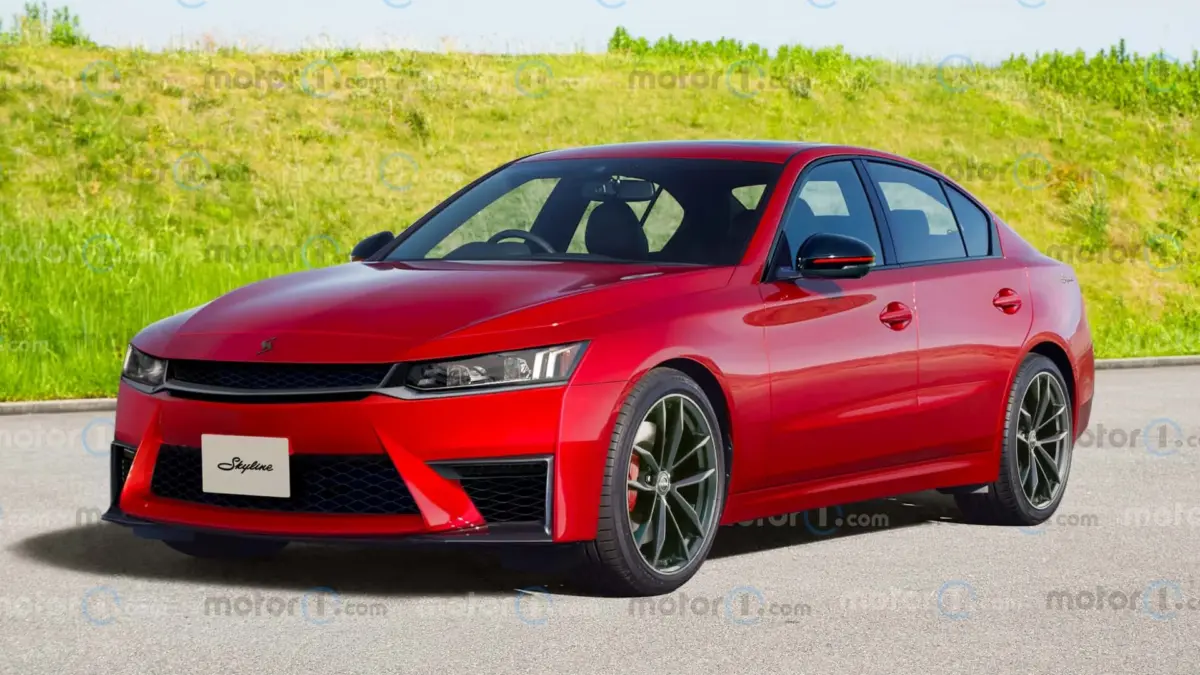
In a move that signals both a commitment to its storied heritage and a radical shift in its engineering philosophy, Nissan has officially set a timeline for the arrival of the 14th-generation Skyline. After years of silence, rumors, and mounting pressure from a dedicated global fanbase, Nissan CEO Ivan Espinosa confirmed that the all-new sedan—internally designated as the V38—is scheduled to make its world debut in December 2026.
The announcement, delivered via Nikkei Asia, positions the upcoming Skyline not merely as a replacement for an aging model, but as a cornerstone of Nissan’s broader corporate recovery. Espinosa described the vehicle as "one of the icons of the renaissance of Nissan," framing the project as a vital symbol of the automaker’s ability to innovate under pressure and reclaim its position as a leader in the sports sedan segment.
For enthusiasts who have watched the Skyline nameplate drift into a period of stagnation over the last decade, the news provides much-needed clarity. The confirmation effectively ends years of speculation regarding whether the Skyline would be discontinued entirely or, perhaps more controversially, rebranded as a crossover to suit modern market tastes. Instead, Nissan appears to be doubling down on the car’s identity as a driver-focused, rear-biased performance machine.
The V38 Era: A Digital Revolution in Engineering
Perhaps the most significant aspect of the 14th-generation Skyline is not the car itself, but the method by which it is being created. The V38 is the first Nissan vehicle to be developed using an accelerated "China-style" playbook, leveraging generative artificial intelligence and advanced digital twin technology to slash development times.
Traditionally, bringing a new vehicle from the drawing board to the production line takes approximately 55 months—nearly five years of design, prototyping, testing, and regulatory compliance. For the V38 Skyline, Nissan has effectively halved that cycle to just 26 months. This rapid pace is intended to allow the company to respond more quickly to shifting consumer demands and technological advancements, a necessity in an era where software-defined vehicles and rapid-fire releases from competitors have changed the industry’s tempo.
"The Skyline is an icon of speed not only as a car, but also as the first Nissan to go through an accelerated development process," Espinosa told Nikkei Asia. He presented the project as a "proof point" of the automaker’s renewed engineering capability. By utilizing AI to simulate crash tests, optimize aerodynamics, and streamline supply chain logistics, Nissan is attempting to prove that it can maintain its rigorous quality standards while operating at the speed of a tech company.
This shift is not a one-off experiment for the Skyline. Espinosa noted that the lessons learned from the V38 project are already being integrated into the company’s global operations. Nissan plans to roll out these AI-driven tools across roughly 90 percent of its future vehicle projects, aiming to make the 26-month development cycle the new corporate standard.