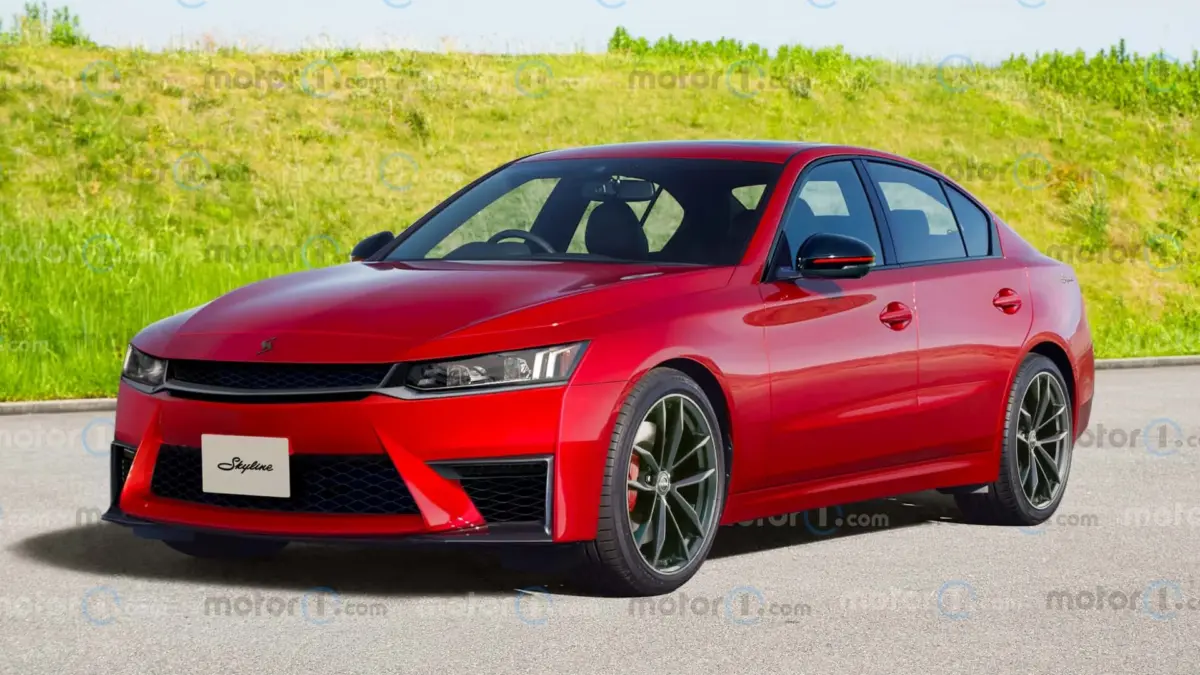
In a move that signals both a commitment to its storied heritage and a radical shift in its engineering philosophy, Nissan has officially set a timeline for the arrival of the 14th-generation Skyline. After years of silence, rumors, and mounting pressure from a dedicated global fanbase, Nissan CEO Ivan Espinosa confirmed that the all-new sedan—internally designated as the V38—is scheduled to make its world debut in December 2026.
The announcement, delivered via Nikkei Asia, positions the upcoming Skyline not merely as a replacement for an aging model, but as a cornerstone of Nissan’s broader corporate recovery. Espinosa described the vehicle as "one of the icons of the renaissance of Nissan," framing the project as a vital symbol of the automaker’s ability to innovate under pressure and reclaim its position as a leader in the sports sedan segment.
For enthusiasts who have watched the Skyline nameplate drift into a period of stagnation over the last decade, the news provides much-needed clarity. The confirmation effectively ends years of speculation regarding whether the Skyline would be discontinued entirely or, perhaps more controversially, rebranded as a crossover to suit modern market tastes. Instead, Nissan appears to be doubling down on the car’s identity as a driver-focused, rear-biased performance machine.
The V38 Era: A Digital Revolution in Engineering
Perhaps the most significant aspect of the 14th-generation Skyline is not the car itself, but the method by which it is being created. The V38 is the first Nissan vehicle to be developed using an accelerated "China-style" playbook, leveraging generative artificial intelligence and advanced digital twin technology to slash development times.
Traditionally, bringing a new vehicle from the drawing board to the production line takes approximately 55 months—nearly five years of design, prototyping, testing, and regulatory compliance. For the V38 Skyline, Nissan has effectively halved that cycle to just 26 months. This rapid pace is intended to allow the company to respond more quickly to shifting consumer demands and technological advancements, a necessity in an era where software-defined vehicles and rapid-fire releases from competitors have changed the industry’s tempo.
"The Skyline is an icon of speed not only as a car, but also as the first Nissan to go through an accelerated development process," Espinosa told Nikkei Asia. He presented the project as a "proof point" of the automaker’s renewed engineering capability. By utilizing AI to simulate crash tests, optimize aerodynamics, and streamline supply chain logistics, Nissan is attempting to prove that it can maintain its rigorous quality standards while operating at the speed of a tech company.
This shift is not a one-off experiment for the Skyline. Espinosa noted that the lessons learned from the V38 project are already being integrated into the company’s global operations. Nissan plans to roll out these AI-driven tools across roughly 90 percent of its future vehicle projects, aiming to make the 26-month development cycle the new corporate standard.
Replacing a Decade-Old Predecessor
The arrival of the V38 in late 2026 will mark the end of an unusually long life cycle for the current V37 generation. Originally launched in Japan in November 2013, the V37 Skyline—known in North America and other markets as the Infiniti Q50—has remained on sale for over a decade with only incremental updates.
While the V37 gained a significant mid-cycle refresh in 2019, which introduced the VR30DDTT 3.0-liter twin-turbo V6 engine and a more aggressive aesthetic inspired by the GT-R, the platform’s age has become increasingly apparent compared to rivals from Germany and domestic competitors like Lexus. The current car’s interior technology and chassis dynamics, while still competent, have struggled to keep pace with the rapid evolution of the luxury sport sedan market.
By the time the V38 reaches showrooms, the V37 will have been in production for 13 years. This gap underscores the importance of the new model; Nissan cannot afford a lukewarm reception for a car that carries such immense historical weight. The Skyline nameplate, which dates back to the Prince Motor Company in the late 1950s, is inextricably linked to Nissan’s identity as a manufacturer of high-performance machinery.
Powertrain and Platform Speculation
While Nissan has confirmed that the December 2026 reveal will showcase a combustion-powered sports sedan, specific technical details remain under wraps. The company has been careful not to preempt the official debut with specifications regarding cylinder counts, displacement, or transmission options.
However, the industry consensus suggests that the V38 will likely continue to utilize a rear-wheel-drive architecture, maintaining the "rear-biased" feel that has defined the Skyline for generations. Given the current global regulatory environment, it is highly probable that the internal combustion engine will be paired with some form of hybridization to balance performance with tightening emissions standards.
Enthusiasts have been vocal in their hopes for a manual gearbox option—something that returned to the Nissan Z to great acclaim—but whether such a feature can be justified for a luxury-leaning sedan remains to be seen. Rumors of a high-output V6 continue to circulate, potentially an evolved version of the VR-series engine that currently powers the Z and the outgoing Skyline 400R.
The platform of the V38 is also expected to serve as the foundation for the next generation of Infiniti products. Specifically, the Skyline’s development is closely linked to the successor of the Infiniti Q50. While Nissan has not confirmed a 2028 model year launch for a new Infiniti sedan, the timing of the V38’s debut makes such a timeline highly plausible. If the V38 delivers on its promise of being a "proper" sport sedan, it could provide the Infiniti brand with the enthusiast flagship it needs to revitalize its image in the premium segment.
Design Heritage and the Nismo Connection
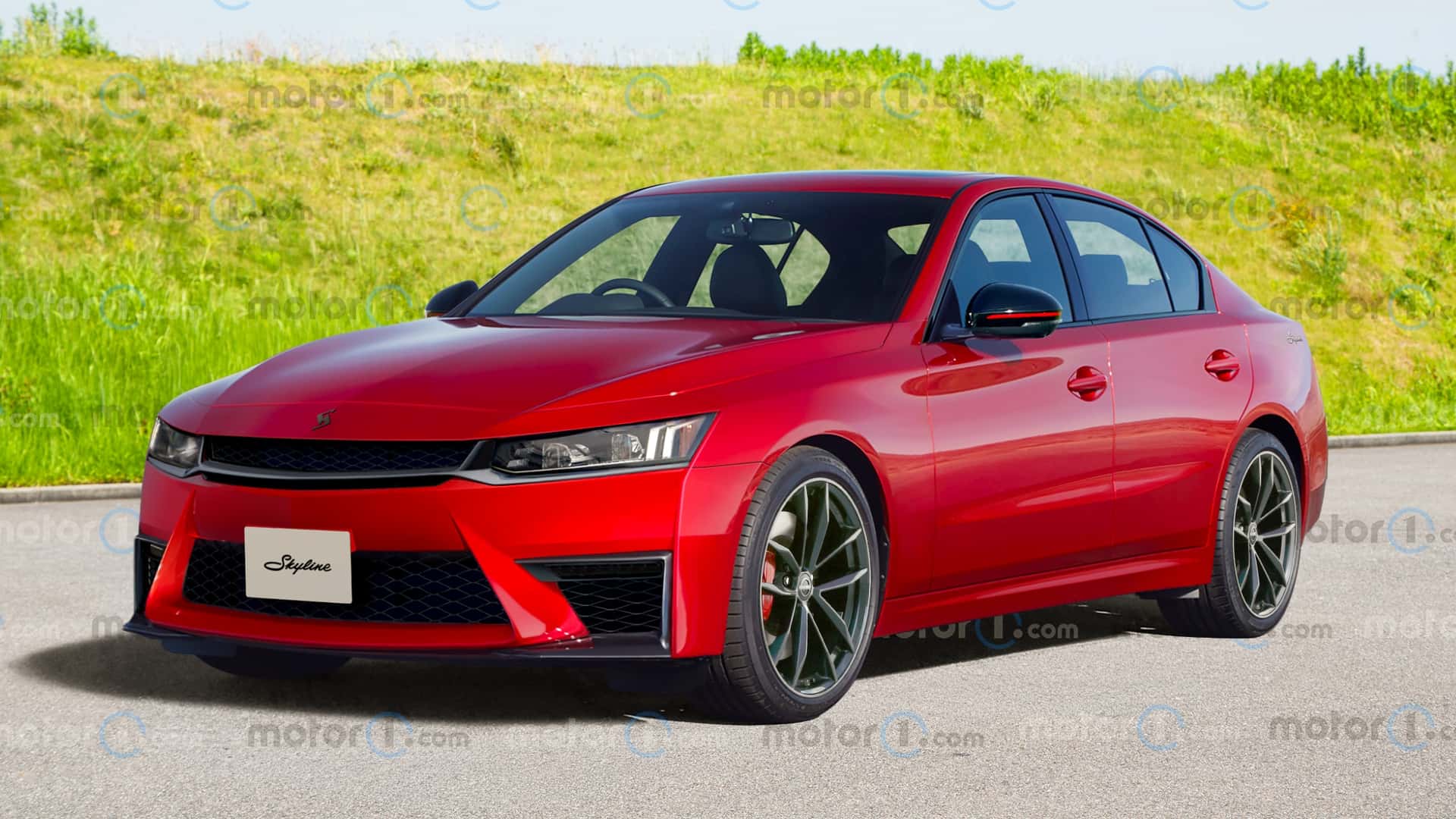
Nissan executives have hinted that the next Skyline will lean heavily into the brand’s heritage. Design themes are expected to pay homage to classic iterations of the car, with rumors suggesting cues taken from the legendary "Hakosuka" (C10 generation) or lighting signatures derived from the modern R35 GT-R.
The aesthetic challenge for Nissan’s design team is significant: they must create a car that looks forward into a digital future while respecting a lineage that includes some of the most iconic silhouettes in Japanese automotive history. Teaser images released by the company have shown sleek, low-slung profiles and sharp LED signatures, suggesting a more athletic and minimalist approach than the current V37.
The timing of the December 2026 reveal has also sparked intense interest among the "Nismo" faithful. The annual Nismo Festival at Fuji Speedway is scheduled for December 6, 2026. While Nissan has not officially confirmed that the Skyline will be unveiled at the track, the overlap is difficult to ignore. The Nismo Festival is a celebration of Nissan’s racing DNA, making it the perfect stage to introduce a car that Espinosa has labeled an "icon of speed."
The Strategic Importance of the "Renaissance"
The reveal of the 14th-generation Skyline is a pivotal moment in "The Arc," Nissan’s medium-term business plan aimed at boosting sales and improving profitability through a flurry of new product launches. Following several years of financial volatility and leadership transitions, the company is eager to prove that it hasn’t lost its soul in the pursuit of volume.
The Skyline occupies a unique space in Nissan’s portfolio. While models like the Rogue (X-Trail) and the Kicks drive the company’s bottom line, the Skyline and the Z provide the emotional resonance that keeps the brand relevant to car enthusiasts. By investing in a dedicated V38 platform rather than simply applying the Skyline name to a generic crossover, Nissan is signaling to the market that it remains committed to the "sedan" as a performance format.
As the industry pivots toward electrification, the V38 Skyline may represent one of the final chapters for the pure combustion-powered Japanese sport sedan. If the car can successfully blend the heritage of its predecessors with the efficiency of AI-accelerated engineering, it could serve as a bridge between Nissan’s glorious past and its high-tech future.
The bigger story, however, remains the shift in how Nissan builds cars. If the 26-month development cycle proves successful for a car as complex and scrutinized as the Skyline, it will validate Espinosa’s strategy and likely force other legacy automakers to rethink their own timelines. For now, the automotive world waits for December 2026, when the digital designs and AI simulations finally manifest into a physical machine carrying one of the most famous badges in history.