Lin King, the acclaimed translator and writer responsible for the English-language version of Yang Shuang-zi’s Taiwan Travelogue, has publicly announced a legal challenge against an unnamed European publisher, alleging a significant violation of her intellectual property rights. In a detailed statement released via Instagram on Tuesday, King laid out a compelling case regarding the unauthorized use of her translation as the basis for a third-language edition, a practice known in the industry as "relay translation." The dispute has quickly become a focal point for discussions regarding the creative agency of translators and the legal protections afforded to those who bridge the gaps between the world’s many languages.
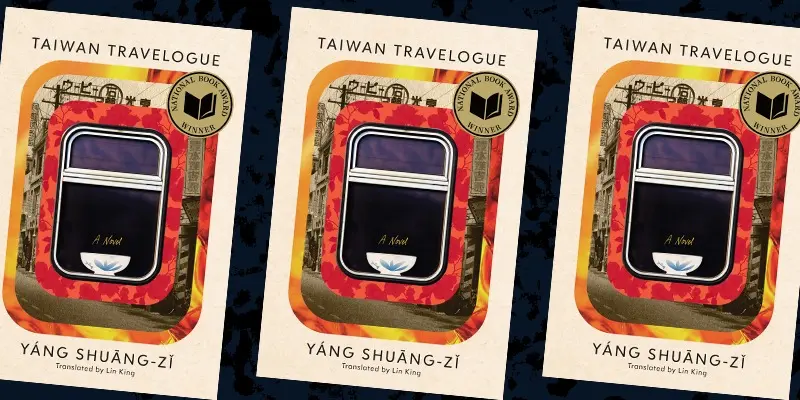
The controversy centers on Taiwan Travelogue, a novel originally written in Mandarin by Yang Shuang-zi under the title Tâiwân Màn Yóu Lù. King’s English translation, which has garnered international acclaim and secured a prestigious Booker Prize, is at the heart of the legal proceedings. According to King, she recently discovered that a European publishing house was moving forward with plans to release a version of the book translated not from the original Mandarin text, but directly from her English rendition. Despite King issuing "repeated warnings" to the publisher that such a move was legally untenable without her express consent, the publisher apparently intended to proceed, prompting King to seek judicial intervention.
The crux of King’s argument rests on the legal and artistic ownership of a translated text. While the original author, Yang Shuang-zi, holds the copyright to the Mandarin work, King asserts that she is the "sole copyright owner" of the English-language version. In the world of international publishing, a translation is generally recognized as a derivative work that carries its own distinct copyright, belonging to the translator unless contractually surrendered. Therefore, when a third party uses that specific English text as a "bridge" to create a version in another language—such as French, German, or Spanish—they are effectively translating King’s creative work, not just Yang’s. Without a license or authorization from King, this process constitutes a breach of copyright.
King’s statement goes far beyond the technicalities of intellectual property law, offering a profound and moving defense of translation as a high art form. She challenges the persistent and often reductive view of translation as a purely mechanical or clerical task. Instead, King argues that translation is an act of deep adaptation, comparable to other forms of creative reinterpretation. To illustrate her point, she draws a parallel to the world of cinema and music, noting that a translator’s work is not unlike a filmmaker reinterpreting a literary classic for the silver screen. She famously cites Whitney Houston’s iconic cover of Dolly Parton’s "I Will Always Love You," pointing out that while audiences may debate which version is "better," it is indisputable that the two performances are fundamentally different creative entities.