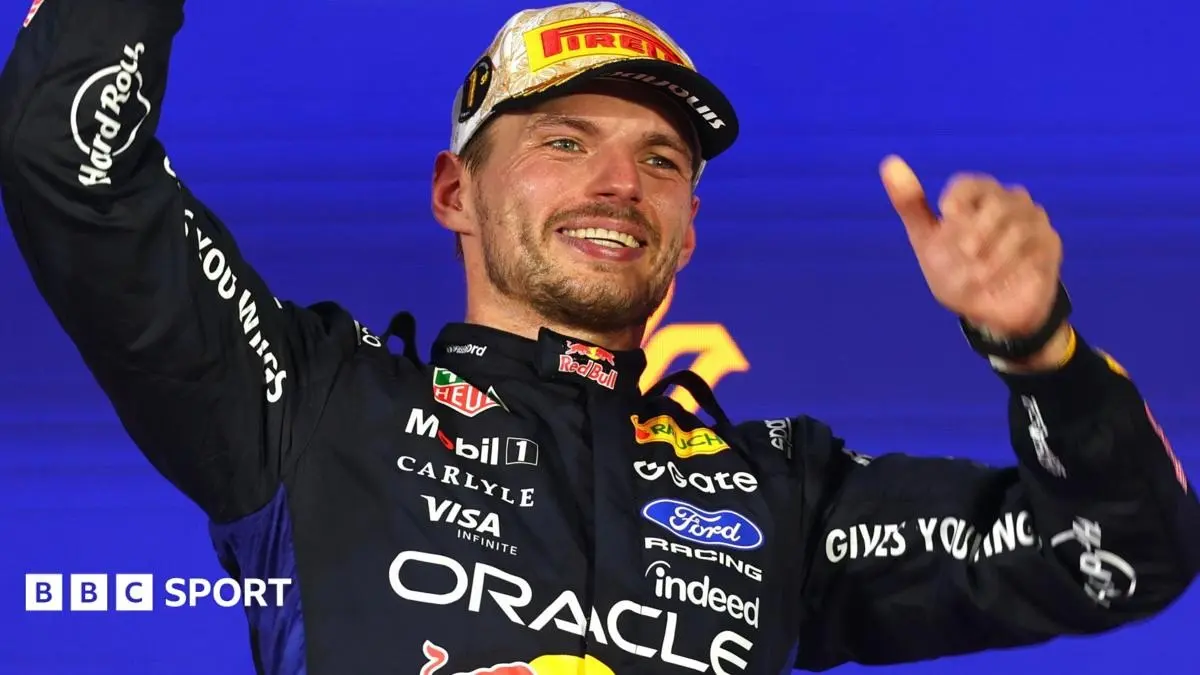
Max Verstappen has firmly re-established his authority over the Formula 1 grid, securing a commanding victory at the Singapore Grand Prix to claim his second major win in just seven days. Under the dazzling floodlights of the Marina Bay Street Circuit, the Red Bull driver delivered a masterclass in controlled aggression, leading from the front to secure his first-ever win in the city-state. This latest triumph, following a resurgent performance in Malaysia last weekend and a clinical sprint race victory on Saturday, serves as a definitive signal that Red Bull has overcome its mid-season slump to emerge once again as the sport’s most formidable force.
The race began with high tension on the front row as Ferrari’s Charles Leclerc sought to challenge Verstappen’s pole position. As the lights went out, Leclerc launched an immediate attack, attempting to squeeze the Red Bull into the first corner. However, Verstappen remained composed, holding his line and fending off the Ferrari to maintain the lead. From that moment forward, the Dutchman dictated the tempo of the Grand Prix, managing his pace and tire wear with the clinical precision that has become his trademark. While the battle raged behind him, Verstappen remained out of reach, eventually crossing the line to secure a win that felt as inevitable as it was significant.
For Charles Leclerc, the race was one of missed opportunities and strategic frustration. Despite showing flashes of pace that could rival the leader, the Ferrari driver was forced to settle for second place. His podium finish was overshadowed by a complex tactical battle involving his teammate, Lewis Hamilton, and a Mercedes team that found itself at odds with its own strategy. Hamilton, who finished a disappointing sixth, was the victim of a baffling decision-making process that left him vulnerable in the closing stages of the race.
The strategic divide began at the start, with Hamilton opting for the medium-compound tires while Verstappen and Leclerc chose the softs. Conventionally, this should have allowed Hamilton to run a longer first stint, capitalizing on the durability of the yellow-marked rubber as those on softs began to struggle. However, the race took an unexpected turn on lap 18 when Mercedes called Hamilton into the pits surprisingly early. The Briton was fitted with a set of soft tires, a move that committed him to a mammoth 44-lap stint on a compound usually reserved for short, high-grip bursts.
In contrast, Leclerc stayed out until lap 24, maximizing his initial set of softs before switching to the medium tires. When Leclerc emerged from the pits, he found himself just ahead of Hamilton. At this stage, Hamilton possessed the theoretically faster tire, yet Ferrari declined to issue team orders that would have allowed the seven-time world champion to move past Leclerc and use his pace to pressure Verstappen. This decision was met with immediate skepticism from Hamilton, who questioned the team’s logic over the radio as he found himself trapped in the dirty air of the sister Ferrari.