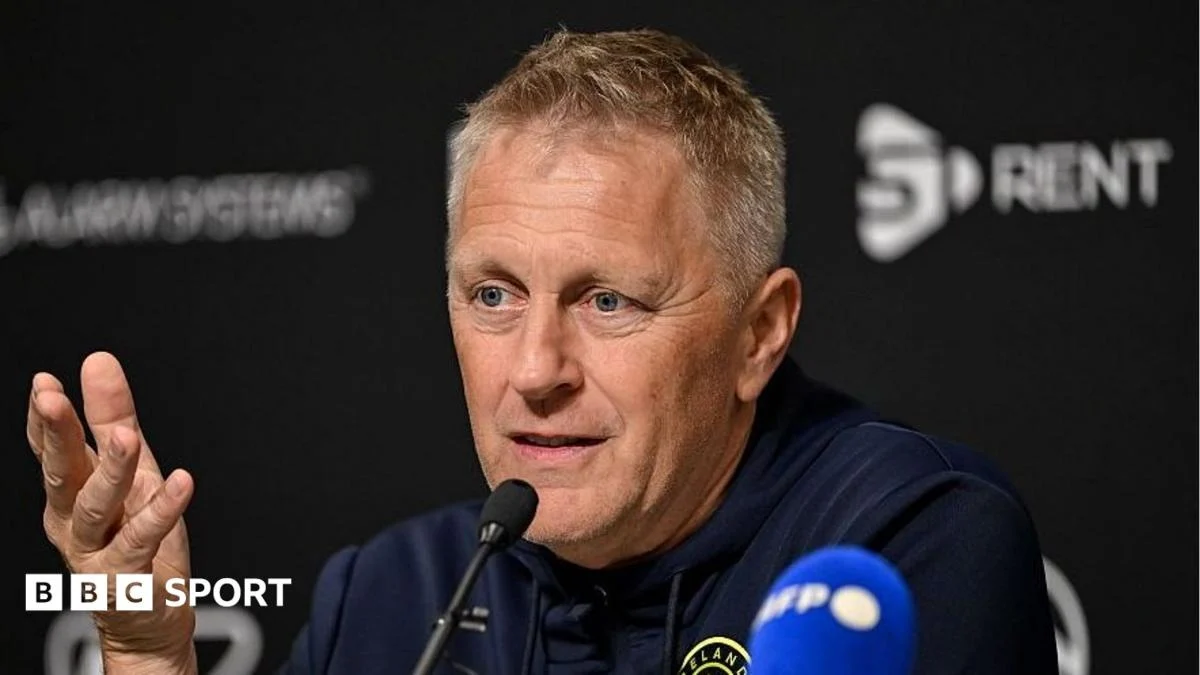
The manager’s exhaustion was written across his face as he reflected on a fortnight that saw his side navigate four matches in just fourteen days, including two highly contentious fixtures against Israel played on neutral ground. With only one of those games taking place on Irish soil, the squad covered approximately 5,000 miles in travel, moving between Dublin, Hungary, and Serbia. However, it was the psychological and moral weight of the window, rather than the physical mileage, that seemed to have left the deepest mark on the camp.
Hallgrimsson did not mince words when assessing the period, stating he was "delighted" that the ordeal had finally come to an end. His sentiments were underscored by a wish that no other national team would ever have to endure the specific set of circumstances his players and staff had faced over the last two weeks. The "trying" nature of the window was a confluence of sporting ambition and the harsh intrusion of global geopolitics into the sanctuary of the dressing room.
The scrutiny began long before the first whistle blew. The Republic of Ireland’s decision to fulfill their fixtures against Israel—first in a 3-0 victory in Debrecen, Hungary, and then in Sunday’s draw in Serbia—drew significant fire from activists at home. The pressure group Irish Sport for Palestine, through their ‘Stop The Game’ campaign, had vociferously called for a boycott of the matches in protest of the ongoing Israel-Gaza war. This campaign created a backdrop of intense public debate in Ireland, placing the Football Association of Ireland (FAI) and the players themselves in the crosshairs of a complex moral argument.
This external pressure manifested internally in a way rarely seen in international football. Prior to the victory in Hungary, the squad was forced to confront the ethical implications of the fixtures head-on. The situation reached a boiling point when goalkeeper Gavin Bazunu made the personal decision to withdraw from the Israel games. Bazunu, a significant figure in the Irish setup, felt that "it would be wrong to participate" given the current global climate. His absence was not due to injury but to a deeply held conviction, a move that sent ripples through the team and the wider sporting community.
The day of Bazunu’s withdrawal was described by many as chaotic. In an extraordinary move, a vote was held among the remaining players to determine whether they should proceed with the scheduled games against Israel. This moment of democratic deliberation within a sports team highlighted the sheer gravity of the situation; these were no longer just football matches, but a series of decisions that weighed heavily on the conscience of young athletes. Ultimately, the team decided to fulfill the fixtures, but the process of reaching that conclusion clearly took an emotional toll.
On the pitch, the results were mixed, leaving the Republic of Ireland with five points from a possible twelve across the window. While the 3-0 win in Debrecen provided a momentary sporting high, the surrounding atmosphere remained sombre. The final match on Sunday, played behind closed doors in the quiet surroundings of Backa Topola, felt like a subdued end to a tumultuous period. The lack of fans and the sterile environment of a neutral venue only served to amplify the sense of isolation and the "toll" Hallgrimsson repeatedly referenced.