LONDON — The ambition was nothing short of bringing the full, unfiltered spectacle of an authentic American college football gameday to the heart of the United Kingdom. When organizers of the University Jam Classic (UJC) set out to transform Wembley Stadium, they knew that capturing the essence of this uniquely American subculture required starting not with the opening kickoff, but hours earlier on the concrete concourses, where the revered tradition of the tailgate party took center stage.
For the uninitiated, the pre-game tailgate is a multi-hour ritual of food, drink, and music that, in the United States, often eclipses the scale of similar gatherings in the professional ranks of the NFL. To college football purists, it is the heartbeat of the sport. One American fan traveling for the event went so far as to tell BBC Sport that she actively prefers the camaraderie and energy of the tailgate to the actual game on the gridiron. At Wembley, organizers sought to replicate this exact fervor. The primary tailgate area opened its gates at 10:00 AM—a full seven hours before the scheduled kickoff—welcoming early arrivals with a performance by Kansas City rapper Tech N9ne, who helped ignite the growing crowd.
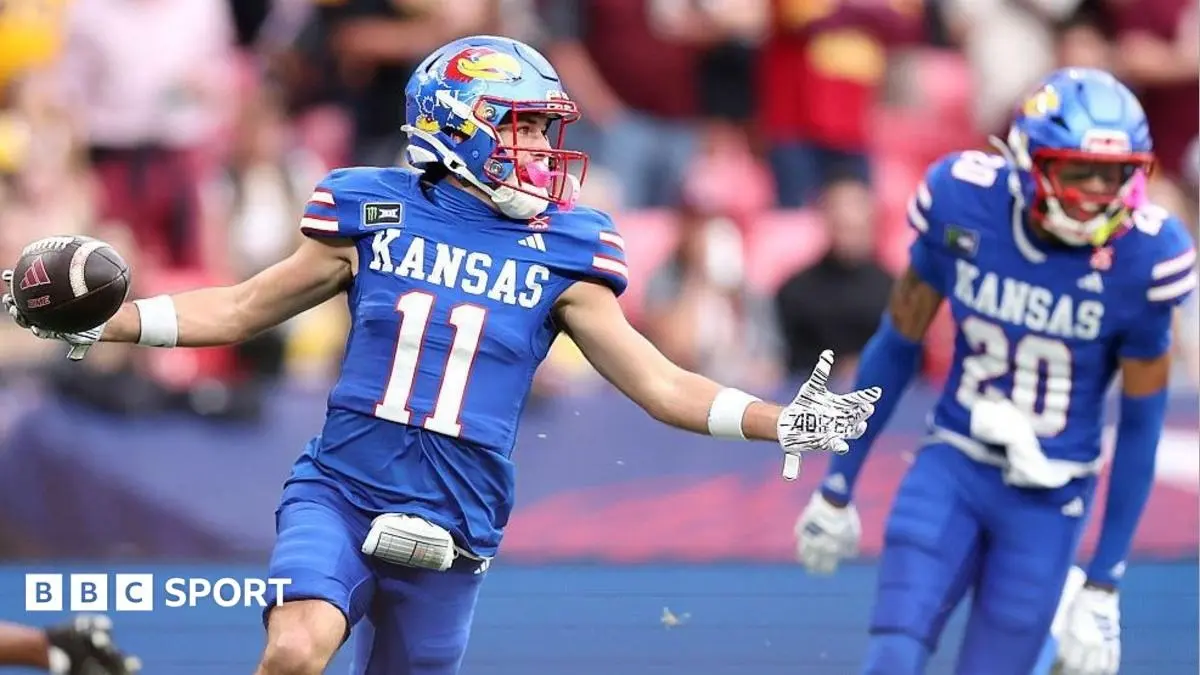
The festivities quickly expanded as university alumni groups established their own dedicated enclaves. Supporters of Arizona State University (ASU) organized a massive gathering that drew nearly 2,000 passionate fans, complete with high-energy performances from the official ASU marching band and cheerleaders on a custom-built stage. Yet, the true epicenter of the pre-game energy materialized along Wembley Way, where US broadcaster Fox Sports had constructed an outdoor studio for its live pre-game show. Surrounded by a sea of spectators, the television crew worked tirelessly to stoke the historic rivalry between the two schools. The atmosphere reached a crescendo as the marching bands from Kansas and Arizona State engaged in a spirited "battle of the bands," trading musical salvos first along Wembley Way and later on the stadium pitch just moments before kickoff.
This intense passion and deeply rooted pageantry are precisely what distinguish college football from its professional counterpart. While NFL fans in the United States and abroad often choose their allegiances based on geography, star players, or personal preference, college football loyalties are almost exclusively inherited, woven tightly into the fabric of family histories. It is a distinction of lineage rather than mere fandom. One Kansas supporter, Hannah, explained this deep connection, noting that college football fans are not merely fanatical but are often "rabid" in their devotion.
Throughout the day at Wembley, this generational bond was on full display. Families shared stories of multiple generations attending the same academic institutions, while dedicated alumni, who now reside in various corners of the United States, detailed the thousands of miles they traveled to London simply to watch their beloved alma mater play on foreign soil. Sophie, a current student at ASU, remarked that her family quite literally "bleeds maroon and gold," the signature colors of the Sun Devils. Her friend Amelia illustrated this domestic obsession, sharing that her home is completely adorned with ASU merchandise, a devotion that recently culminated in her purchasing a new car painted in the school’s signature maroon.