LONDON — The ambition was nothing short of bringing the full, unfiltered spectacle of an authentic American college football gameday to the heart of the United Kingdom. When organizers of the University Jam Classic (UJC) set out to transform Wembley Stadium, they knew that capturing the essence of this uniquely American subculture required starting not with the opening kickoff, but hours earlier on the concrete concourses, where the revered tradition of the tailgate party took center stage.
For the uninitiated, the pre-game tailgate is a multi-hour ritual of food, drink, and music that, in the United States, often eclipses the scale of similar gatherings in the professional ranks of the NFL. To college football purists, it is the heartbeat of the sport. One American fan traveling for the event went so far as to tell BBC Sport that she actively prefers the camaraderie and energy of the tailgate to the actual game on the gridiron. At Wembley, organizers sought to replicate this exact fervor. The primary tailgate area opened its gates at 10:00 AM—a full seven hours before the scheduled kickoff—welcoming early arrivals with a performance by Kansas City rapper Tech N9ne, who helped ignite the growing crowd.
The festivities quickly expanded as university alumni groups established their own dedicated enclaves. Supporters of Arizona State University (ASU) organized a massive gathering that drew nearly 2,000 passionate fans, complete with high-energy performances from the official ASU marching band and cheerleaders on a custom-built stage. Yet, the true epicenter of the pre-game energy materialized along Wembley Way, where US broadcaster Fox Sports had constructed an outdoor studio for its live pre-game show. Surrounded by a sea of spectators, the television crew worked tirelessly to stoke the historic rivalry between the two schools. The atmosphere reached a crescendo as the marching bands from Kansas and Arizona State engaged in a spirited "battle of the bands," trading musical salvos first along Wembley Way and later on the stadium pitch just moments before kickoff.
This intense passion and deeply rooted pageantry are precisely what distinguish college football from its professional counterpart. While NFL fans in the United States and abroad often choose their allegiances based on geography, star players, or personal preference, college football loyalties are almost exclusively inherited, woven tightly into the fabric of family histories. It is a distinction of lineage rather than mere fandom. One Kansas supporter, Hannah, explained this deep connection, noting that college football fans are not merely fanatical but are often "rabid" in their devotion.
Throughout the day at Wembley, this generational bond was on full display. Families shared stories of multiple generations attending the same academic institutions, while dedicated alumni, who now reside in various corners of the United States, detailed the thousands of miles they traveled to London simply to watch their beloved alma mater play on foreign soil. Sophie, a current student at ASU, remarked that her family quite literally "bleeds maroon and gold," the signature colors of the Sun Devils. Her friend Amelia illustrated this domestic obsession, sharing that her home is completely adorned with ASU merchandise, a devotion that recently culminated in her purchasing a new car painted in the school’s signature maroon.
In total, approximately 15,000 fans made the transatlantic pilgrimage from the United States to attend Saturday’s game. The traveling contingent was heavily weighted in favor of the Sun Devils, with 9,000 fans rooting for ASU compared to 6,000 representing Kansas. In the domestic US collegiate landscape, games rarely feature significant numbers of away fans due to the vast geographical distances between universities. However, because both teams brought substantial fanbases to London, and because the game was contested at a neutral international venue, several traveling spectators remarked that the resulting atmosphere closely mirrored the high-stakes environment of a postseason play-off game.
The appeal of the event, however, extended far beyond American expatriates and traveling alumni. Ticket sales revealed a remarkably global audience, with buyers representing 35 different countries. Similar to the NFL’s annual international series games in London, the crowd at Wembley was a colorful tapestry of football fandom, featuring neutral spectators wearing jerseys from a wide array of teams. On display were the colors of major American collegiate powerhouses, including Oklahoma, Miami, and Texas, alongside standard NFL jerseys and even the jerseys of local British university teams.
The presence of domestic British players was entirely by design. With more than 100 universities across the United Kingdom currently fielding American football teams, UJC organizers actively targeted these local players in their promotional efforts. For British students actively playing the sport, the collegiate version of the game is often far more relatable than the multi-billion-dollar corporate landscape of the NFL. To foster a deeper connection with this grassroots community, the UJC established strategic partnerships with the British American Football Association (BAFA), British Universities and Colleges Sport (BUCS), and the NFL’s Jacksonville Jaguars, who have long maintained a strong commercial presence in the UK.
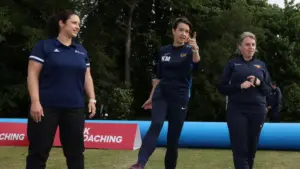
These partnerships have already yielded tangible developments for the sport in Britain. Over the course of this year alone, the UJC has helped to train more than 1,050 British coaches and referees, many of whom were hosted as guests at Saturday’s showcase. Alex, a player representing Cambridge University’s American football team, noted that the event offered a unique opportunity to learn the rich histories and traditions of both Kansas and ASU. He added that he would eagerly attend more international college games in the future, provided they feature teams that British fans can easily rally behind.
While the cultural exchange was a resounding success, the event faced some logistical realities on game day. Organizers had initially planned for a crowd of approximately 60,000 spectators. Ultimately, the official attendance at Wembley was recorded at 46,523. To optimize the stadium atmosphere and ensure a consolidated crowd noise, stadium operators closed the top tier of the venue, relocating ticketholders from those sections down into the lower bowl.
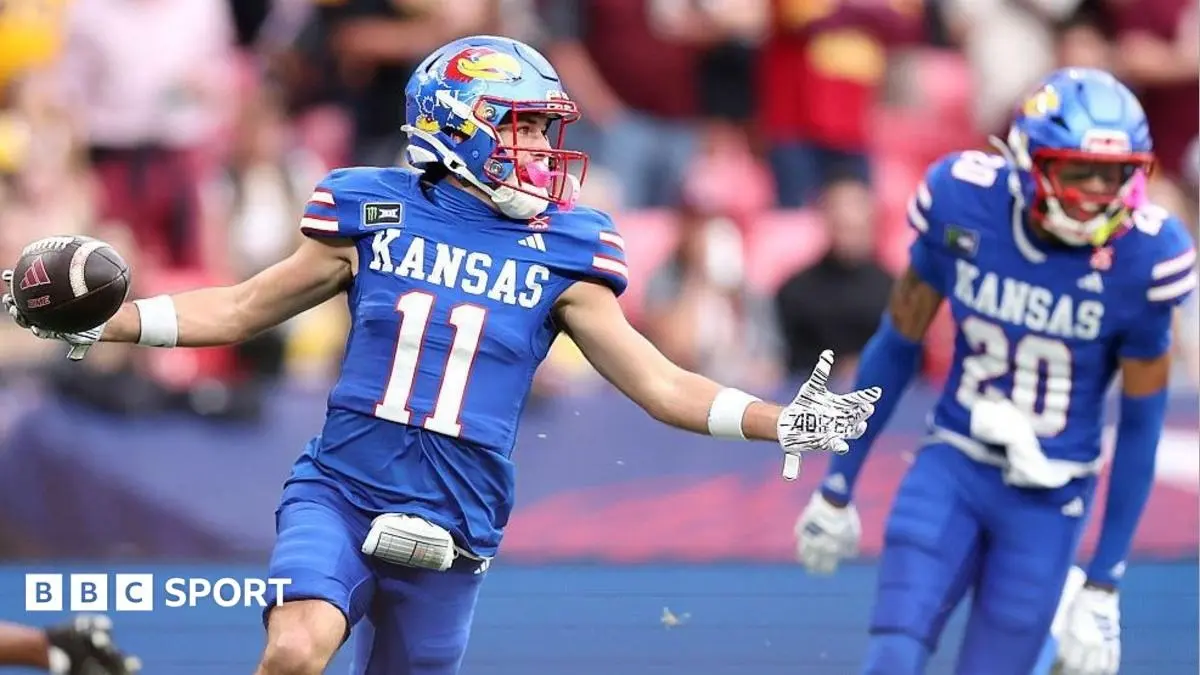
On the field, the game itself struggled to match the electric energy of the pre-game festivities. Although both offenses produced occasional big plays, the contest was less explosive than anticipated. Arizona State ultimately secured a 24-17 victory, a scoreline that observers felt somewhat flattered a struggling Kansas team. To keep the crowd engaged, organizers integrated live musical acts throughout the game and presented a coordinated light show during the third quarter. While these elements succeeded in giving British fans a distinct flavor of the American college sports experience, the game ultimately lacked some of the sheer pomp and circumstance that defines a Saturday afternoon in the United States. The traveling contingents of band members and cheerleaders were notably smaller than those seen at domestic games, and the crowd noise naturally fell short of the deafening levels typically found at ASU home games, where the Sun Devils averaged 54,000 fans last season.
Nevertheless, for the participants themselves, the journey was a monumental success. Both universities brought travel squads of 105 student-athletes. Remarkably, 90 percent of these young players did not even own a passport prior to this trip. The journey offered many players, staff members, and coaches’ families their very first opportunity to travel outside of the United States. ASU head coach Kenny Dillingham reflected on the broader impact of the trip, stating that his program had been granted "an experience they will remember for the rest of their lives." Kansas head coach Lance Leipold echoed these sentiments, praising the outstanding hospitality they received in London and noting that the team’s hotel and practice facilities were a major "win" for their operations.
The broader business implications of the game are already shaping the future of college football’s international expansion. Both ASU and Kansas compete in the Big 12 Conference, and the league’s commissioner, Brett Yormark, was highly enthusiastic about the venture’s success. Yormark stated that the event exceeded his expectations in every metric, from the turnout and logistical execution to the warm embrace of the local London community. "It’s been fantastic, so we want more," Yormark declared.
This ambition is backed by concrete plans. The UJC has secured an exclusive, multi-year agreement with Wembley Stadium to host future collegiate games. According to Yormark, several other Big 12 institutions have already expressed a strong interest in making the trip to London in the coming years. The conference is no stranger to international waters, having already played two successful games in Dublin, Ireland, over the past 13 months. Looking ahead, the Big 12 is actively exploring further expansion into other international markets.
Yormark revealed that the demand for the conference’s sports properties is exceptionally high, noting that he receives inquiries every two weeks from international representatives looking to bring Big 12 matchups to their respective countries. Fans eager to see which schools will next cross the Atlantic will not have to wait long; the commissioner confirmed that an official announcement regarding next year’s London fixture is expected to be made within the next month or two. That timeline will afford British American football enthusiasts plenty of opportunity to study up on the traditions, fight songs, and rivalries of the next two universities set to bring their unique brand of gridiron passion to the United Kingdom.