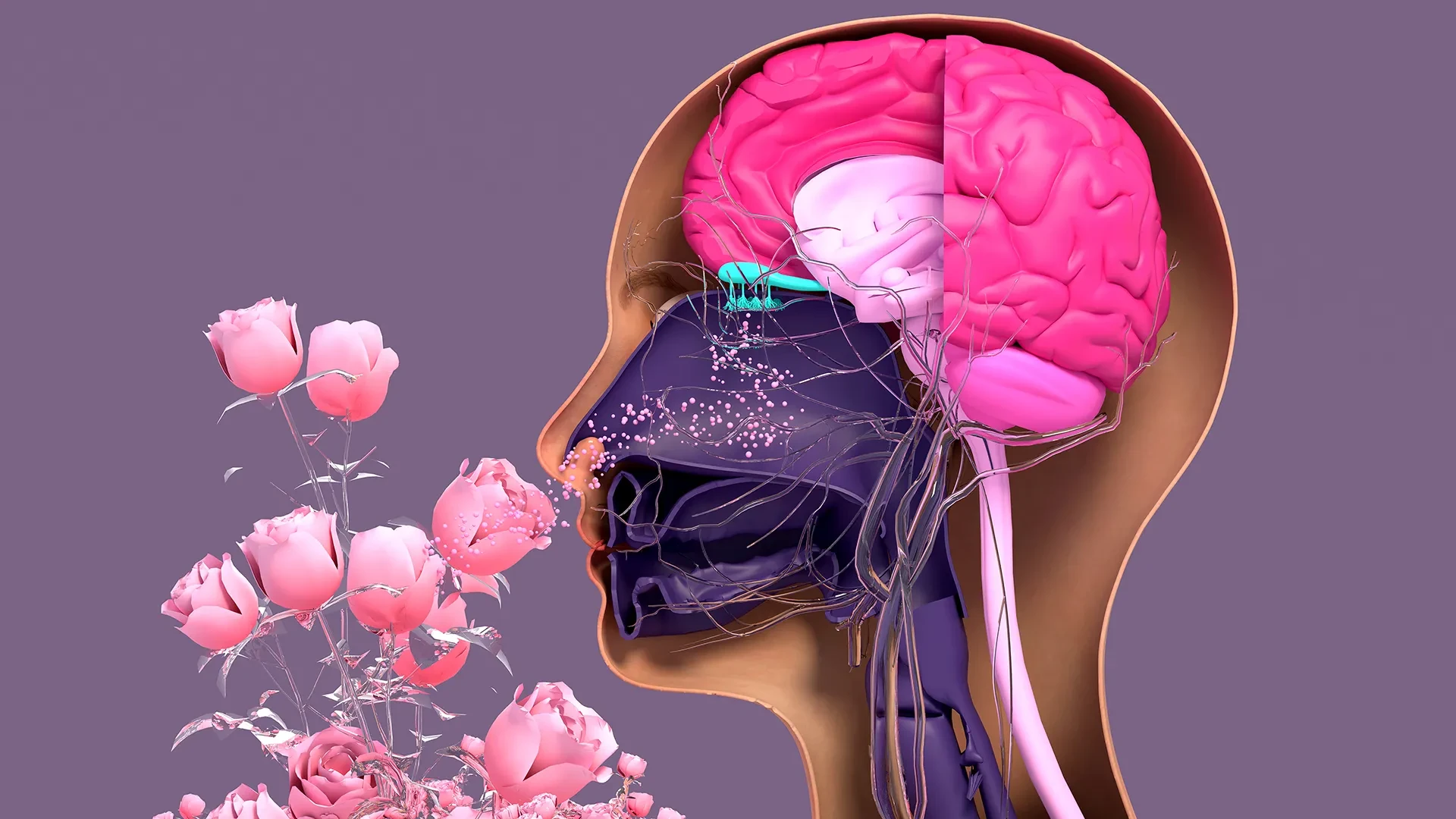
In the complex landscape of human sensory perception, the sense of smell often occupies a paradoxical position. While it is frequently overshadowed by sight and hearing in daily discourse, its absence—a condition known as anosmia—can profoundly diminish a person’s quality of life, affecting everything from nutritional habits to emotional well-being. Unlike the delicate and often permanent nature of neurons within the central nervous system, the sensory neurons located within the nasal cavity possess a remarkable, almost unique ability to regenerate throughout a person’s life. Despite being constantly bombarded by environmental hazards, toxins, and pathogens, the nose maintains a sophisticated biological machinery designed to repair and replace damaged tissue.
Now, a pioneering study led by researchers at Tufts University School of Medicine and the Graduate School of Biomedical Sciences (GSBS), in collaboration with international colleagues, has shed new light on the mechanics of this regenerative process. By utilizing a newly devised, three-dimensional model of olfactory tissue, the team has discovered that a specific type of stem cell, long dismissed as largely dormant, actually plays a pivotal role in maintaining the sense of smell. This discovery not only challenges existing biological paradigms but also opens new avenues for treating smell loss caused by aging, environmental exposure, and viral infections such as COVID-19.
The research, recently published in the journal Cell Reports Methods, centers on the interaction between different populations of stem cells within the olfactory epithelium—the specialized tissue inside the nasal cavity responsible for detecting odors. For years, the scientific community focused on a hierarchy of stem cells where one group did the heavy lifting while others remained in reserve. However, the Tufts team has demonstrated a far more integrated and interdependent relationship than previously imagined.
The Dynamics of Nasal Regeneration
The nasal cavity is a harsh frontier. Because it serves as a primary gateway for the respiratory system, the olfactory sensory neurons are under near-constant assault. Every breath brings the potential for exposure to cigarette smoke, industrial pollutants, allergens, and viruses. In most parts of the nervous system, such sustained trauma would lead to permanent sensory deficits. However, the olfactory system is equipped with a robust regenerative cycle.
Under normal circumstances, this cycle is fueled by stem cells that continuously produce new neurons to replace those that have reached the end of their lifespan or have been damaged. Yet, this process is not infallible. As individuals age, or when they are subjected to severe viral loads or toxic environments, the efficiency of this regeneration wanes. The result can be a partial loss of smell (hyposmia) or a complete loss (anosmia).
To study this process with greater precision, the Tufts researchers developed a three-dimensional olfactory tissue mouse model, commonly referred to as an organoid. Unlike traditional two-dimensional cell cultures, which often fail to replicate the complex architecture and signaling environments of living tissue, these 3D organoids allow scientists to observe how different cell types interact in a space that closely mimics the natural biology of the nose.
The team focused their investigation on two primary types of stem cells found in the nasal lining: horizontal basal cells (HBCs) and globose basal cells (GBCs). Historically, GBCs were viewed as the primary drivers of routine neuronal replacement, while HBCs were categorized as a "reserve" population—dormant cells that only sprang into action following catastrophic injury to the tissue.
The study’s findings, however, suggest that the role of HBCs is far more active and essential than the "dormant" label implies. "Our research suggests that these two stem cells may be interdependent," says Brian Lin, senior author on the study and a research assistant professor in the Department of Developmental, Molecular and Chemical Biology at Tufts. "One type that we thought was largely dormant—HBCs—may actually play a crucial role in supporting the production of new neurons and the repair of damaged tissue."
Identifying the Key Players in the Organoid
Through the use of their 3D organoid model, the researchers were able to peel back the layers of stem cell communication. They identified a specific subpopulation of HBCs that are distinguished by their production of a protein known as KRT5. In the controlled environment of the organoid, these KRT5-producing cells appeared to act as a support system for the generation of new olfactory neurons.