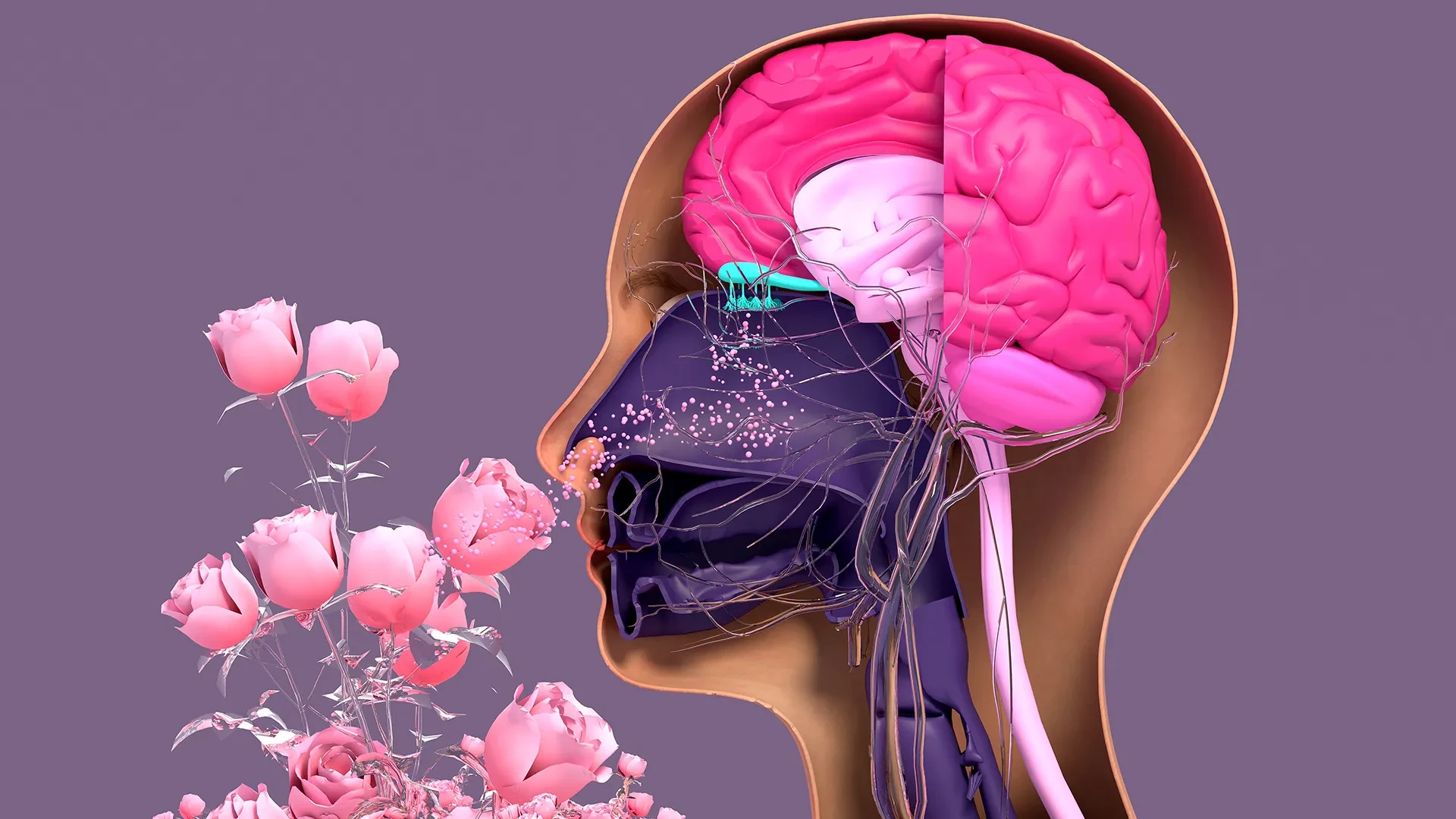
In the intricate landscape of human biology, the sense of smell often occupies a paradoxical position. While it is frequently regarded as the most visceral and evocative of our five senses—capable of triggering distant memories or alerting us to immediate danger—it is also one of the most vulnerable. Unlike the protected confines of the central nervous system, the sensory neurons responsible for detecting odors are situated in the nasal cavity, where they are relentlessly exposed to the external world. Every breath draws in a cocktail of dust, pollutants, allergens, and pathogens, placing these delicate nerve tissues under constant siege.
Despite this environmental bombardment, the olfactory system possesses a remarkable, almost unique, capacity for self-renewal. Throughout a person’s life, these neurons are replaced and repaired in a cycle of regeneration that usually keeps the sense of smell sharp. However, this process is not invincible. Factors such as viral infections—most notably COVID-19—exposure to environmental toxins, and the natural progression of aging can severely hamper this regenerative ability, leading to anosmia or hyposmia, the total or partial loss of smell.
Now, a pioneering study from researchers at Tufts University School of Medicine and the Graduate School of Biomedical Sciences (GSBS), in collaboration with international colleagues, has shed new light on how this regeneration occurs. By developing a sophisticated three-dimensional "organoid" model of nasal tissue, the team has discovered that a specific type of stem cell, long dismissed as largely dormant, actually plays a pivotal role in maintaining and repairing our olfactory machinery. Their findings, recently published in the journal Cell Reports Methods, offer a new roadmap for understanding sensory loss and potentially developing future treatments to restore it.
The Mystery of the Nasal Stem Cell
At the heart of the study are two primary types of stem cells found within the olfactory epithelium, the specialized tissue lining the nasal cavity: horizontal basal cells (HBCs) and globose basal cells (GBCs). For years, the scientific consensus held a somewhat binary view of these cells. The GBCs were seen as the "workhorses" of the system—actively dividing and differentiating into new sensory neurons to replace those that had died. In contrast, the HBCs were viewed as a reserve population, a "break glass in case of emergency" backup that remained largely inactive under normal conditions.
However, the Tufts research team, led by senior author Brian Lin, a research assistant professor in the Department of Developmental, Molecular and Chemical Biology, found that this traditional view was incomplete. Using their newly devised 3D mouse model, the researchers observed a complex, interdependent relationship between the two cell types that had previously been invisible in simpler 2D cultures.
"Our research suggests that these two stem cells may be interdependent," says Lin. "One type that we thought was largely dormant—HBCs—may actually play a crucial role in supporting the production of new neurons and the repair of damaged tissue."
By observing the cells in a 3D environment that more closely mimics the natural architecture of the nose, the team identified a specific subpopulation of HBCs. These cells are distinguished by their production of a protein known as KRT5. Rather than sitting idly by, these KRT5-positive HBCs were found to be active participants in the regenerative process. They appear to act as a support system, creating the necessary environment and biochemical cues for the GBCs to successfully generate new olfactory neurons.
To test the importance of these cells, the researchers performed a depletion experiment. When the KRT5-producing HBCs were selectively removed from the organoid cultures, the results were striking: the generation of new neurons was significantly impaired. This suggested that without the support of these "dormant" cells, the more active GBCs could not fulfill their role effectively. The discovery elevates the HBC from a passive bystander to an essential player in the maintenance of human olfaction.
Aging and the Decline of Sensory Renewal
Beyond identifying the key players in regeneration, the study also delved into why our sense of smell tends to fade as we get older. It is a common clinical observation that elderly individuals often experience a diminished ability to detect odors, which can impact nutrition, safety, and overall quality of life.