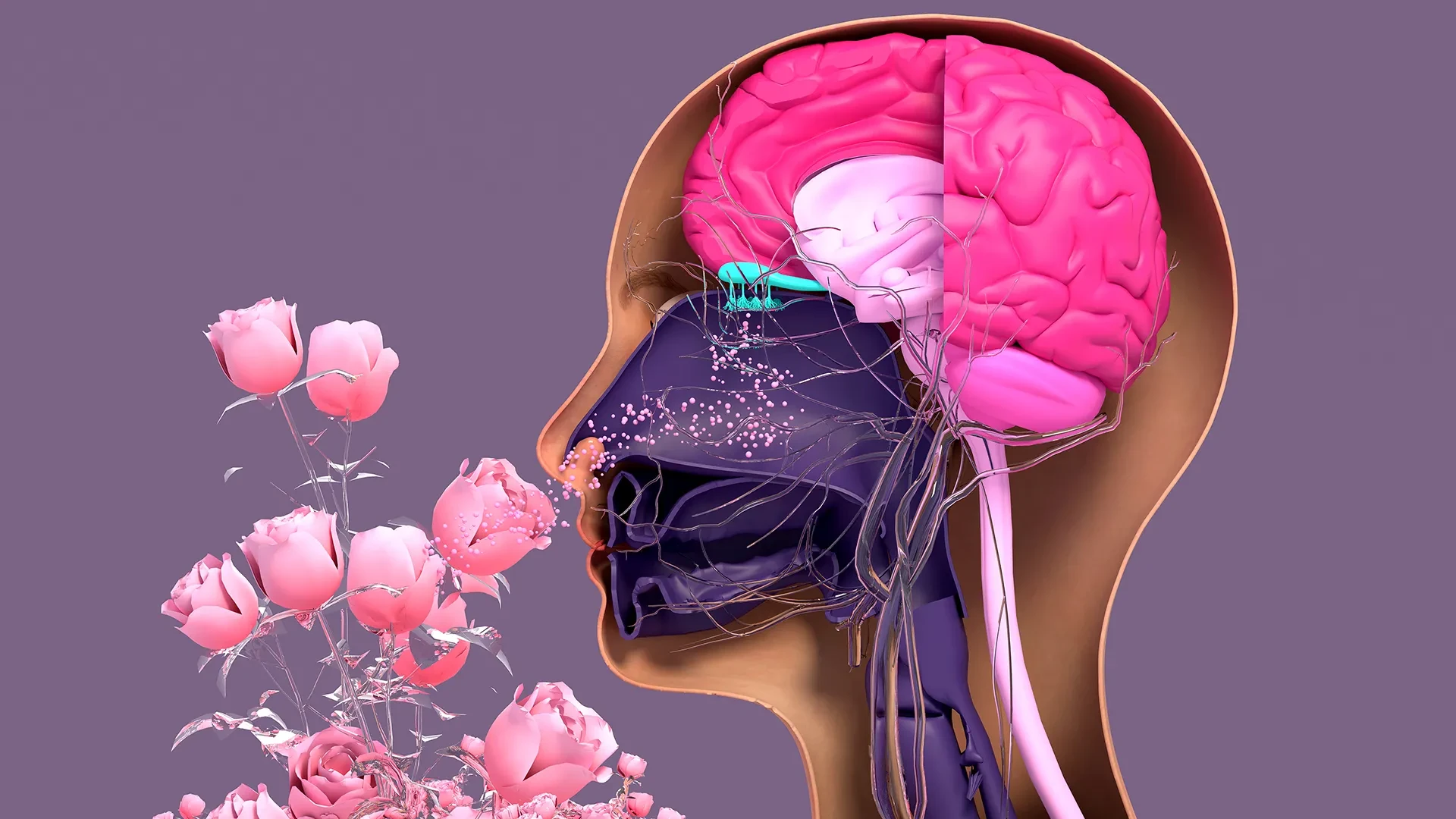
In the intricate landscape of human sensory perception, the sense of smell often operates as a silent sentinel, anchoring our memories, warning us of environmental hazards, and enriching the basic experience of eating. Yet, despite its importance, the mechanisms by which the body maintains and repairs the delicate nerve tissue responsible for olfaction have remained partially shrouded in mystery. Now, a breakthrough study led by researchers at the Tufts University School of Medicine and the Graduate School of Biomedical Sciences (GSBS) has shed new light on this process, utilizing a sophisticated three-dimensional model to uncover the hidden dynamics of nasal tissue regeneration.
The research, recently published in the journal Cell Reports Methods, challenges long-held assumptions about the stem cells residing in the nasal cavity. Specifically, the team discovered that a type of stem cell previously thought to be largely dormant—the horizontal basal cell (HBC)—actually plays a far more active and essential role in preserving the sense of smell than the scientific community had originally believed. By developing a new, accessible "organoid" model, the researchers have provided a powerful tool for understanding how the nose heals itself and why this vital capacity often falters with age or disease.
The Unique Regenerative Power of the Nose
To appreciate the significance of the Tufts study, one must first understand the unique biological environment of the nasal cavity. Unlike the central nervous system, where neurons are notoriously difficult to replace once damaged, the olfactory system possesses a remarkable and near-constant ability to regenerate. The sensory neurons in the nose are essentially the only part of the nervous system that is directly and continuously exposed to the external world. Every breath brings a barrage of potential insults, including viral pathogens, environmental toxins, pollutants, and physical trauma.
To survive this constant exposure, the body has evolved a robust regenerative engine within the olfactory epithelium—the specialized tissue lining the nasal cavity. Throughout a person’s life, new neurons are born, mature, and integrate into the existing neural circuitry, replacing those that have died or been damaged. However, this process is not invincible. Factors such as aging, chronic exposure to toxins, or severe viral infections—most notably seen in the global experience of COVID-19—can diminish the function of these cells or strip away their ability to replicate. This failure of the regenerative cycle often results in hyposmia (a diminished sense of smell) or anosmia (the total loss of smell), conditions that can profoundly impact quality of life and mental health.
Unmasking the "Dormant" Stem Cell
The engine of this regeneration is driven by two primary types of stem cells: horizontal basal cells (HBCs) and globose basal cells (GBCs). For years, the prevailing scientific consensus was that GBCs were the primary "workhorses" of the system, actively dividing and differentiating into new neurons. In contrast, HBCs were viewed as a sort of emergency reserve—dormant cells that only sprang into action in response to catastrophic tissue damage.
The Tufts research team, led by senior author Brian Lin, a research assistant professor in the Department of Developmental, Molecular and Chemical Biology, has now overturned this "dormant" label. Using their newly devised 3D mouse model, the team observed that these two cell types do not operate in isolation. Instead, they exist in a state of complex interdependency.
"Our research suggests that these two stem cells may be interdependent," explains Lin. "One type that we thought was largely dormant—HBCs—may actually play a crucial role in supporting the production of new neurons and the repair of damaged tissue."
By closely monitoring the behavior of these cells within the 3D organoid, the researchers identified a specific subpopulation of HBCs characterized by the production of a protein known as KRT5. These KRT5-positive cells were found to be actively involved in supporting the generation of new olfactory neurons. When the researchers experimentally depleted these specific HBCs from the organoid cultures, the results were striking: the generation of new neurons was significantly impaired. This finding suggests that HBCs are not merely a backup system but are essential players that provide the necessary environment and signals for the GBCs to function correctly.