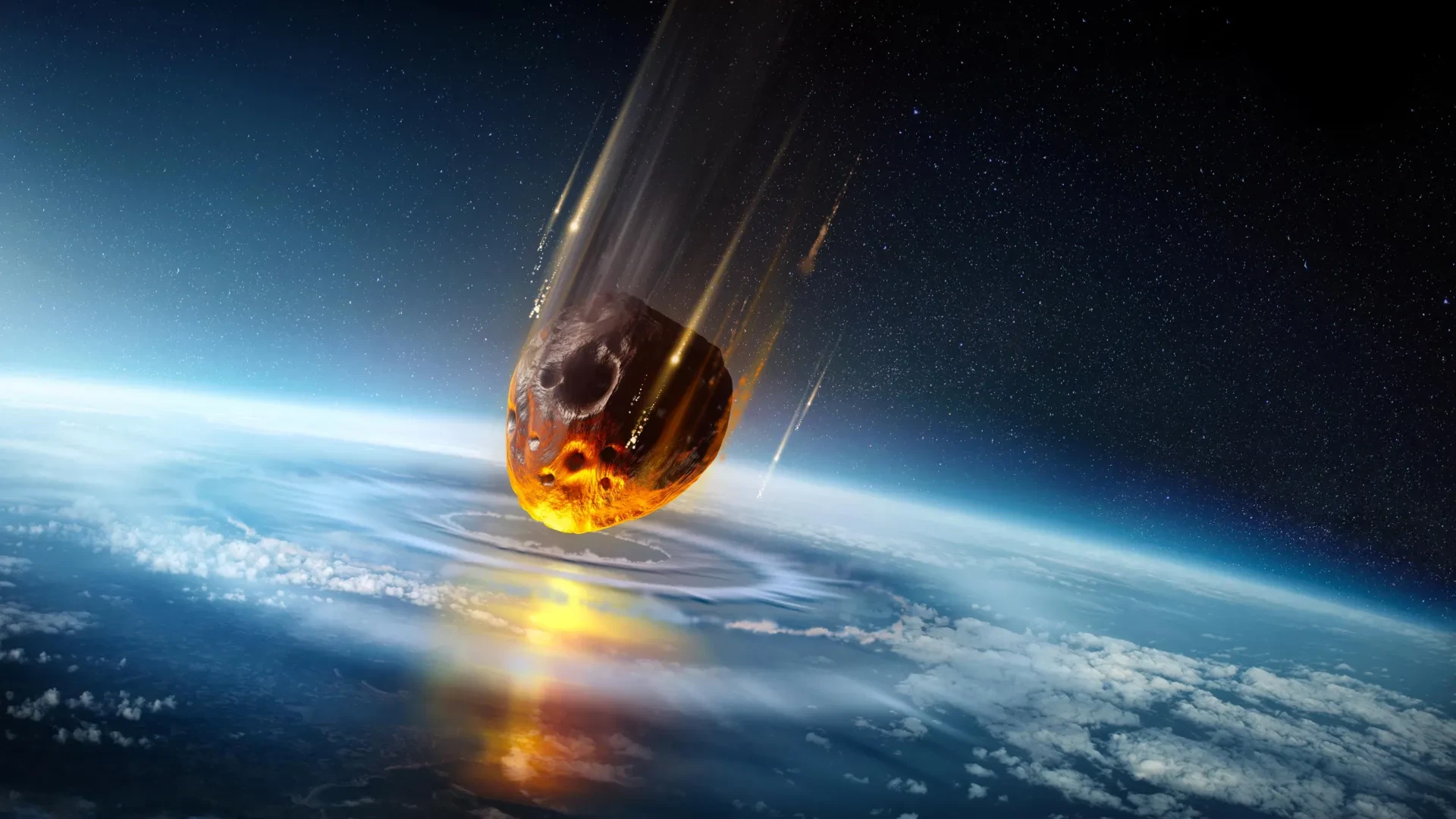
Deep beneath the quiet landscape of Major County, Oklahoma, lies a geological scar of cosmic proportions. For decades, the Ames impact structure—a massive crater buried under thousands of feet of sediment—has been a focal point for both energy exploration and scientific inquiry. Long believed to be a remnant of a specific, high-traffic period in Earth’s celestial history, new research from The University of Texas at Austin has fundamentally challenged that narrative.
By employing advanced geochronological techniques on microscopic crystals, a team of researchers from the UT Jackson School of Geosciences has determined that the Ames impact occurred approximately 370 million years ago. This discovery places the event in the Late Devonian period, making the crater nearly 100 million years younger than previously estimated. The revision does more than just update a map; it removes a cornerstone of a popular theory regarding Earth’s ancient past and provides a new potential culprit for one of the planet’s most devastating mass extinction events.
A Hidden Giant with Economic Weight
The Ames impact structure, often referred to locally as the "Ames Hole," is not visible from the surface. Located beneath the town of Ames, Oklahoma, it is a circular depression roughly eight miles in diameter. It was discovered in the early 1990s not by astronomers looking at the sky, but by geologists looking for oil.
Impact craters often create unique geological traps where hydrocarbons can accumulate. In the case of Ames, the violent collision shattered the local granite and carbonate rock, creating a highly porous reservoir. This structure became one of the most productive oil and gas fields in the region, leading to the drilling of numerous wells that provided researchers with something rare: physical core samples from deep within a buried impact site.
For years, these samples were the primary source of information regarding the crater’s age. Based on the presence of specific fossils within the layers of rock associated with the impact, scientists concluded that the meteor struck during the Middle Ordovician period, roughly 467.5 million years ago.
The Myth of the Ordovician Ring
The original dating of the Ames crater was significant because it aligned the Oklahoma site with a series of other major impact structures across North America and Europe. This clustering led to the development of the "Ordovician Meteor Event" theory.
According to this hypothesis, about 470 million years ago, a massive collision in the asteroid belt between Mars and Jupiter showered the inner solar system with debris. The influx of meteorites was so intense that some researchers proposed Earth may have briefly possessed a Saturn-like ring of asteroid fragments. This ring would have gradually decayed, leading to a prolonged period of frequent impacts that some scientists believe influenced the evolution of life during the Great Ordovician Biodiversification Event.
However, the new findings from the University of Texas suggest that the Ames crater was never part of this story.
"No matter what technique we used, it was coming back to this younger signal," said Elizabeth Catlos, lead author of the study and an associate professor in UT’s Department of Earth and Planetary Sciences.
The team’s research, published in the July issue of Meteoritics & Planetary Science, indicates that the Ames impact was an isolated event occurring long after the proposed Ordovician bombardment had ended. By removing Ames from the Ordovician timeline, the evidence for a concentrated "cluster" of impacts begins to thin, forcing scientists to reconsider the validity of the debris-ring hypothesis.