A New Piece of a Mass Extinction Puzzle
The shift from 467 million to 370 million years ago moves the Ames impact into a much more turbulent era of Earth’s history. The Late Devonian was a time of radical environmental change, culminating in the Frasnian-Famennian mass extinction.
Occurring roughly 372 million years ago, this extinction event was one of the "Big Five" in Earth’s history, wiping out approximately 75% of all species, with marine life—particularly reef-building organisms—taking the hardest hit. The cause of this extinction has long been a subject of intense debate among scientists. Was it triggered by internal forces, such as massive volcanic eruptions and climate change, or by external forces, such as a large-scale meteor strike?
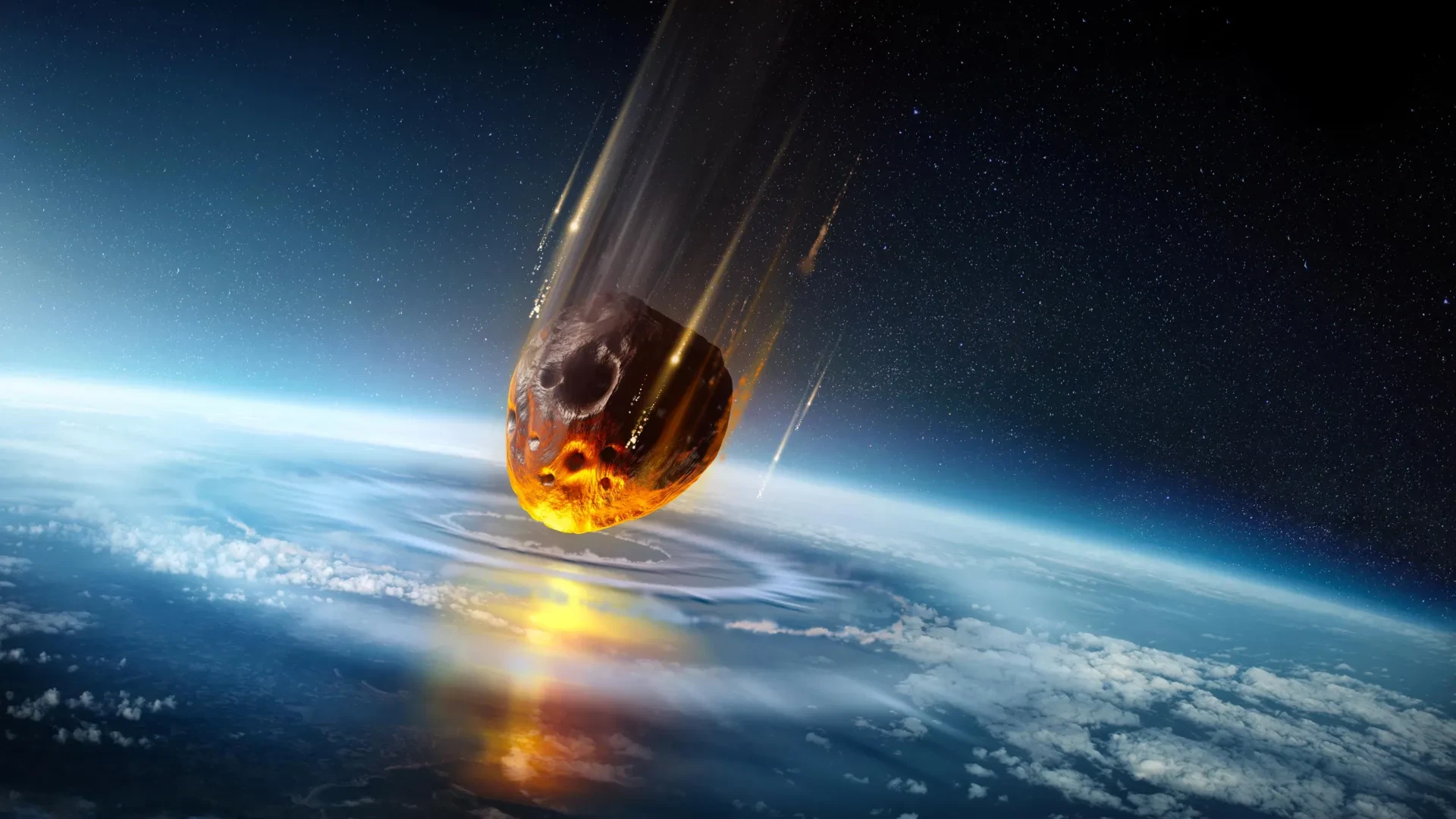
By redating the Ames crater to 370 million years ago, the UT researchers have placed it within the immediate window of this biological catastrophe. While the Ames impact alone may not have been large enough to trigger a global extinction, its timing suggests it may have been part of a larger period of instability.
"With this research, we’re basically taking a major pawn out of the Ordovician Meteor Event and dumping it into the Frasnian-Famennian event," Catlos said. "We are saying, ‘This is where this impact belongs.’"
This reassignment helps clarify the "murder mystery" of the Late Devonian. It provides concrete evidence that Earth was indeed being struck by significant cosmic bodies during the lead-up to or the aftermath of the mass extinction, potentially compounding the stress on the planet’s ecosystems.
A Legacy of Research
The publication of this study marks the culmination of a multi-generational effort at the Jackson School of Geosciences. The project was initiated by Andrew Parisi, a former graduate student who conducted the foundational work of traveling to Oklahoma, obtaining the rock cores from the Oklahoma Geological Survey, and extracting the zircons.
Parisi, who graduated in 2018, passed away before the final results could be published. Similarly, co-author Michael Brookfield, an affiliated researcher at the school, passed away prior to the paper’s release. The final study stands as a tribute to their contributions, with additional support provided by Research Professor Sean Gulick and Professor Emeritus Mark Cloos.
The success of the Ames study has prompted a call for a broader re-evaluation of North American geology. Many other impact sites across the continent were dated using the same fossil-based methods that led to the original Ames timeline.
"It would be great to do this for more of the meteor impact sites across the continent so we could get a more accurate timeline for these major events," Stockli said.
As technology improves, the ability to peer into the heart of a single crystal of zircon is allowing scientists to rewrite the history of our planet. In the case of the Ames crater, the story is no longer one of a quiet addition to an Ordovician ring, but a violent punctuation mark at the end of the Devonian—a reminder of how space and Earth are inextricably linked in the cycle of life and extinction.