Why the Earlier Date Was Misleading
The discrepancy between the old and new dates stems from the methods used to age the crater. Historically, the Ames structure was dated using biostratigraphy—the study of fossils within rock layers.
Specifically, researchers had identified the remains of conodonts—tiny, eel-like creatures—within the impact breccia (the jagged, broken rock formed during the collision). These conodonts were known to have lived during the Ordovician period. Because their teeth were found embedded in the impact-altered rock, it was logically assumed that the impact occurred while those creatures were extant.
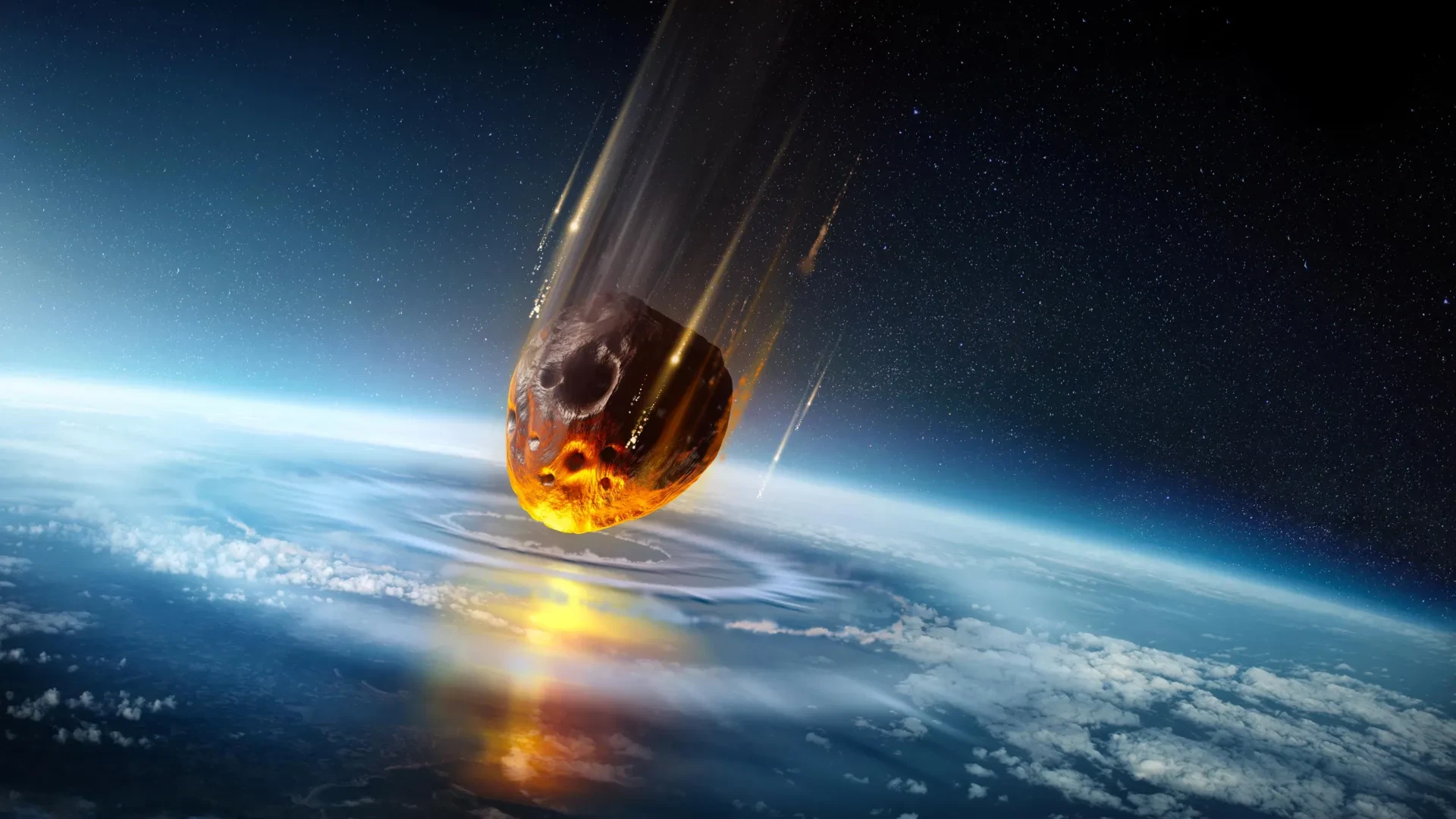
However, Catlos and her team suspected that these "index fossils" were providing a "reworked" age. In the violent chaos of a meteor strike, the ground is not simply compressed; it is excavated, flipped, and churned.
"The teeth were probably already millions of years old by the time the asteroid struck," Catlos explained. The impact likely struck a landscape where Ordovician sediments were already buried. The force of the collision unearthed this older material, mixing the ancient fossils into the newly formed impact rock. While the fossils survived the heat and pressure, they represented the target rock’s history, not the timing of the impact itself.
Tiny Zircon Crystals Preserve the Impact
To find a more reliable "clock," the researchers turned to zircon crystals. Zircons are incredibly durable minerals that can survive extreme heat and chemical erosion. They are also unique because they incorporate uranium into their structure when they form but reject lead. Over time, the uranium decays into lead at a known, constant rate. By measuring the ratio of uranium to lead within a crystal—a process known as U-Pb dating—scientists can determine exactly when the crystal formed or when it was last "reset" by a high-energy event.
Danny Stockli, dean of the Jackson School of Geosciences and a co-author of the study, noted that zircon dating is among the most rigorous tools available to geologists.
"These small crystals allow us to go back in time and learn about the major changes to Earth’s ancient landscapes," Stockli said.
However, dating zircons in an impact crater is a delicate task. The team had to distinguish between the original age of the granite (when the crystals first formed billions of years ago) and the moment the meteor struck. When a meteorite hits, the intense pressure and temperature cause the zircons to undergo "shock metamorphism." They may partially melt or recrystallize, effectively restarting their internal radioactive clocks.
To ensure they were looking at the right data, the UT team collaborated with NASA to image the crystals using advanced techniques: cathodoluminescence and electron backscatter diffraction. These methods allowed the researchers to see the internal structure of the zircons at a microscopic level. They looked for "shock features"—distinctive patterns of recrystallization that only occur under the extreme conditions of a cosmic collision.
Once they identified the zircons that had been physically altered by the impact, they dated those specific sections. The results were consistent: the clock had been reset 370 million years ago.