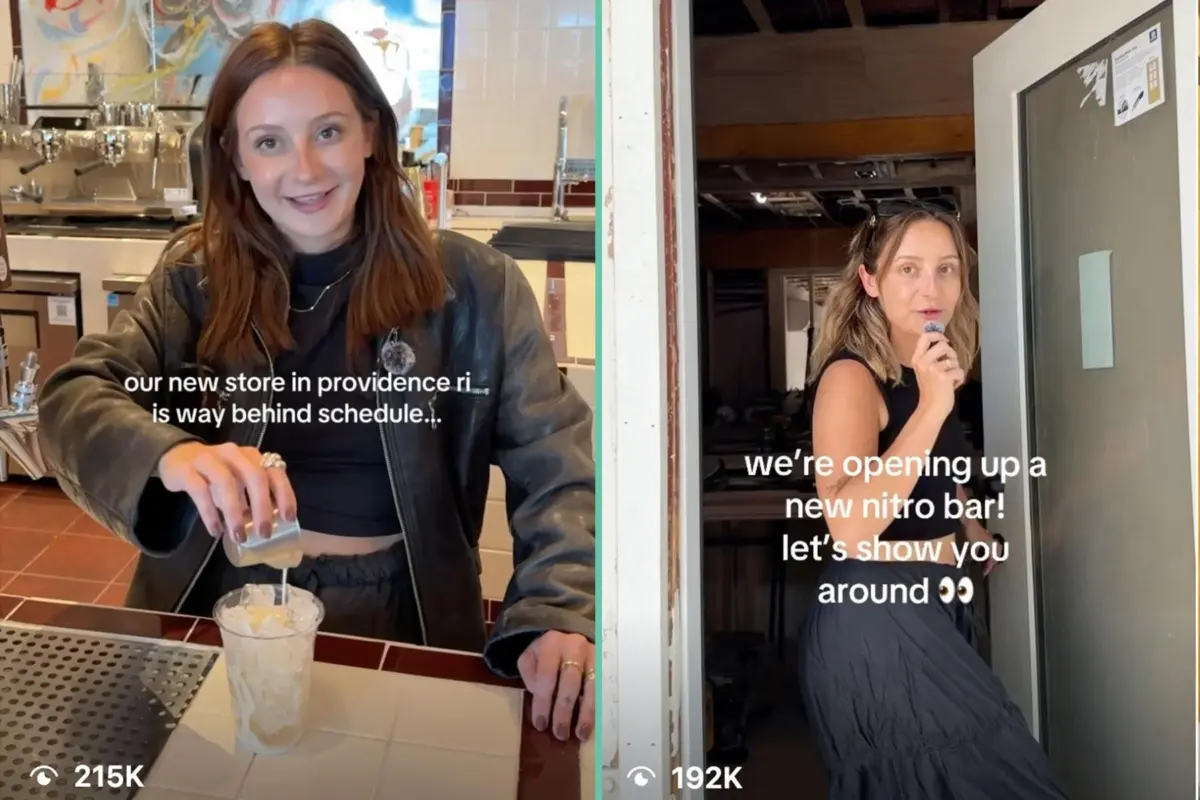
In the traditional arc of the hospitality industry, the period between signing a lease and welcoming the first guest was often a time of guarded silence. Owners worked behind paper-covered windows, keeping their progress—and their mounting anxieties—hidden from the public eye until a polished "Grand Opening" signaled their readiness for the world. But a new generation of restaurateurs, bartenders, and shop owners is fundamentally rewriting this narrative. Today, the paper is coming off the windows long before the doors open, replaced by the lens of a smartphone.
The "buildout" has been transformed from a stressful private hurdle into a public performance. Across platforms like TikTok, Instagram, and YouTube, the gritty, unglamorous reality of opening a business is becoming some of the most consumed content in the food world. From the installation of high-end speaker systems to the agonizing selection of countertop materials, the journey of creating a space is now as much a part of the brand as the menu itself.
This shift represents more than just a change in social media strategy; it is a fundamental evolution in how hospitality businesses build community and loyalty. By the time a customer walks through the door of a new establishment, they often feel as though they have already been there, having watched the owner struggle with permits, paint colors, and equipment failures for months.
The Rise of the "Buildout Narrative"
The power of this approach was recently illustrated by Michael Bishop-Myers, a veteran New York City bartender who is currently preparing to open his first bar, Susu’s, in Brooklyn. In a video that quickly garnered over 100,000 views on Instagram, Bishop-Myers introduces himself with a disarming simplicity: "Hey, I’m Mike. I’ve been a bartender for a long time in New York City and I’m opening my very first bar. Let’s go inside."
The video doesn’t offer a high-gloss commercial; instead, it provides a raw look at the work in progress. Viewers see Bishop-Myers poring over menus, drills resting on unfinished bar counters, and the meticulous installation of a 12-speaker Klipsch sound system powered by a Powersoft amplifier. To the casual observer, these might seem like mundane details. To an audience increasingly hungry for authenticity, they are the building blocks of a story they want to follow.
This "buildout narrative" has proven to be a powerful precursor to critical success. In Chicago, chef Jacob Potashnick began documenting the creation of his restaurant, Feld, on TikTok in 2022. For two years, followers watched the painstaking process of bringing a fine-dining vision to life. When Feld finally opened in 2024, it did so with a built-in audience that had already invested years of emotional energy into its success. That digital groundwork was followed by tangible accolades: Feld has since earned a Michelin star and Potashnick has secured a James Beard Award. The content that once focused on construction now focuses on the reality of maintaining a world-class kitchen, proving that the audience’s interest doesn’t evaporate once the "open" sign is flipped.
The Business as a Character
The success of these series lies in their ability to foster what psychologists call parasocial relationships—one-sided bonds where the audience feels a deep, personal connection to a creator. In the hospitality world, this means customers aren’t just buying a cup of coffee or a cocktail; they are supporting a "character" they have come to know and like.