In the traditional arc of the hospitality industry, the period between signing a lease and welcoming the first guest was often a time of guarded silence. Owners worked behind paper-covered windows, keeping their progress—and their mounting anxieties—hidden from the public eye until a polished "Grand Opening" signaled their readiness for the world. But a new generation of restaurateurs, bartenders, and shop owners is fundamentally rewriting this narrative. Today, the paper is coming off the windows long before the doors open, replaced by the lens of a smartphone.
The "buildout" has been transformed from a stressful private hurdle into a public performance. Across platforms like TikTok, Instagram, and YouTube, the gritty, unglamorous reality of opening a business is becoming some of the most consumed content in the food world. From the installation of high-end speaker systems to the agonizing selection of countertop materials, the journey of creating a space is now as much a part of the brand as the menu itself.
This shift represents more than just a change in social media strategy; it is a fundamental evolution in how hospitality businesses build community and loyalty. By the time a customer walks through the door of a new establishment, they often feel as though they have already been there, having watched the owner struggle with permits, paint colors, and equipment failures for months.
The Rise of the "Buildout Narrative"
The power of this approach was recently illustrated by Michael Bishop-Myers, a veteran New York City bartender who is currently preparing to open his first bar, Susu’s, in Brooklyn. In a video that quickly garnered over 100,000 views on Instagram, Bishop-Myers introduces himself with a disarming simplicity: "Hey, I’m Mike. I’ve been a bartender for a long time in New York City and I’m opening my very first bar. Let’s go inside."
The video doesn’t offer a high-gloss commercial; instead, it provides a raw look at the work in progress. Viewers see Bishop-Myers poring over menus, drills resting on unfinished bar counters, and the meticulous installation of a 12-speaker Klipsch sound system powered by a Powersoft amplifier. To the casual observer, these might seem like mundane details. To an audience increasingly hungry for authenticity, they are the building blocks of a story they want to follow.
This "buildout narrative" has proven to be a powerful precursor to critical success. In Chicago, chef Jacob Potashnick began documenting the creation of his restaurant, Feld, on TikTok in 2022. For two years, followers watched the painstaking process of bringing a fine-dining vision to life. When Feld finally opened in 2024, it did so with a built-in audience that had already invested years of emotional energy into its success. That digital groundwork was followed by tangible accolades: Feld has since earned a Michelin star and Potashnick has secured a James Beard Award. The content that once focused on construction now focuses on the reality of maintaining a world-class kitchen, proving that the audience’s interest doesn’t evaporate once the "open" sign is flipped.
The Business as a Character
The success of these series lies in their ability to foster what psychologists call parasocial relationships—one-sided bonds where the audience feels a deep, personal connection to a creator. In the hospitality world, this means customers aren’t just buying a cup of coffee or a cocktail; they are supporting a "character" they have come to know and like.
Rachel Karten, author of the social media-focused publication Link in Bio, describes this phenomenon as the "my show is on" mentality. During an industry panel earlier this year, Karten explained that for a modern food business, the owner acts as the host, the employees are the cast, and the physical space serves as the set.
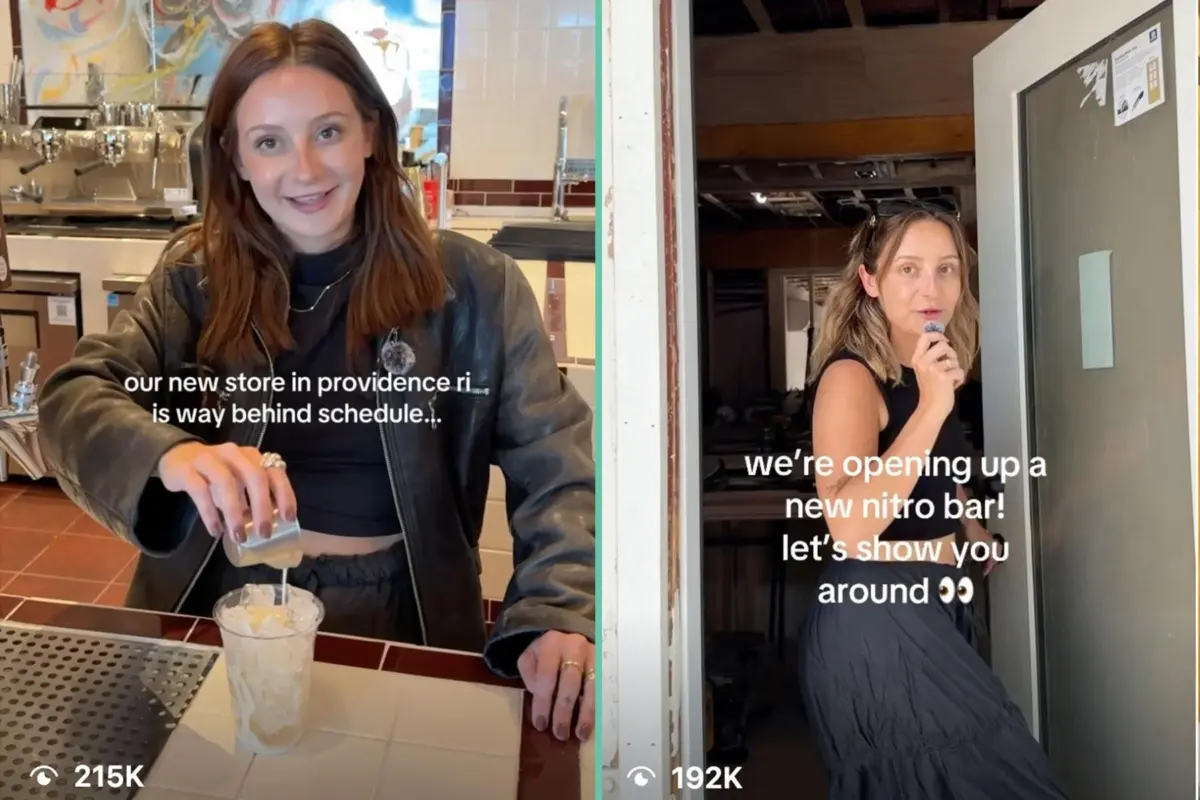
One of the most successful practitioners of this method is Audrey Finocchiaro, the owner of The Nitro Bar in Providence, Rhode Island. Finocchiaro has moved beyond simple progress updates to create a fully realized digital persona for her business. Her content often features her staff participating in goofy, high-energy prompts that humanize the workforce. She has described her philosophy as treating the coffee shop like its "own person"—someone customers would actually want to befriend.
As Finocchiaro expands The Nitro Bar to New York City, she is taking this transparency even further by producing long-form YouTube videos. These episodes document everything from interior design meetings to tours of production spaces, garnering tens of thousands of views. By the time the New York location opens, the "character" of The Nitro Bar will already be a familiar face in a crowded market.
From HGTV to the Food Network: The Crossover Appeal

The fascination with buildouts also taps into a long-standing cultural love for renovation and DIY content. When cookbook author and food personality Jake Cohen announced his new project—transforming a Brooklyn warehouse into a dream event space and test kitchen—he leaned heavily into the aesthetics of home renovation media. Standing in a dilapidated bathroom, Cohen asks his audience for advice on stainless steel versus stone countertops, effectively merging the appeal of HGTV with the culinary authority of the Food Network.
This interactive element turns viewers into stakeholders. When a follower weighs in on a design choice, they become more likely to visit the space in person to see the final result. The business becomes a shared project between the owner and the community.
Perhaps the most extreme example of this trend is Sammy Nussdorf and his high-end NYC grocery store, Meadow Lane. According to an analysis by Grub Street, Nussdorf documented the journey to his store’s opening over 430 days, navigating permitting "snafus" and various setbacks across nearly 700 TikTok posts.
By the time Meadow Lane opened in late 2025, Nussdorf had become a polarizing but undeniably famous figure in the New York food scene. His confessional, often raw videos gave the buildout the cliffhanger appeal of a reality TV series. The strategy worked: Meadow Lane saw lines stretching down the block upon its debut, with interest coming from as far away as the Midwest.
"I think the more disclosure, the more unveiling of the curtain behind a private business, the more interested people are," Nussdorf told the New York Times. His success suggests that in an age of polished corporate branding, the "messy middle" of starting a business is a goldmine for engagement.
The Professionalization of Transparency
While short-form video is the primary driver of this trend, the desire for "insider" information is also manifesting in more traditional and long-form media. In Stockholm, chef Bill Allison has gained international traction by sharing the "nuts-and-bolts" of restaurant life, moving away from the curated perfection of food photography toward the reality of the industry.
In New York, the owners of the newly opened restaurant Legion took a more literary approach. In the months leading up to their debut, they published a series called The Opening Files on Substack. The newsletter provided a granular look at the decision-making process, from selecting dishware to the stresses of securing a physical space. This approach allows for a level of detail that a 60-second TikTok cannot provide, catering to an audience that wants to understand the intellectual and financial labor behind their favorite spots.
Even legacy media outlets are recognizing that the "story of the opening" is often as compelling as the review of the food. Last year, Curbed ran a multi-part series following restaurateur and author Eddie Huang as he attempted to open the new iteration of Baohaus. The series was notable for its candor, with Huang writing openly about deals falling apart, the complexities of rent concessions, and the specific, often brutal finances of New York City real estate.
The Power of Being "Nosy"
At its core, the explosion of buildout content relies on a simple human trait: curiosity. Whether it is a curiosity about how much a commercial refrigerator costs or a "nosy" interest in the interpersonal drama of a kitchen, audiences are increasingly drawn to the "how" and "why" of the hospitality world.
For the business owner, this level of disclosure is not without risk. Opening a business to public scrutiny before it is even functional can invite criticism and unwanted advice. However, the rewards—a loyal, pre-sold audience and a brand that feels human rather than corporate—are becoming too significant to ignore.
As the barriers between the "back of house" and the public continue to dissolve, the most successful new restaurants and bars may not be the ones with the biggest PR budgets, but the ones with the most compelling stories to tell. In the modern hospitality landscape, the secret ingredient isn’t just on the plate; it’s in the process. By giving the public a seat at the table during the most difficult parts of the journey, owners are ensuring that when the doors finally open, the room is already full.