Rachel Karten, author of the social media-focused publication Link in Bio, describes this phenomenon as the "my show is on" mentality. During an industry panel earlier this year, Karten explained that for a modern food business, the owner acts as the host, the employees are the cast, and the physical space serves as the set.
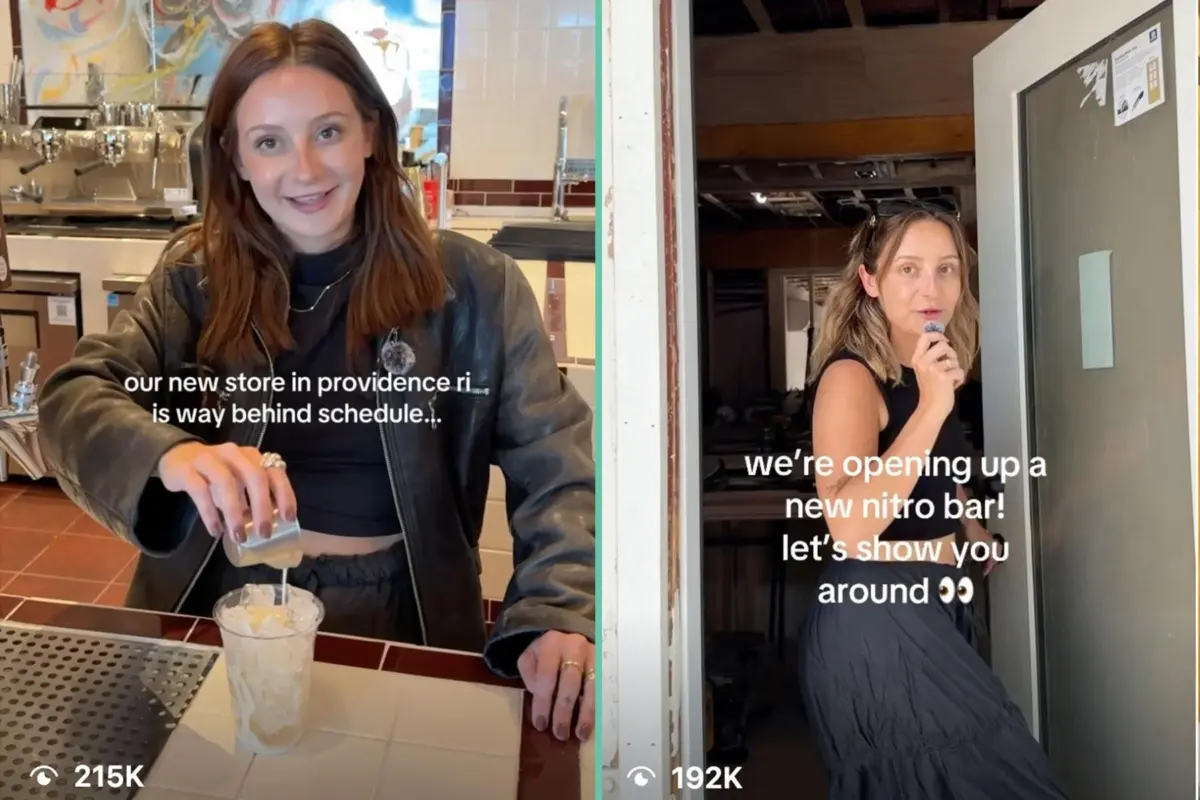
One of the most successful practitioners of this method is Audrey Finocchiaro, the owner of The Nitro Bar in Providence, Rhode Island. Finocchiaro has moved beyond simple progress updates to create a fully realized digital persona for her business. Her content often features her staff participating in goofy, high-energy prompts that humanize the workforce. She has described her philosophy as treating the coffee shop like its "own person"—someone customers would actually want to befriend.
As Finocchiaro expands The Nitro Bar to New York City, she is taking this transparency even further by producing long-form YouTube videos. These episodes document everything from interior design meetings to tours of production spaces, garnering tens of thousands of views. By the time the New York location opens, the "character" of The Nitro Bar will already be a familiar face in a crowded market.
From HGTV to the Food Network: The Crossover Appeal

The fascination with buildouts also taps into a long-standing cultural love for renovation and DIY content. When cookbook author and food personality Jake Cohen announced his new project—transforming a Brooklyn warehouse into a dream event space and test kitchen—he leaned heavily into the aesthetics of home renovation media. Standing in a dilapidated bathroom, Cohen asks his audience for advice on stainless steel versus stone countertops, effectively merging the appeal of HGTV with the culinary authority of the Food Network.
This interactive element turns viewers into stakeholders. When a follower weighs in on a design choice, they become more likely to visit the space in person to see the final result. The business becomes a shared project between the owner and the community.
Perhaps the most extreme example of this trend is Sammy Nussdorf and his high-end NYC grocery store, Meadow Lane. According to an analysis by Grub Street, Nussdorf documented the journey to his store’s opening over 430 days, navigating permitting "snafus" and various setbacks across nearly 700 TikTok posts.
By the time Meadow Lane opened in late 2025, Nussdorf had become a polarizing but undeniably famous figure in the New York food scene. His confessional, often raw videos gave the buildout the cliffhanger appeal of a reality TV series. The strategy worked: Meadow Lane saw lines stretching down the block upon its debut, with interest coming from as far away as the Midwest.
"I think the more disclosure, the more unveiling of the curtain behind a private business, the more interested people are," Nussdorf told the New York Times. His success suggests that in an age of polished corporate branding, the "messy middle" of starting a business is a goldmine for engagement.