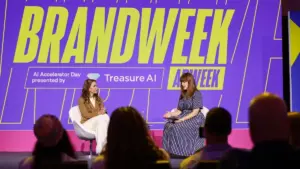
At the most recent Advertising Week, the air was thick with the usual buzzwords. Panels and hallway conversations were dominated by the shifting power of talent agents, the meteoric rise of the creator economy, and the perennial struggle to combat audience fragmentation. Yet, amid these high-tech discussions, an unexpectedly "analog" topic kept surfacing with persistent regularity: out-of-home (OOH) advertising.
For decades, out-of-home advertising—a broad industry term encompassing everything from towering highway billboards and urban wheatpastes to subway leaflets and airport displays—was regarded as a relatively static, if not fusty, corner of the media world. However, in recent years, this traditional channel has undergone a profound transformation, reclaiming a level of relevance that few in the digital age would have predicted. This resurgence is not merely a nostalgic fluke; rather, it is the result of a surprising confluence of technological tailwinds and a fundamental shift in how consumers interact with the world around them.
The primary engine of this growth is the digital evolution of the medium, often referred to as digital out-of-home (DOOH). This hybrid format is increasingly viewed by marketers as a "best of both worlds" solution. It offers the high-impact, physical presence of traditional signage combined with the sophisticated targeting and programmatic flexibility of digital media. Perhaps most importantly in an era of ad-blockers and short attention spans, DOOH is essentially unskippable. Unlike a pre-roll video or a social media post, a digital screen in a high-traffic physical environment cannot be swiped away or hidden behind a premium subscription.
The financial data underscores this renewed enthusiasm. According to the Out of Home Advertising Association of America, U.S. OOH advertising revenue surged by 10.7% year-over-year in the second quarter of 2024, hitting a record-breaking $3.16 billion. The digital segment of the market is moving even faster, posting an 18.5% increase and now accounting for nearly 40% of the total category revenue.
However, the return to physical space represents something deeper than just a new way to buy ad inventory. It reflects a potentially consequential shift in the broader advertising landscape. As the internet becomes increasingly saturated with artificial intelligence, less reliable in its provenance, and harder for human users to navigate without intermediaries, the value of physical, "real-world" space is appreciating.
The Trust Deficit and the Rise of "Slop"
For media companies, the move toward in-person engagement has already become a lifeline. Dedicated industry observers have noted that live events have been one of the few consistent bright spots for publishers facing a volatile digital ad market. Major players ranging from Condé Nast to Semafor, and even industry staples like ADWEEK, have pivoted heavily toward their events businesses. In many instances, these live experiences now generate more than half of a company’s total revenue.
Several factors drive this trend. The shift toward remote and hybrid work has created a more geographically distributed workforce, leaving professionals with fewer organic opportunities for networking. High-quality in-person events fill this void. More broadly, physical media offers a tangible, memorable experience that stands in stark contrast to the ephemeral nature of digital consumption. Scrolling past a display ad on a smartphone is a fleeting, often unconscious action; standing before a massive, well-executed physical installation is an experience.
This distinction is becoming more meaningful as the digital world grapples with the rise of generative AI. The technology has enabled an onslaught of low-quality, automated content—derisively termed "slop"—that is flooding search results and social feeds. As this technology improves, the ability to discern human-made fact from AI-generated fiction is eroding. A 2024 Adobe report found that 87% of U.S. consumers believe generative AI has made it significantly harder to identify what is true online.
This erosion of trust is driving top-tier talent and brands to reconsider where they show up. When Mariano Jeger, the former executive creative director at the renowned agency Droga5, left his post to join Outfront Media this past September, he cited this very dynamic. As digital content becomes easier to manufacture and harder to authenticate, brands are finding a renewed sense of security in physical environments where the context is fixed and the audience is guaranteed to be human.
The Threat of the "Answer Engine"