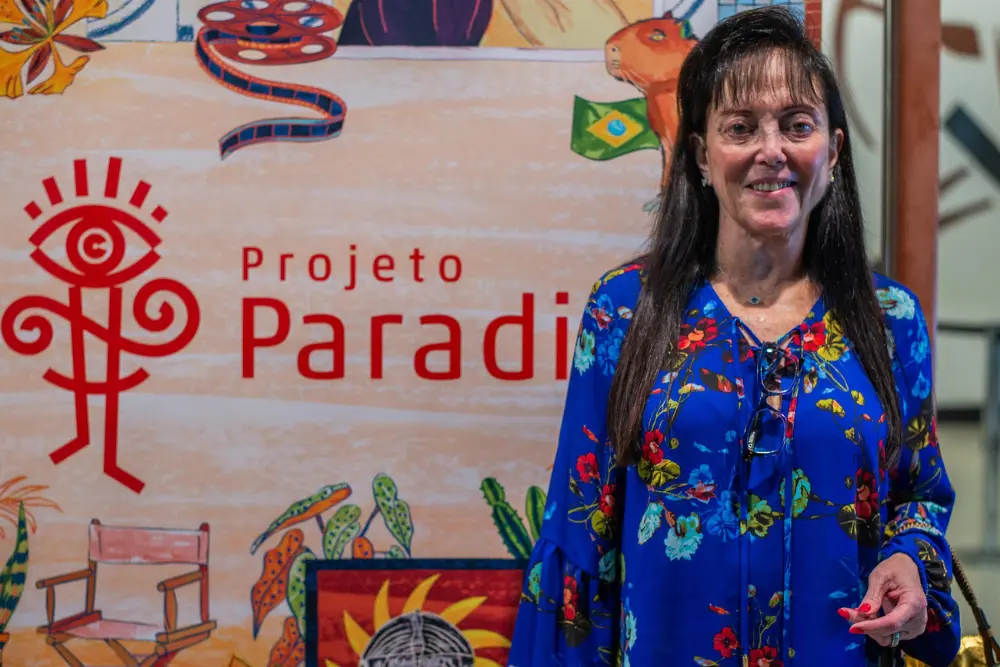
The landscape of Brazilian cinema has undergone a profound transformation over the last decade, driven not only by the resilience of its creators but also by a burgeoning movement of private philanthropy aimed at securing the industry’s future on the global stage. At the heart of this movement is Olga Rabinovich, a philanthropist whose dedicated support for the audiovisual sector has become a cornerstone of contemporary Brazilian film production. In recognition of her significant contributions, Rabinovich will be the first-ever recipient of the Prêmio Encontros (Encounters Award), a new honor debuting at this year’s Encontro de Ideias Audiovisuais, the dedicated industry platform of the São Paulo International Film Festival.
The award serves as a formal acknowledgment of Rabinovich’s enduring commitment to the advancement of Brazilian cinema. Through her work with the Olga Rabinovich Institute and its primary initiative, Projeto Paradiso, she has played a pivotal role in elevating the international profile of Brazilian films and fostering the development of domestic talent. The Prêmio Encontros was specifically designed to spotlight the transformative power of private investment in the cultural sector, highlighting the essential synergy between private funders and the creative professionals who bring audiovisual projects to life.
The inaugural ceremony is scheduled to take place during the festival’s opening gala on October 14. This prestigious event will precede a highly anticipated "in-conversation" session featuring Jeff Deutchman, the president of Neon, the acclaimed U.S. distribution company behind such hits as Parasite and Anatomy of a Fall. The pairing of Rabinovich’s honor with a discussion involving a major figure in international distribution underscores the central mission of her work: bridging the gap between Brazilian creativity and the global marketplace.
Rabinovich’s journey into the world of film philanthropy is as unique as the institution she founded. Born in São Paulo, she spent many years of her life away from the red carpets and production offices of the film industry. Instead, her early career was defined by a commitment to service, as she spent years volunteering in hospitals and working closely with terminally ill patients. This background in human-centric care and empathy informed her later philosophical approach to the arts. By 2018, she sought a way to channel her philanthropic efforts into a medium that could achieve a different kind of healing and connection. She founded the Olga Rabinovich Institute with the core conviction that "stories can change the world."
This belief led directly to the launch of Projeto Paradiso. The initiative was born out of a strategic decision to invest in the people behind the camera—the writers, directors, and producers—rather than just the final products. Rabinovich’s vision was to provide these creators with the resources they needed to share their unique perspectives with audiences not just in Brazil, but across the globe. She has frequently described cinema as a "magical art form," noting in past interviews that the experience of entering a darkened theater to be moved, disturbed, or elated is a uniquely transformative and communal human experience.
The timing of the institute’s founding was particularly significant for the Brazilian film community. Renata de Almeida, the director of the São Paulo International Film Festival, recalls the emergence of Rabinovich’s vision during a period of deep uncertainty for the country’s cultural sectors. According to Almeida, the name Olga Rabinovich first came to her attention in early 2018, when Josephine Bourgois, who would become the executive director of Projeto Paradiso, approached the festival about a private sector investor looking to establish a dedicated cinema institute.