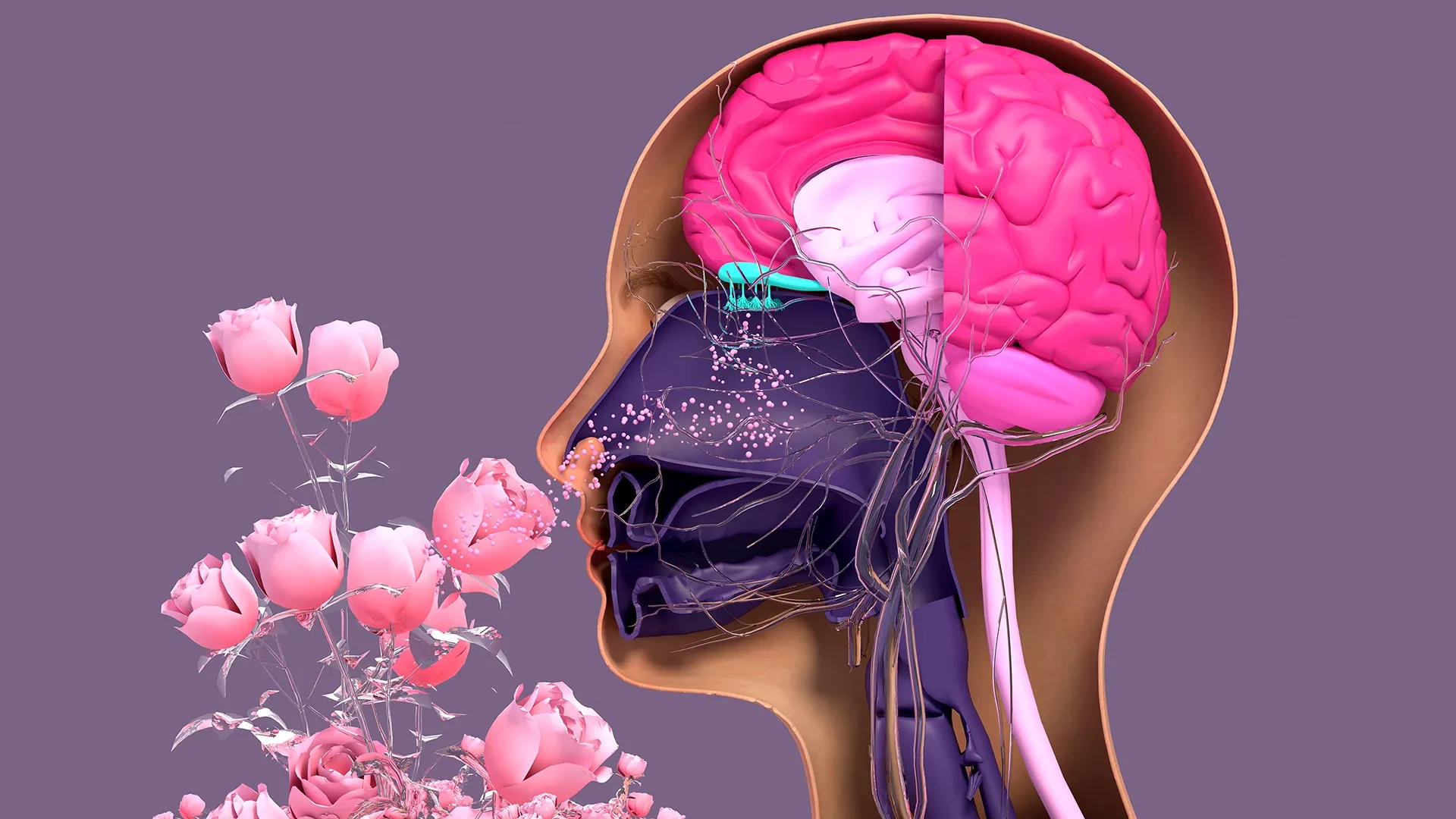
In the complex landscape of the human sensory system, the sense of smell often occupies a paradoxical position. It is frequently taken for granted until it vanishes, a phenomenon that became a global concern during the COVID-19 pandemic. Unlike the delicate neurons of the brain and spinal cord, which possess a notoriously limited capacity for repair, the sensory neurons located within the nasal cavity are among the most resilient and regenerative tissues in the mammalian body. Throughout a person’s life, these neurons are constantly dying and being replaced, a necessary adaptation for cells that are perpetually exposed to the harsh outside environment, including pollutants, allergens, and pathogens.
However, this regenerative engine is not invincible. Factors ranging from viral infections and toxic exposure to the inevitable process of aging can slow or halt the production of new neurons, leading to anosmia—the total loss of smell—or hyposmia, its partial loss. To better understand how this regenerative process functions and why it sometimes fails, researchers at Tufts University School of Medicine and the Graduate School of Biomedical Sciences (GSBS) have developed a sophisticated new three-dimensional model of olfactory tissue.
Their findings, published recently in the journal Cell Reports Methods, have already begun to shift the scientific understanding of nasal biology. Most notably, the study reveals that a specific type of stem cell, long dismissed by many in the field as largely dormant, actually plays a pivotal role in maintaining the health and renewal of our smell-sensing apparatus.
A New Perspective on "Dormant" Stem Cells
For years, the scientific consensus regarding the olfactory epithelium—the specialized tissue inside the nose responsible for detecting odors—centered on two primary types of stem cells: horizontal basal cells (HBCs) and globose basal cells (GBCs). Traditionally, GBCs were viewed as the primary workhorses of the system, the active "progenitor" cells that frequently divide to replace aging or damaged neurons. In contrast, HBCs were often categorized as a reserve population—dormant cells that remained quiet unless a catastrophic injury occurred.
The Tufts research team, led by senior author Brian Lin, a research assistant professor in the Department of Developmental, Molecular and Chemical Biology, has now challenged this "dormant" label. By utilizing their newly devised 3D organoid model, the team discovered that HBCs are far more active and essential than previously realized.
"Our research suggests that these two stem cells may be interdependent," explains Lin. "One type that we thought was largely dormant—HBCs—may actually play a crucial role in supporting the production of new neurons and the repair of damaged tissue."
Through the use of the 3D mouse-tissue model, the researchers identified a specific subpopulation of HBCs characterized by the production of a protein known as KRT5. They observed that these KRT5-producing cells do not just sit idly by; instead, they appear to be vital architects of the regenerative process. When the team experimentally depleted these specific HBCs from the organoid cultures, the results were stark: the generation of new sensory neurons was significantly impaired. This suggests that the HBCs provide a necessary support structure or biochemical signaling environment that allows the GBCs to function effectively. Without the "dormant" cells, the "active" cells cannot complete their mission.
The Power of the 3D Organoid Model
The breakthrough was made possible by the development of an "organoid"—a simplified, miniature version of an organ grown in a laboratory setting that mimics the three-dimensional architecture of actual biological tissue. While traditional two-dimensional cell cultures (cells grown in a flat petri dish) have been the backbone of biological research for decades, they often fail to capture the complex interactions that occur in a living body.