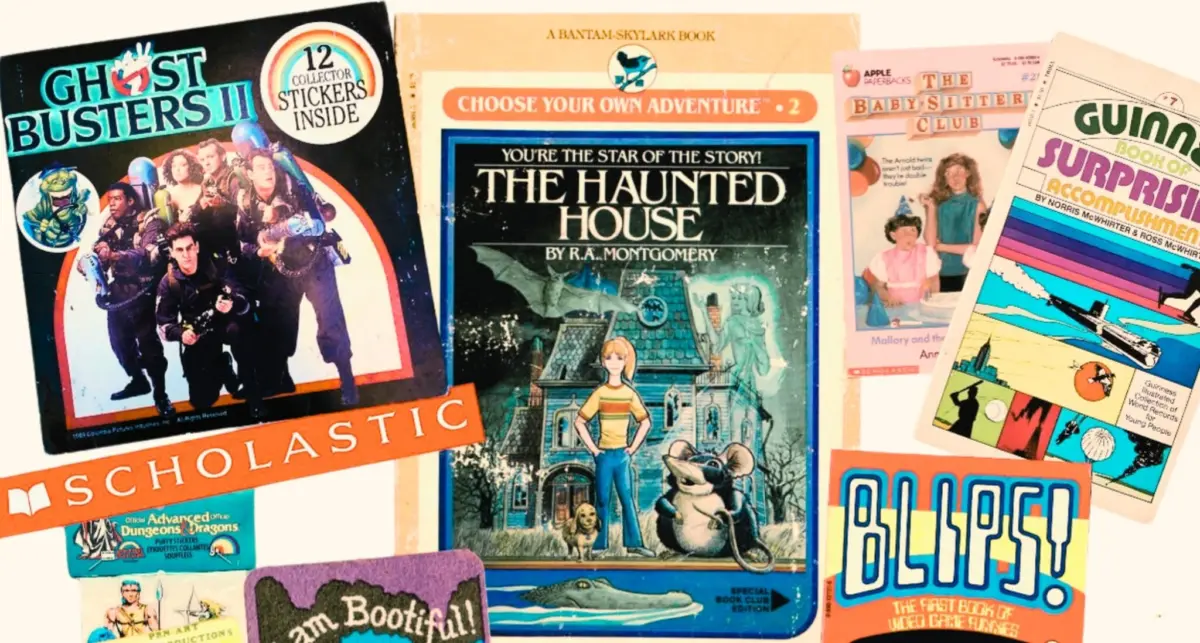
For generations of North American students, the arrival of the Scholastic Book Fair was a singular event, a vibrant, circus-like disruption of the quiet monotony of the school library. It was characterized by the crinkle of a multi-paged, glossy catalog and the frantic filling out of order forms. To those who grew up in the latter half of the 20th century, the fair represented a rare moment of autonomy—a chance to browse shelves and select a world to inhabit, away from the watchful eyes of teachers and the prescribed curriculum of the classroom. However, as the fair continues its decades-long run, a growing chorus of critics and parents is beginning to question whether this cherished cultural touchstone has traded its literary soul for the hollow rewards of corporate cross-promotion.
The conversation was recently reignited by critic Michelle Cyca, who, in a poignant and evocative essay for The Walrus, explored the tension between her own nostalgic memories of the fair and the reality her daughter now faces. Cyca, a Millennial who remembers the fair as a gateway to box sets of Animorphs and the thrill of wholesome consumerism, found herself disheartened when her young daughter brought home a contemporary Scholastic catalog. The sorrow that replaced her nostalgia stemmed from a stark observation: today’s offerings appear less like a curated selection of literature and more like an extension of global toy and television franchises.
Cyca noted with distress that the current catalogs are saturated with titles tied to brands like Lego, Pokémon, and Paw Patrol. The concern is not merely the presence of these brands, but the way they are marketed. In Cyca’s view, these books seem to sell themselves not on the strength of their prose or the depth of their imaginative storytelling, but rather on their proximity to more "stimulating" forms of entertainment. This shift raises a fundamental question about the role of the book fair in an era defined by a national reading crisis: Is the traditional fair "dead," or are we simply viewing the past through rose-colored glasses?
To understand the current state of the Scholastic Book Fair, one must first look at its historical trajectory. Scholastic’s foray into schools began long before the first metal carts rolled into libraries. In 1948, the company launched its first teen-targeted book clubs. The "Pocket Book" program was a revolutionary concept for its time, allowing students to access affordable literature by ordering directly from magazines stationed in their classrooms. It democratized book ownership for a generation of students, making literature accessible to those who might not live near a traditional bookstore.
The physical book fairs as we know them today did not debut until 1982. In their early years, these fairs were instrumental in the success of Scholastic’s own internal titles, such as the Clifford the Big Dog series. As the decades progressed, the fair became a kingmaker for Young Adult properties. It was the engine behind the massive growth of R.L. Stine’s Goosebumps series in the 1990s and, later, the explosive popularity of The Hunger Games. The fair was a place where a series could transition from a library book to a cultural phenomenon.
However, the idea that the fair was once a "pure" literary space is a claim that requires closer scrutiny. Critics of the nostalgia-driven narrative point out that spin-off books and merchandise are far from a new development. As far back as 2002, the Arrow Top 10 bestseller list for Scholastic included a Pokémon guide, proving that franchise-driven content has been a staple of the fair for over twenty years. Even the beloved Animorphs series, cited by many Millennials as a hallmark of "real" reading, was a piece of intellectual property that eventually spawned its own television drama. This suggests that the distinction between the "quality" books of the past and the "merchandise" books of the present may be more aesthetic than substantive.