In the vast, rugged landscape of Alaska politics, few insults carry as much weight or sting as being labeled a puppet of the "Lower 48." It is a shorthand pejorative, a coded accusation suggesting that a candidate is not a true voice for the Last Frontier, but rather a vessel for the interests of powerful, distant forces in the contiguous United States. In a state that prides itself on fierce independence and a unique way of life, the suggestion that a politician is taking "marching orders" from Washington D.C., New York, or California is often enough to derail a campaign.
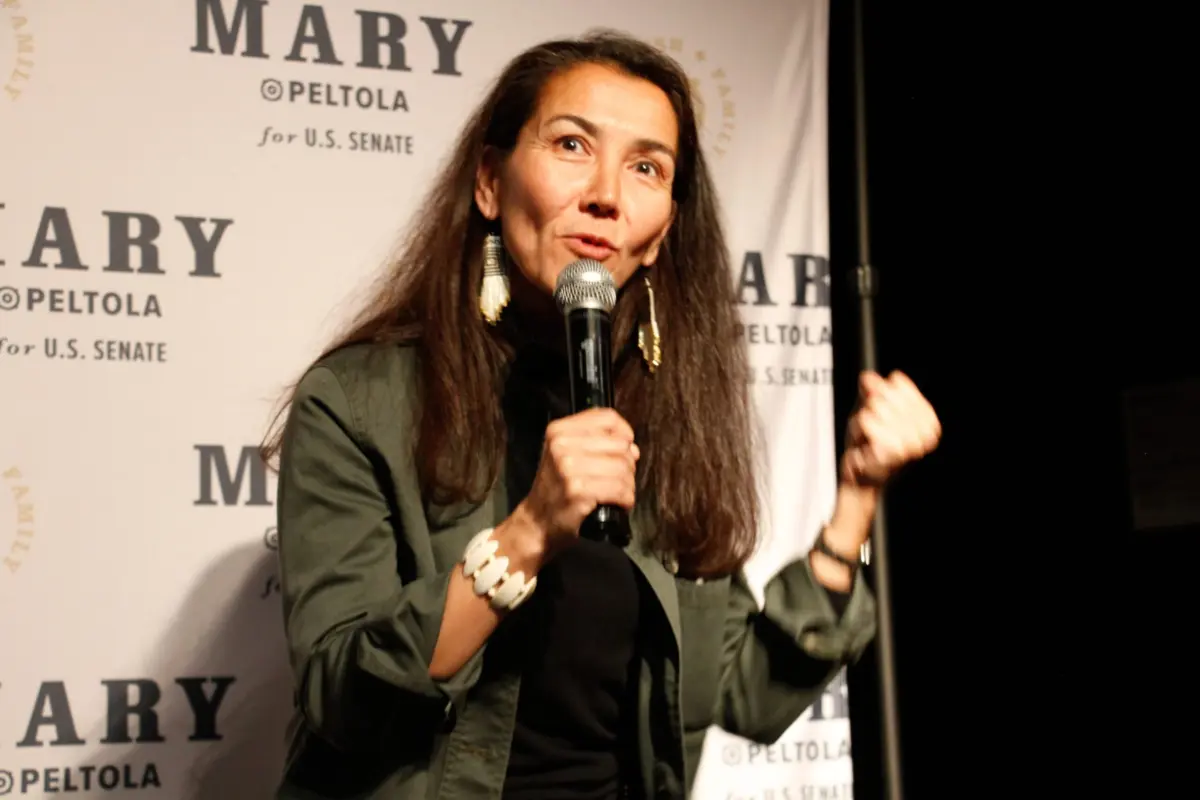
This year, that rhetoric has moved to the center of the race for Alaska’s U.S. Senate seat. As one of a handful of contests expected to determine which party controls the chamber come November, the stakes could not be higher. The battle between incumbent Republican Senator Dan Sullivan and his challenger, former Democratic Congresswoman Mary Peltola, has become a proxy war over who can most convincingly claim the mantle of the "authentic" Alaskan.
Senator Sullivan’s campaign has leaned heavily into this narrative, utilizing it as a primary attack line. By lumping Peltola in with what he calls "Lower 48 liberals," Sullivan seeks to frame the election as a choice between local sovereignty and outside interference. His criticisms are frequently leveled at Peltola’s perceived alignment with national Democrats who have historically opposed the expansion of oil and gas drilling—an industry that has served as the lifeblood of Alaska’s economy for over half a century.
However, Peltola, the first Alaska Native elected to Congress, has not ceded this ground. She has countered by highlighting her own record of defiance against her party’s national leadership. She frequently reminds voters that she "took on" President Joe Biden to secure the 2023 approval of the Willow oil project, a massive $8 billion undertaking by ConocoPhillips that environmentalists in the Lower 48 fought tooth and nail to stop. Her message is one of pragmatic independence: she claims she will "take on anyone," including her own party, if they fail to understand the specific needs of the Alaskan people.
Abundance of oil and other resources has created friction with federal government
The potency of the "Lower 48" label is rooted in Alaska’s complex and often litigious relationship with the federal government. Despite having been a state for less than 70 years, Alaska’s history is defined by its struggle for control over its own destiny. The federal government owns approximately 60% of the land in the state, a reality that creates a constant state of friction. For many Alaskans, the federal government is not just a provider of services, but a landlord whose rules often feel arbitrary and disconnected from the realities of life in the subarctic.
This tension is most visible in the management of natural resources. Under Democratic administrations, the federal government has frequently sought to restrict logging, mining, and oil exploration in the name of conservation and climate change mitigation. For a state that relies on resource extraction to fund its schools, roads, and public services, these restrictions are often viewed as an existential threat.
The policy shifts between administrations have been dramatic, creating a sense of whiplash for Alaskans. During the Obama and Biden eras, leasing was banned on nearly half of the 23-million-acre National Petroleum Reserve-Alaska (NPR-A). This area is a critical habitat for caribou and polar bears and a nesting ground for millions of migratory birds, making it a focal point for national environmental groups. Conversely, the administration of Donald Trump worked to roll back these protections, pushing for expanded development not only in the NPR-A but also within the Arctic National Wildlife Refuge (ANWR), a move that was cheered by many state leaders but decried by activists in the Lower 48.