‘Lower 48’ jabs fill social media and airwaves, but do voters care?
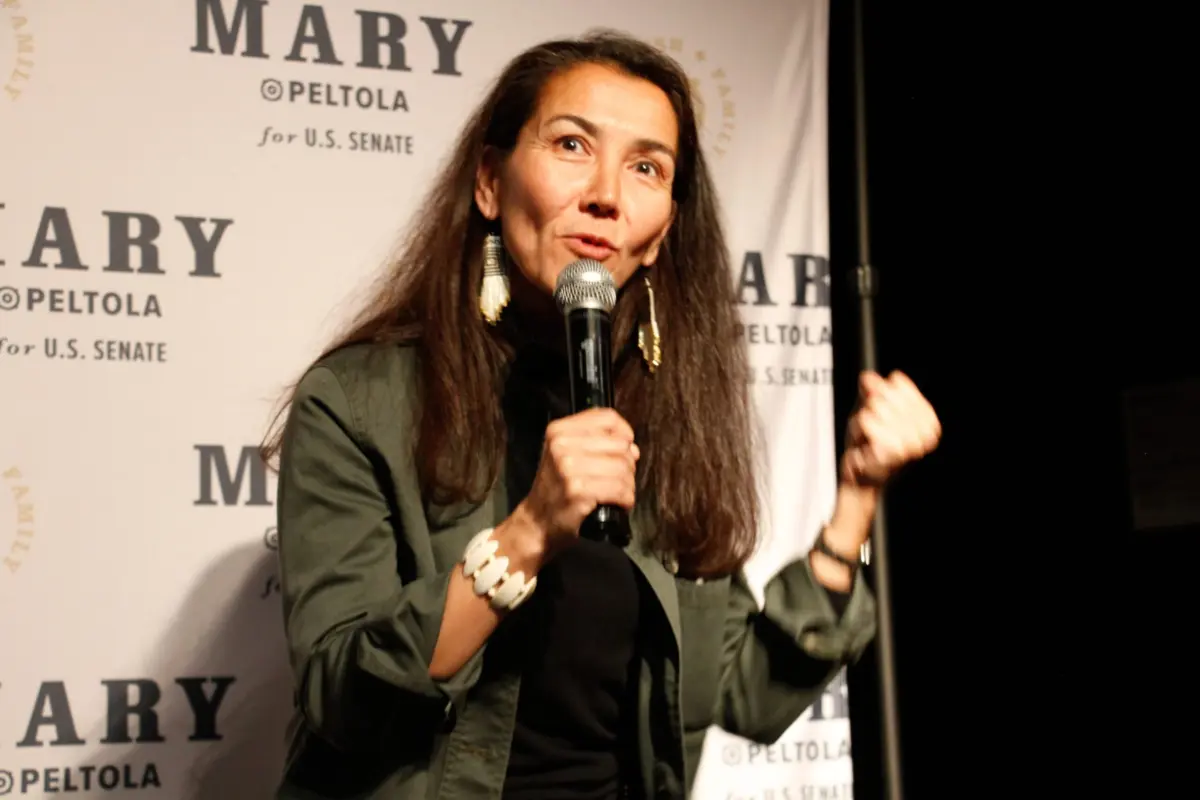
The biographical contrast between the two candidates provides plenty of ammunition for this battle of identities. Peltola, who is Yup’ik, is part of the 43% of Alaskans born in the state. Her campaign branding is steeped in local imagery—fishing photos, rugged landscapes, and the slogan "Fish, Family, Freedom." This messaging is designed to tap into the shared values of self-reliance and connection to the land that define the Alaskan mystique.
Senator Sullivan, by contrast, grew up in Ohio and moved to Alaska in the late 1990s in his early 30s. While he is a relative newcomer by Alaskan standards, he has spent decades in public service within the state, serving as Attorney General and Commissioner of the Department of Natural Resources. He is also a retired Marine and served in the George W. Bush administration. His supporters argue that his commitment to the state is proven by his years of advocacy for Alaskan interests in the nation’s capital.
Sullivan’s spokesperson, Nate Adams, defines being an Alaskan as "loving this state" and "making sure Alaskans, not Lower 48 liberals, decide our future." This sentiment is echoed in aggressive advertising campaigns from third-party groups like the SLF PAC, which supports a Republican Senate majority. One of their ads attempts to undermine Peltola’s authenticity, claiming that national Democrats "dress her up, throw her out on a stream somewhere, [and] make her look like an Alaskan," while she "toes a different line in Washington, D.C."
Peltola’s campaign has dismissed these attacks as "mudslinging" and has fired back by linking Sullivan to "Lower 48 special interest donors." They argue that it is Sullivan, with his ties to the D.C. establishment and national Republican apparatus, who is truly out of touch with the grassroots needs of the state.
Despite the intensity of the rhetoric, some Alaskans are beginning to feel a sense of fatigue. Andrew Halcro, a former state lawmaker and current political podcast host, says the airwaves and social media feeds are inundated with ads designed to stoke anger. While Alaskans take pride in the "persona" that their state is a tough, independent place to live, Halcro wonders if the "Lower 48" attacks are losing their effectiveness.
"It’s all of this stuff just to make us angry at a time where we really genuinely, genuinely just need stability," Halcro said. He suggests that after years of political volatility and economic uncertainty, voters may be looking for something more substantial than a debate over who is the most "authentic" Alaskan. "We just need to elect somebody who’s not going to break anything," he added.
As the election nears, the candidates will continue to walk the fine line between their national party affiliations and their local identities. In a state where the "Lower 48" is often viewed as a world away, the winner will likely be the one who best convinces voters that their heart—and their vote—remains firmly planted in Alaskan soil.