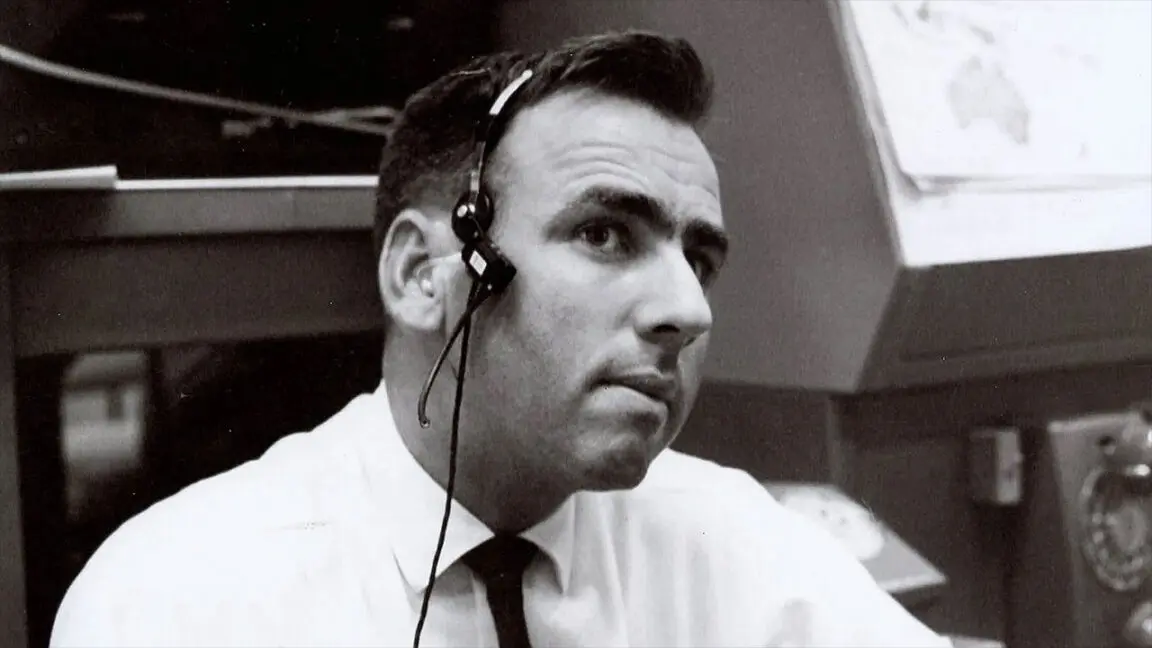
Milton “Milt” Windler, a key figure in the golden age of American human spaceflight whose leadership in NASA’s Mission Control helped safely guide the endangered Apollo 13 crew back to Earth, has died. Over a career that spanned the dawn of the space race through the assembly of the International Space Station, Windler played a pivotal role in establishing the operational discipline and flexible planning protocols that define modern space operations.
As one of NASA’s elite flight directors during the Apollo program, Windler shared the nation’s highest civilian honor—the Presidential Medal of Freedom—for his decisive role during the 1970 Apollo 13 emergency. Beyond the dramatic rescue of Apollo 13, Windler was instrumental in transforming how mission controllers operated during the Skylab program, helped integrate Canadian robotics into the Space Shuttle fleet, and later served as a consultant ensuring the complex systems of the International Space Station were ready for orbit.
His passing marks the loss of another pioneer from the historic cadre of mission controllers who built human spaceflight operations from the ground up at NASA’s Manned Spacecraft Center in Houston, Texas.
The Crisis of Apollo 13 and the Medal of Freedom
Windler’s most public legacy came in April 1970 during the flight of Apollo 13. Intended to be NASA’s third crewed lunar landing mission, Apollo 13 turned into a fight for survival when an oxygen tank exploded inside the Service Module nearly 200,000 miles from Earth. The explosion crippled the primary spacecraft command module, forcing astronauts Jim Lovell, Jack Swigert, and Fred Haise to convert the Lunar Module into an orbital lifeboat.
To bring the three astronauts home, NASA relied on round-the-clock coordination among four flight directors who managed alternating teams of controllers in Mission Control: Gene Kranz, Glynn Lunney, Gerry Griffin, and Milton Windler, who led the Maroon Team. Facing unprecedented technical hurdles—ranging from strict power conservation and carbon dioxide filtration to trajectory recalculations that required firing engines never intended for deep-space maneuvers—the flight directors oversaw a grueling multi-day effort that safely returned the crew to Earth on April 17, 1970.
The operational feat garnered international acclaim. Just one day after the crew safely splashed down in the Pacific Ocean, President Richard Nixon traveled to Hawaii and Texas to honor those responsible. On April 18, 1970, President Nixon presented the Presidential Medal of Freedom to the Apollo 13 mission operations team, represented by Windler, Lunney, Kranz, and Griffin. The award recognized the team’s exceptional coolness under pressure, operational excellence, and unwavering dedication to preserving human life in space.
In addition to the Presidential Medal of Freedom, Windler was honored with NASA’s Exceptional Service Medal, recognizing his broader contributions to the Apollo program and the advancement of mission management protocols.
Innovating Space Science aboard Skylab
Following the conclusion of the Apollo lunar landing missions, Windler transitioned into leadership roles for Skylab, America’s first orbital space station. Launched in 1973, Skylab presented a completely different set of operational challenges than the brief, highly scripted missions to the Moon. Instead of following a rigid, predetermined flight plan, Skylab crew members spent months in orbit conducting extensive scientific research, Earth observations, and solar physics experiments.