Working as a private contractor and consultant, Windler advised on the complex operational frameworks needed to manage a permanently crewed, multi-module space station built by an international partnership. As physical hardware for the ISS was produced across various manufacturing facilities, Windler focused on verification procedures, helping ensure that individual modules, electrical architectures, and environmental systems were thoroughly tested and operationally ready before being launched and mated together in low Earth orbit.
‘Pay more attention’
Milton Windler was born on Jan. 10, 1932, in Hampton, Virginia. Growing up near the coast, he developed an early interest in aviation and engineering. He attended Virginia Tech (Virginia Polytechnic Institute and State University), earning his degree in aeronautical engineering in 1954.
While pursuing his degree at Virginia Tech, Windler joined the U.S. Air Force’s Reserve Officers’ Training Corps (ROTC). After graduation, he began working for the National Advisory Committee for Aeronautics (NACA), the federal agency dedicated to aeronautical research that served as the predecessor to NASA. He then spent four years fulfilling his active-duty service commitment in the U.S. Air Force before returning to civil service at NACA’s Langley Research Center in Hampton, Virginia.
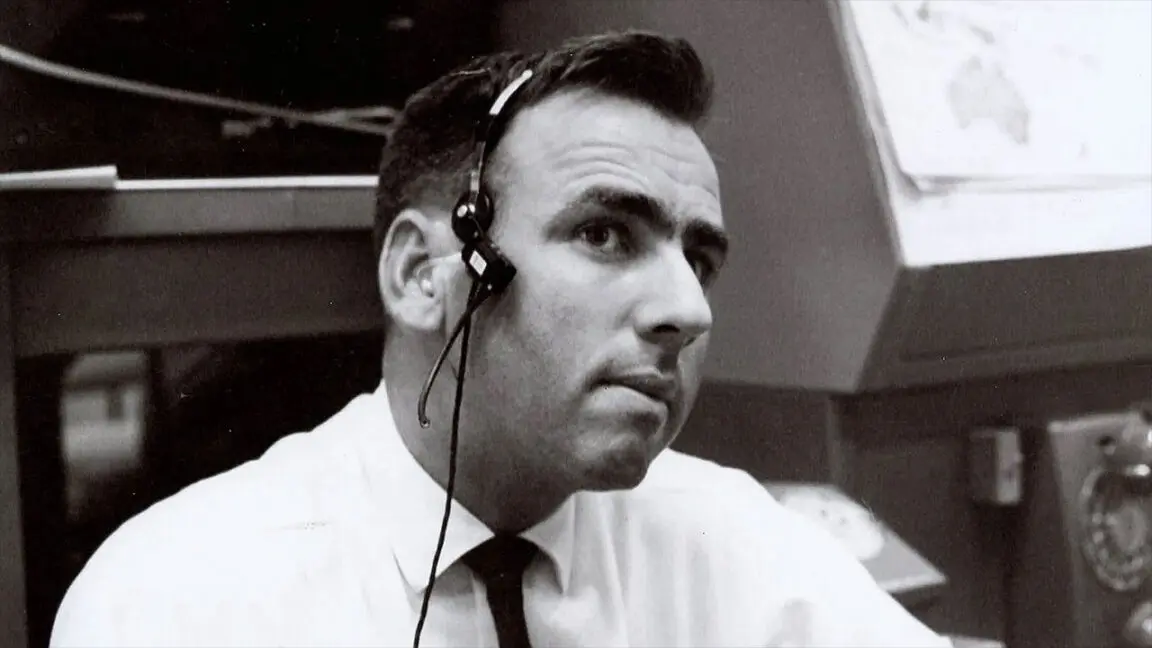
Windler was present at Langley during a historic turning point in aviation history: the formal transition of NACA into the National Aeronautics and Space Administration (NASA) in October 1958, spurred by the dawn of the Space Age. As NASA established its human spaceflight effort, Windler relocated to Houston, Texas, taking up residence and duty just as the Manned Spacecraft Center—later renamed the Lyndon B. Johnson Space Center—was being established. There, he joined the initial cohort of flight controllers who would define the mechanics of controlling human missions to space.
Outside of his aerospace career, Milton was a devoted family man. He and his wife, Betty (née Selby), raised three children and were later blessed with eight grandchildren. A memorial service honoring Windler’s life and accomplishments will take place in the coming weeks at the family’s longtime former church in Friendswood, Texas, located near the Johnson Space Center where he spent so many years of his professional life.
Looking back on his remarkable career in late-life interviews, Windler offered a poignant reflection on the relentless, intense pace of early spaceflight operations. During the height of the space race, mission controllers worked grueling hours under immense national pressure, moving rapidly from one historic mission to the next with little time to pause.
“If I did it again, I’d probably try to do something more about trying to pay more attention,” Windler admitted in a quiet reflection on his storied career. “Apollo was — well, all of [the missions] were … bang-bang-bang. You couldn’t enjoy, really, in a way you couldn’t savor it, like maybe it would have been better to have done.”