The friction extends beyond oil. Disputes over road building and logging in the Tongass National Forest—the largest temperate rainforest in the world—have persisted for decades, dating back to the Clinton administration’s "Roadless Rule." For Southeast Alaskans, these debates are about more than trees; they are about the ability to build infrastructure and maintain a viable timber industry in isolated communities.
Adding to the frustration is a long-standing grievance over royalty revenues. Many Alaska lawmakers argue that the federal government has failed to uphold its end of the statehood compact, which they believe promised the state a larger share of the revenue generated from minerals and oil on federal lands. While oil production is currently a fraction of its 1980s peak, there is a renewed sense of optimism among political leaders who point to the strong interest from major energy companies in recent lease sales as a sign of a potential turnaround.
The economic stakes are particularly high for remote communities. In places like the North Slope, where the "Iran war" and global market volatility have caused spikes in fuel prices, the cost of living can be astronomical. In these regions, fuel must often be flown in or delivered by barge before the winter freeze, making local energy development a matter of survival rather than just politics. Darryl Hugo, a resident of the small community of Anaktuvuk Pass, says his support for Sullivan is rooted in these practicalities. He notes that the very infrastructure of his town—the health clinic, the school, and the police department—is funded by the industry that national liberals often seek to curtail. "My region’s economy depends on oil," Hugo said, echoing a sentiment shared by many in the state’s interior.
Candidates are seen as trying to stake claim as ‘the real spokesperson for the real Alaska’
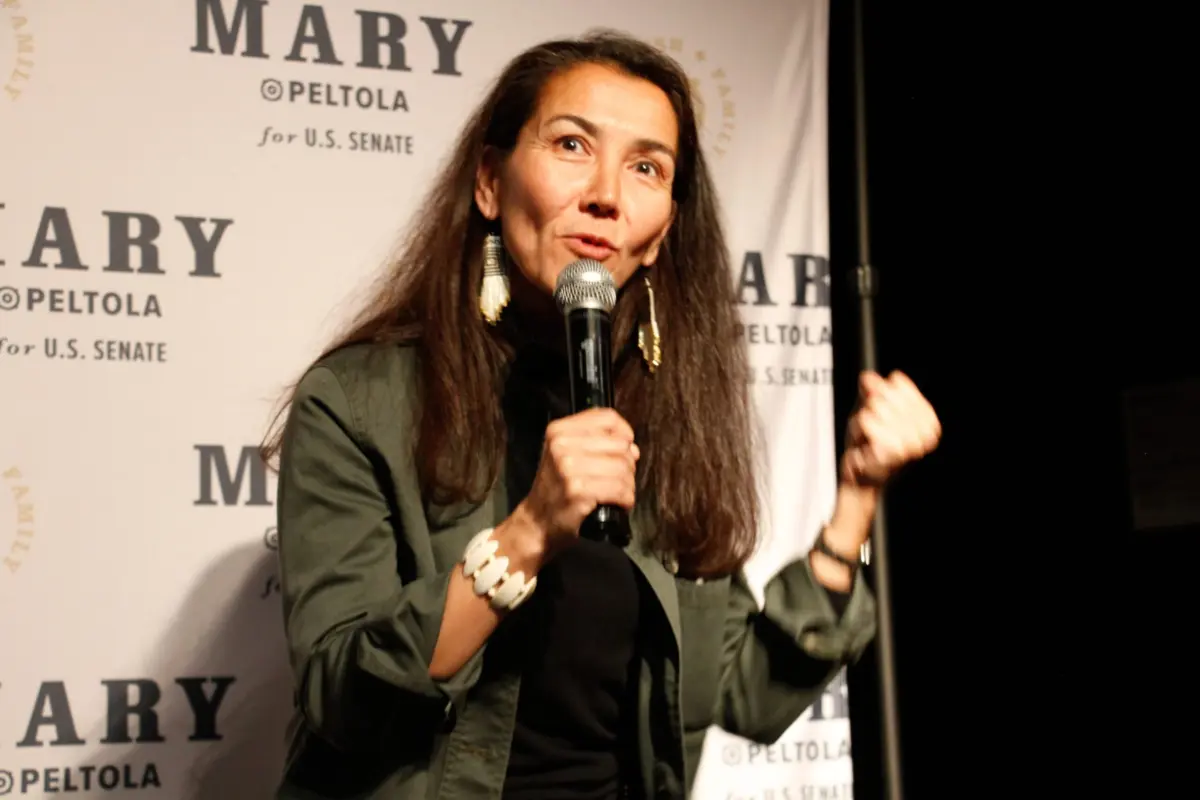
As the campaign progresses, observers say the rhetoric has devolved into a contest of authenticity. Robert Sewell, an independent voter from the Juneau area, views the "Lower 48" taunts as a strategic attempt by each candidate to establish themselves as the "real spokesperson for the real Alaska." He notes that Peltola’s efforts to distance herself from the national Democratic platform are a necessary survival tactic in a state where the party brand is often viewed with skepticism.
Sewell likens the back-and-forth to a schoolyard jeer, where each side tries to paint the other as the "true" outsider. During her unsuccessful 2024 congressional reelection bid, Peltola notably refused to endorse Vice President Kamala Harris and stated she would not vote for Donald Trump, despite Trump’s historical popularity in the state. When Harris’s campaign recently sent out a fundraising appeal mentioning Peltola, her campaign was quick to clarify that she "isn’t seeking endorsements from anyone from the Lower 48."
Peltola’s strategy involves a delicate balancing act. She has released videos highlighting her support for the Willow project and expressing a willingness to work with Donald Trump on future energy initiatives. "I took on Joe Biden to secure the largest development project in decades," she says in one social media advertisement. "And I’ll work with Donald Trump on more."
This cross-party appeal is intended to resonate with Alaska’s large population of independent voters. Sewell, a supporter of Peltola, says he understands her position. He believes her stance on oil is a reflection of the state’s economic necessity rather than a personal affinity for Trump’s broader agenda. For Peltola, the goal is to prove that her primary allegiance is to the Kuskokwim River, where she grew up fishing, rather than the halls of power in Washington.