In the vast, rugged landscape of Alaska politics, few insults carry as much weight or sting as being labeled a puppet of the "Lower 48." It is a shorthand pejorative, a coded accusation suggesting that a candidate is not a true voice for the Last Frontier, but rather a vessel for the interests of powerful, distant forces in the contiguous United States. In a state that prides itself on fierce independence and a unique way of life, the suggestion that a politician is taking "marching orders" from Washington D.C., New York, or California is often enough to derail a campaign.
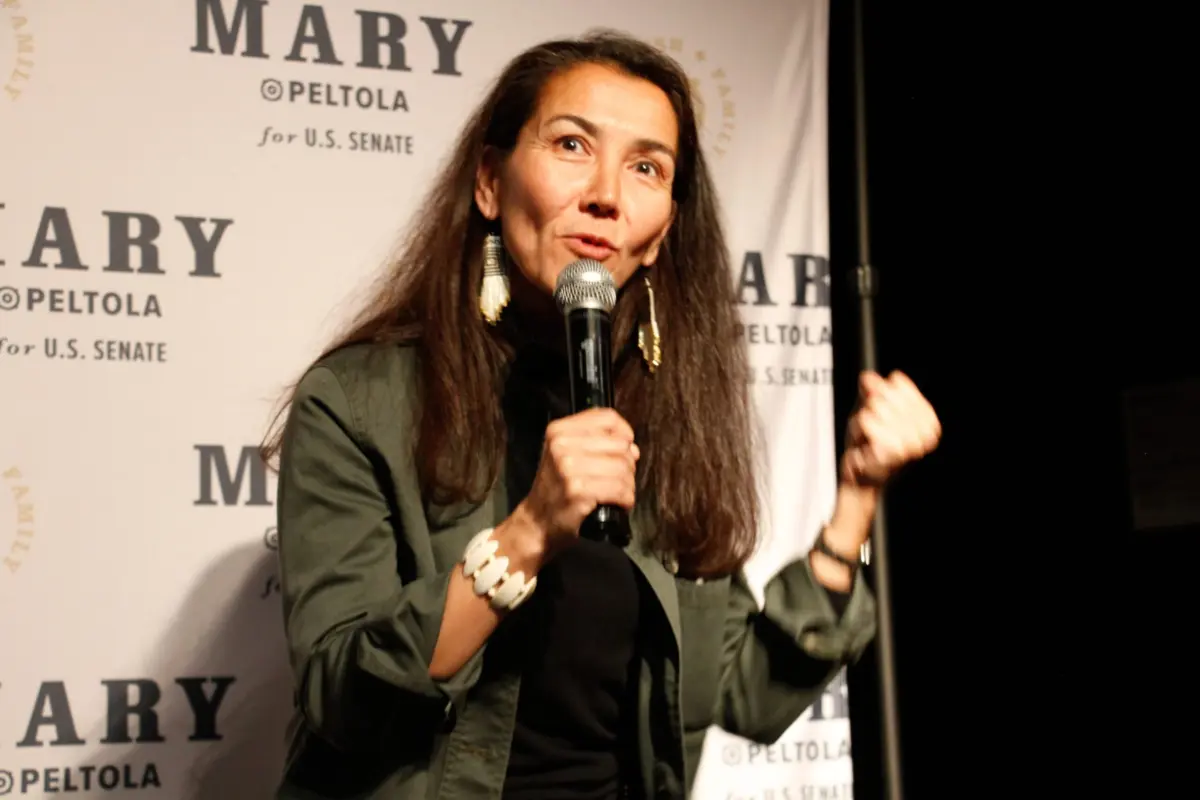
This year, that rhetoric has moved to the center of the race for Alaska’s U.S. Senate seat. As one of a handful of contests expected to determine which party controls the chamber come November, the stakes could not be higher. The battle between incumbent Republican Senator Dan Sullivan and his challenger, former Democratic Congresswoman Mary Peltola, has become a proxy war over who can most convincingly claim the mantle of the "authentic" Alaskan.
Senator Sullivan’s campaign has leaned heavily into this narrative, utilizing it as a primary attack line. By lumping Peltola in with what he calls "Lower 48 liberals," Sullivan seeks to frame the election as a choice between local sovereignty and outside interference. His criticisms are frequently leveled at Peltola’s perceived alignment with national Democrats who have historically opposed the expansion of oil and gas drilling—an industry that has served as the lifeblood of Alaska’s economy for over half a century.
However, Peltola, the first Alaska Native elected to Congress, has not ceded this ground. She has countered by highlighting her own record of defiance against her party’s national leadership. She frequently reminds voters that she "took on" President Joe Biden to secure the 2023 approval of the Willow oil project, a massive $8 billion undertaking by ConocoPhillips that environmentalists in the Lower 48 fought tooth and nail to stop. Her message is one of pragmatic independence: she claims she will "take on anyone," including her own party, if they fail to understand the specific needs of the Alaskan people.
Abundance of oil and other resources has created friction with federal government
The potency of the "Lower 48" label is rooted in Alaska’s complex and often litigious relationship with the federal government. Despite having been a state for less than 70 years, Alaska’s history is defined by its struggle for control over its own destiny. The federal government owns approximately 60% of the land in the state, a reality that creates a constant state of friction. For many Alaskans, the federal government is not just a provider of services, but a landlord whose rules often feel arbitrary and disconnected from the realities of life in the subarctic.
This tension is most visible in the management of natural resources. Under Democratic administrations, the federal government has frequently sought to restrict logging, mining, and oil exploration in the name of conservation and climate change mitigation. For a state that relies on resource extraction to fund its schools, roads, and public services, these restrictions are often viewed as an existential threat.
The policy shifts between administrations have been dramatic, creating a sense of whiplash for Alaskans. During the Obama and Biden eras, leasing was banned on nearly half of the 23-million-acre National Petroleum Reserve-Alaska (NPR-A). This area is a critical habitat for caribou and polar bears and a nesting ground for millions of migratory birds, making it a focal point for national environmental groups. Conversely, the administration of Donald Trump worked to roll back these protections, pushing for expanded development not only in the NPR-A but also within the Arctic National Wildlife Refuge (ANWR), a move that was cheered by many state leaders but decried by activists in the Lower 48.
The friction extends beyond oil. Disputes over road building and logging in the Tongass National Forest—the largest temperate rainforest in the world—have persisted for decades, dating back to the Clinton administration’s "Roadless Rule." For Southeast Alaskans, these debates are about more than trees; they are about the ability to build infrastructure and maintain a viable timber industry in isolated communities.
Adding to the frustration is a long-standing grievance over royalty revenues. Many Alaska lawmakers argue that the federal government has failed to uphold its end of the statehood compact, which they believe promised the state a larger share of the revenue generated from minerals and oil on federal lands. While oil production is currently a fraction of its 1980s peak, there is a renewed sense of optimism among political leaders who point to the strong interest from major energy companies in recent lease sales as a sign of a potential turnaround.
The economic stakes are particularly high for remote communities. In places like the North Slope, where the "Iran war" and global market volatility have caused spikes in fuel prices, the cost of living can be astronomical. In these regions, fuel must often be flown in or delivered by barge before the winter freeze, making local energy development a matter of survival rather than just politics. Darryl Hugo, a resident of the small community of Anaktuvuk Pass, says his support for Sullivan is rooted in these practicalities. He notes that the very infrastructure of his town—the health clinic, the school, and the police department—is funded by the industry that national liberals often seek to curtail. "My region’s economy depends on oil," Hugo said, echoing a sentiment shared by many in the state’s interior.
Candidates are seen as trying to stake claim as ‘the real spokesperson for the real Alaska’
As the campaign progresses, observers say the rhetoric has devolved into a contest of authenticity. Robert Sewell, an independent voter from the Juneau area, views the "Lower 48" taunts as a strategic attempt by each candidate to establish themselves as the "real spokesperson for the real Alaska." He notes that Peltola’s efforts to distance herself from the national Democratic platform are a necessary survival tactic in a state where the party brand is often viewed with skepticism.
Sewell likens the back-and-forth to a schoolyard jeer, where each side tries to paint the other as the "true" outsider. During her unsuccessful 2024 congressional reelection bid, Peltola notably refused to endorse Vice President Kamala Harris and stated she would not vote for Donald Trump, despite Trump’s historical popularity in the state. When Harris’s campaign recently sent out a fundraising appeal mentioning Peltola, her campaign was quick to clarify that she "isn’t seeking endorsements from anyone from the Lower 48."
Peltola’s strategy involves a delicate balancing act. She has released videos highlighting her support for the Willow project and expressing a willingness to work with Donald Trump on future energy initiatives. "I took on Joe Biden to secure the largest development project in decades," she says in one social media advertisement. "And I’ll work with Donald Trump on more."
This cross-party appeal is intended to resonate with Alaska’s large population of independent voters. Sewell, a supporter of Peltola, says he understands her position. He believes her stance on oil is a reflection of the state’s economic necessity rather than a personal affinity for Trump’s broader agenda. For Peltola, the goal is to prove that her primary allegiance is to the Kuskokwim River, where she grew up fishing, rather than the halls of power in Washington.
‘Lower 48’ jabs fill social media and airwaves, but do voters care?
The biographical contrast between the two candidates provides plenty of ammunition for this battle of identities. Peltola, who is Yup’ik, is part of the 43% of Alaskans born in the state. Her campaign branding is steeped in local imagery—fishing photos, rugged landscapes, and the slogan "Fish, Family, Freedom." This messaging is designed to tap into the shared values of self-reliance and connection to the land that define the Alaskan mystique.
Senator Sullivan, by contrast, grew up in Ohio and moved to Alaska in the late 1990s in his early 30s. While he is a relative newcomer by Alaskan standards, he has spent decades in public service within the state, serving as Attorney General and Commissioner of the Department of Natural Resources. He is also a retired Marine and served in the George W. Bush administration. His supporters argue that his commitment to the state is proven by his years of advocacy for Alaskan interests in the nation’s capital.
Sullivan’s spokesperson, Nate Adams, defines being an Alaskan as "loving this state" and "making sure Alaskans, not Lower 48 liberals, decide our future." This sentiment is echoed in aggressive advertising campaigns from third-party groups like the SLF PAC, which supports a Republican Senate majority. One of their ads attempts to undermine Peltola’s authenticity, claiming that national Democrats "dress her up, throw her out on a stream somewhere, [and] make her look like an Alaskan," while she "toes a different line in Washington, D.C."
Peltola’s campaign has dismissed these attacks as "mudslinging" and has fired back by linking Sullivan to "Lower 48 special interest donors." They argue that it is Sullivan, with his ties to the D.C. establishment and national Republican apparatus, who is truly out of touch with the grassroots needs of the state.
Despite the intensity of the rhetoric, some Alaskans are beginning to feel a sense of fatigue. Andrew Halcro, a former state lawmaker and current political podcast host, says the airwaves and social media feeds are inundated with ads designed to stoke anger. While Alaskans take pride in the "persona" that their state is a tough, independent place to live, Halcro wonders if the "Lower 48" attacks are losing their effectiveness.
"It’s all of this stuff just to make us angry at a time where we really genuinely, genuinely just need stability," Halcro said. He suggests that after years of political volatility and economic uncertainty, voters may be looking for something more substantial than a debate over who is the most "authentic" Alaskan. "We just need to elect somebody who’s not going to break anything," he added.
As the election nears, the candidates will continue to walk the fine line between their national party affiliations and their local identities. In a state where the "Lower 48" is often viewed as a world away, the winner will likely be the one who best convinces voters that their heart—and their vote—remains firmly planted in Alaskan soil.