For nearly fifteen years, the name Kraken has been synonymous with the vanguard of the cryptocurrency exchange market. Since its inception, the firm has navigated the volatile cycles of the digital asset space, establishing itself as a primary gateway for retail and institutional traders alike. However, over the past two years, a significant transformation has been unfolding behind the scenes at its Wyoming-based parent company, Payward. The company is no longer content with being categorized simply as a crypto exchange; instead, it is aggressively deploying billions of dollars to pivot into a comprehensive financial infrastructure provider.
According to Arjun Sethi, co-CEO of Payward and Kraken, the company is executing a long-term strategy to unify trading, payments, asset management, and institutional services onto a single, modernized technological stack. This vision moves beyond the "Everything Exchange" model pursued by some of its largest rivals, aiming instead to become the foundational plumbing for the next generation of global finance.
One Ledger, Four Businesses
At the heart of Payward’s ambitious overhaul is what Sethi describes as the "one ledger" philosophy. In the traditional financial world, the movement of money and assets is often a fragmented process. Banks, brokerages, custodians, and clearinghouses maintain disparate records that must be constantly reconciled. This patchwork of intermediaries creates friction, leading to delays in settlement times and a layering of fees that burden the end user.
Payward’s thesis is that blockchain technology provides the solution to these legacy constraints. By utilizing a unified ledger, assets can function simultaneously as investments, collateral, and programmable instruments on a shared infrastructure. This allows money and securities to move seamlessly across different product lines without the need for the traditional "reconciliation dance" that defines 20th-century banking.
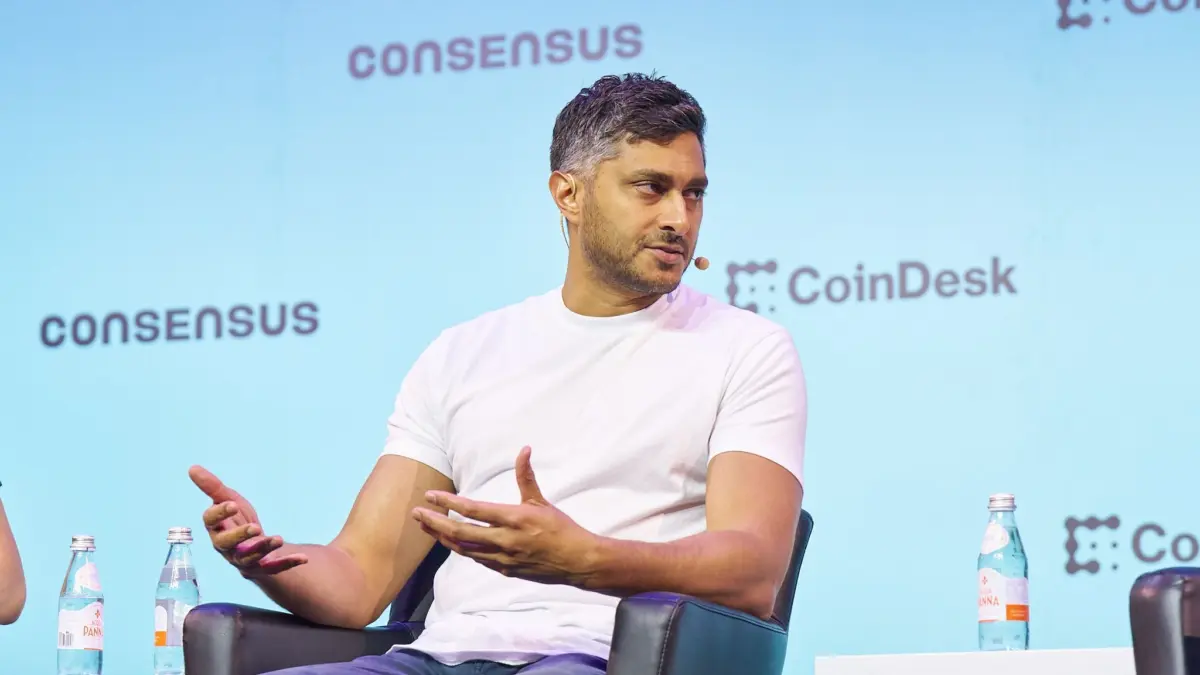
"We’re not a holding company," Sethi told CoinDesk. "It’s one platform, one balance sheet, one regulatory stack."
To organize this vision, Payward has structured its operations into four distinct pillars: trading (primarily through the Kraken brand), banking, asset management, and Payward Services—a business-to-business (B2B) division focused on infrastructure.
Currently, Kraken remains the flagship of the ecosystem, boasting approximately 6.6 million funded accounts. These accounts hold an estimated $40 billion to $50 billion in assets, spanning more than 190 countries. To capitalize on this massive user base, Payward is integrating a suite of services around these accounts, including debit cards, lending facilities, and the ability to borrow against assets or deploy them directly into decentralized finance (DeFi) applications.
The Strategy of Build, Buy, or Partner
Achieving the status of a global financial infrastructure provider requires more than just innovative software; it requires a vast network of licenses and regulatory permissions. To accelerate its timeline, Payward has adopted a "build, buy, or partner" approach, spending billions to acquire the pieces it cannot build quickly enough.
One of the most significant moves in this direction was the $1.5 billion acquisition of NinjaTrader in March 2025. The deal provided Payward with an immediate foothold in the U.S. futures brokerage market, granting it both the technology and the regulatory approvals that would have taken years to secure independently. This was followed in April 2026 by a $550 million acquisition of Bitnomial, which added essential derivatives infrastructure, including an exchange, a clearinghouse, and a futures commission merchant (FCM).