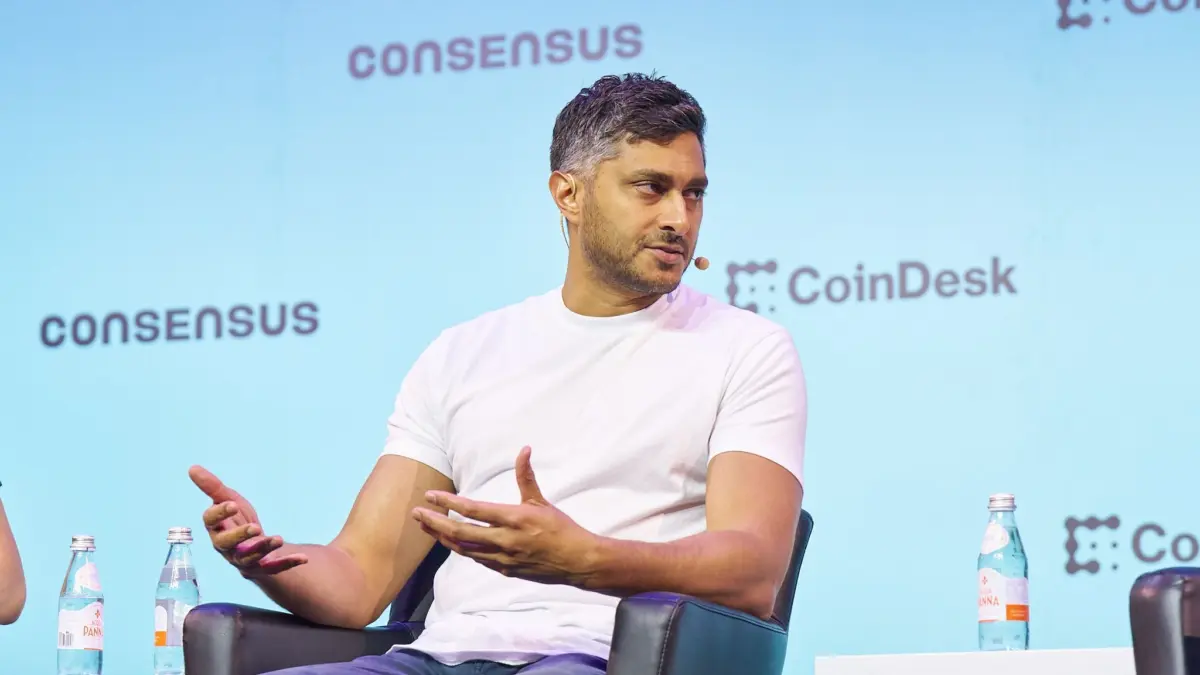
For nearly fifteen years, the name Kraken has been synonymous with the vanguard of the cryptocurrency exchange market. Since its inception, the firm has navigated the volatile cycles of the digital asset space, establishing itself as a primary gateway for retail and institutional traders alike. However, over the past two years, a significant transformation has been unfolding behind the scenes at its Wyoming-based parent company, Payward. The company is no longer content with being categorized simply as a crypto exchange; instead, it is aggressively deploying billions of dollars to pivot into a comprehensive financial infrastructure provider.
According to Arjun Sethi, co-CEO of Payward and Kraken, the company is executing a long-term strategy to unify trading, payments, asset management, and institutional services onto a single, modernized technological stack. This vision moves beyond the "Everything Exchange" model pursued by some of its largest rivals, aiming instead to become the foundational plumbing for the next generation of global finance.
One Ledger, Four Businesses
At the heart of Payward’s ambitious overhaul is what Sethi describes as the "one ledger" philosophy. In the traditional financial world, the movement of money and assets is often a fragmented process. Banks, brokerages, custodians, and clearinghouses maintain disparate records that must be constantly reconciled. This patchwork of intermediaries creates friction, leading to delays in settlement times and a layering of fees that burden the end user.
Payward’s thesis is that blockchain technology provides the solution to these legacy constraints. By utilizing a unified ledger, assets can function simultaneously as investments, collateral, and programmable instruments on a shared infrastructure. This allows money and securities to move seamlessly across different product lines without the need for the traditional "reconciliation dance" that defines 20th-century banking.
"We’re not a holding company," Sethi told CoinDesk. "It’s one platform, one balance sheet, one regulatory stack."
To organize this vision, Payward has structured its operations into four distinct pillars: trading (primarily through the Kraken brand), banking, asset management, and Payward Services—a business-to-business (B2B) division focused on infrastructure.
Currently, Kraken remains the flagship of the ecosystem, boasting approximately 6.6 million funded accounts. These accounts hold an estimated $40 billion to $50 billion in assets, spanning more than 190 countries. To capitalize on this massive user base, Payward is integrating a suite of services around these accounts, including debit cards, lending facilities, and the ability to borrow against assets or deploy them directly into decentralized finance (DeFi) applications.
The Strategy of Build, Buy, or Partner
Achieving the status of a global financial infrastructure provider requires more than just innovative software; it requires a vast network of licenses and regulatory permissions. To accelerate its timeline, Payward has adopted a "build, buy, or partner" approach, spending billions to acquire the pieces it cannot build quickly enough.
One of the most significant moves in this direction was the $1.5 billion acquisition of NinjaTrader in March 2025. The deal provided Payward with an immediate foothold in the U.S. futures brokerage market, granting it both the technology and the regulatory approvals that would have taken years to secure independently. This was followed in April 2026 by a $550 million acquisition of Bitnomial, which added essential derivatives infrastructure, including an exchange, a clearinghouse, and a futures commission merchant (FCM).
The expansion is also moving into the traditional banking sector. Sethi confirmed that the firm is "about to buy a bank in Europe," a move that aligns with reports that Payward has been eyeing a Lithuanian banking license to solidify its presence on the continent. By owning the banking rails, Payward can offer more efficient fiat-to-crypto on-ramps and off-ramps, while providing a regulated environment for institutional clients.
However, Payward recognizes that some aspects of the financial system—particularly the "trust currency" held by centuries-old institutions—cannot be easily replaced. This has led to high-profile partnerships with legacy giants like Nasdaq and the London Stock Exchange (LSE).
Earlier this month, Nasdaq invested $100 million in Payward as part of a broader collaboration to advance "always-on" markets and tokenized equities. The two companies are working toward a 2027 launch for Nasdaq Equity Tokens, with Payward providing the distribution and post-trade infrastructure. Similarly, the London Stock Exchange has partnered with Payward to explore xStocks—tokenized representations of public shares that are intended to trade on the forthcoming LSE 24 venue.
These partnerships suggest that Payward is not looking to displace established exchanges, but rather to complement them by providing the modern, blockchain-based "rails" on which their traditional assets can run more efficiently.
Defining the "Everything Financial Infrastructure" Model
While Payward’s expansion into various financial sectors draws comparisons to competitors like Coinbase and Binance, market analysts suggest Payward is carving out a unique niche. Coinbase has frequently been described as building an "Everything Exchange," aiming to be a consumer-facing super-app for crypto, stocks, and prediction markets.
In contrast, Architect Partners, a digital-assets investment bank, notes that Payward is choosing a different aggregation layer. Instead of focusing solely on bringing every product under the Kraken brand, Payward is building a regulated infrastructure stack that can power financial products across multiple brands and partner channels.
"In our view, Payward is helping define the next evolution beyond the ‘Everything Exchange’: an ‘Everything Financial Infrastructure’ model," Architect Partners stated. This means that in the future, a consumer might use a fintech app or a traditional bank’s services that are entirely powered by Payward’s backend, without ever interacting with the Kraken interface directly.
This B2B focus is the primary mission of Payward Services. The division offers a set of APIs that allow banks, fintechs, and other crypto platforms to access Payward’s custody, liquidity, compliance, and settlement tools. Sethi revealed that at least 25 companies are currently building on this infrastructure, with several expected to launch before the end of 2026.
Bringing Asset Management On-Chain
The fourth pillar of Payward’s strategy involves a significant push into asset management. While the company has long offered staking and yield-bearing products, it is now formalizing these activities into a comprehensive platform capable of hosting diverse investment strategies.
The goal is to provide an execution and distribution layer for structured products, tokenized credit, and multi-asset strategies. By keeping these assets on Payward’s internal rails, the company can reduce costs and counterparty risks associated with traditional asset management.
A recent partnership with Bitwise to develop an institutional investment product serves as a template for this expansion. Payward intends to add more managers and strategies to the platform, essentially creating a tokenized version of traditional asset management that is accessible globally and administered with the efficiency of a blockchain ledger.
Regulatory Philosophy and the Path to a Public Listing
As Payward expands its footprint, it continues to navigate a complex and often stagnant regulatory environment, particularly in the United States. Despite the lack of a comprehensive market-structure bill for digital assets, Sethi remains undeterred. While Payward has actively supported the Clarity Act and engaged in policy education, the co-CEO believes that the industry’s growth is not strictly dependent on new legislation.
"Bitcoin has been around for 17 years without a market-structure bill," Sethi noted, arguing that "rights come first and laws come later." From his perspective, legislation serves to formalize industries that have already established their value and utility.
This focus on long-term utility is also reflected in the company’s approach to its anticipated initial public offering (IPO). While Payward confidentially filed for an IPO in late 2025, the company has recently signaled that it is in no rush to list. Reports indicate that a public debut is unlikely to happen before the second quarter of 2027 at the earliest.
Sethi emphasized that Payward is currently profitable and seeing consistent revenue growth, with $508 million in adjusted revenue reported for the second quarter of 2026—a 17% increase over the previous year. Because the firm can finance its investments from its own balance sheet, recent capital raises have focused on bringing in strategic partners like Citadel Securities and Nasdaq rather than simply raising cash for operations.
The delay of the IPO allows the company to further integrate its recent acquisitions and prove the viability of its infrastructure-first model before facing the scrutiny of public markets.
The Vision: Democratizing High-Finance Infrastructure
Ultimately, the transformation of Payward from a crypto exchange into a global financial infrastructure provider is driven by a desire to democratize the tools of high finance. Sethi envisions a world where individuals have access to the same high-speed, efficient, and transparent infrastructure currently reserved for elite trading firms like Jump Trading or Jane Street.
By removing the friction inherent in the legacy financial system and replacing it with a unified, blockchain-based ledger, Payward aims to simplify how the world interacts with value. As Sethi summarized the company’s foundational motivation: "Fix money, fix the world."