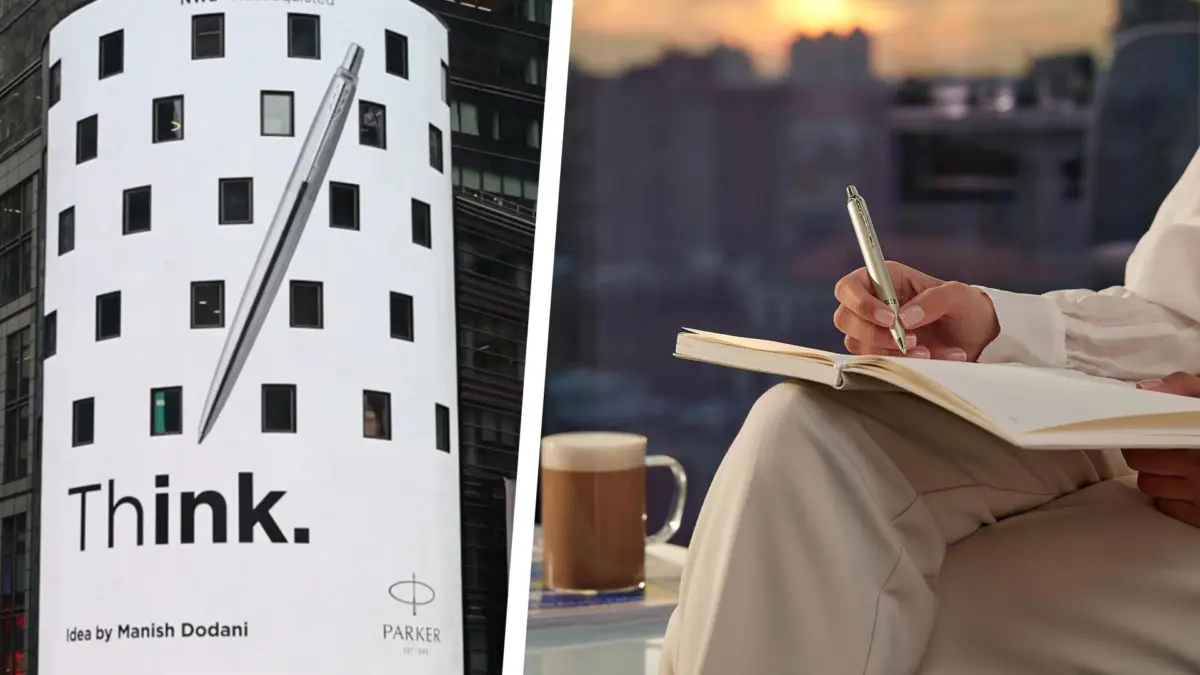
The catalyst for this unexpected resurgence was a viral creative challenge that invited designers to rebrand classic tools for the "AI Age." The prompt struck a chord with a creative community increasingly wary of the "dead internet theory" and the influx of algorithmically generated content. Designers began proposing witty, minimalist advertisements for the Parker Jotter, positioning the ballpoint pen not as a relic of the past, but as a necessary tool for human focus and authentic expression. Recognizing the organic momentum and the cleverness of the messaging, Parker moved with uncharacteristic speed for a heritage brand, transforming these fan-made designs into a reality. The campaign reached its zenith when these "anti-AI" messages appeared on a massive digital billboard in the heart of New York City’s Times Square, a location typically reserved for the world’s most advanced tech giants.
This move by Parker is more than just a savvy marketing play; it is a reflection of a growing counter-movement against the ubiquity of artificial intelligence. While early predictions suggested that AI-driven text generation would signal the final death knell for handwriting, the opposite appears to be occurring. A "handwriting rebellion" is taking root among professionals, students, and creatives who find that the tactile experience of pen on paper offers cognitive benefits that a keyboard cannot replicate. Neurobiological studies have long suggested that the act of writing by hand engages the brain more deeply than typing, aiding in memory retention, conceptual understanding, and the synthesis of complex ideas. In a world where AI can draft a thousand-word essay in seconds, the slow, deliberate nature of handwriting has become a luxury and a method of mindfulness.
The backlash against what critics call "AI slop"—the generic, often uncanny valley-style images and text that have begun to clutter social media feeds—has further fueled this analog revival. On platforms like Instagram, where AI-generated event flyers and marketing copy have become common, some businesses are intentionally pivoting back to hand-drawn and hand-written promotional materials. This "human-first" aesthetic serves as a digital watermark of authenticity, signaling to consumers that there is a person behind the brand. Parker’s recent campaign leans heavily into this sentiment, emphasizing that while AI can simulate thought, the pen remains the primary conduit for genuine human reflection.
Beyond the philosophical and cultural implications, there is a practical, economic dimension to this trend. As many users find themselves locked into various monthly software subscriptions, the cost-effectiveness of a high-quality writing instrument is becoming more apparent. Currently, a premium pen can be acquired for significantly less than the price of a single month’s subscription to a top-tier AI service like ChatGPT Plus. This realization has coincided with a surge in interest for Parker’s most legendary models, many of which are currently seeing significant discounts on major retail platforms like Amazon.