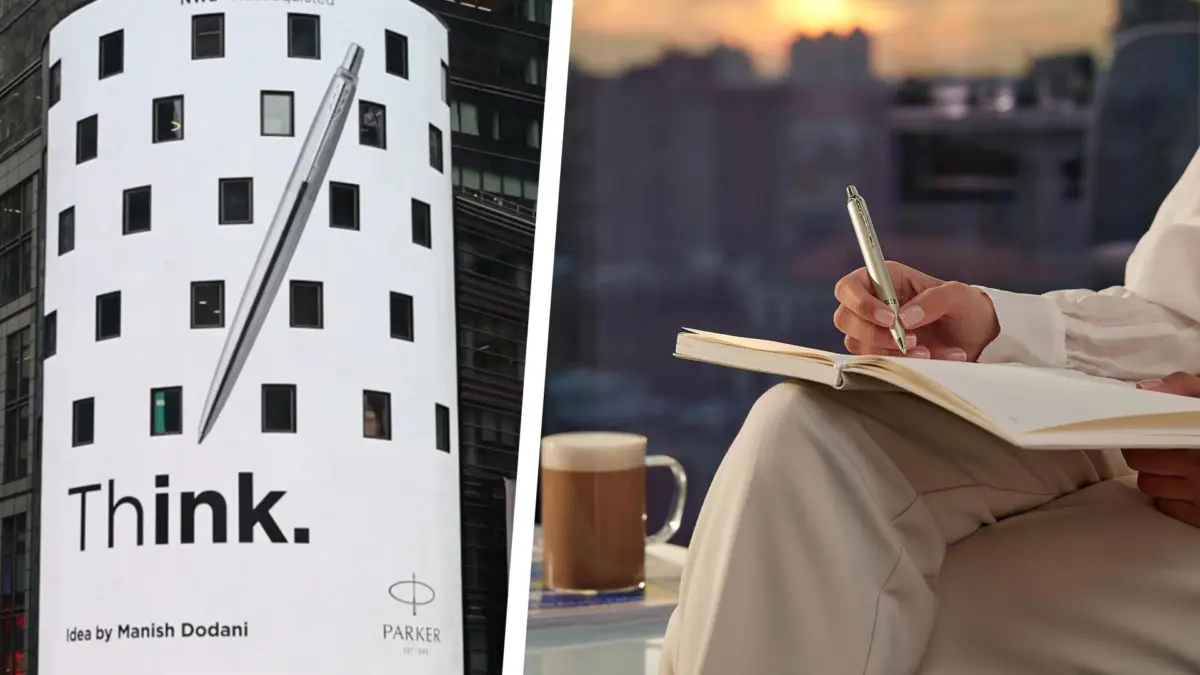
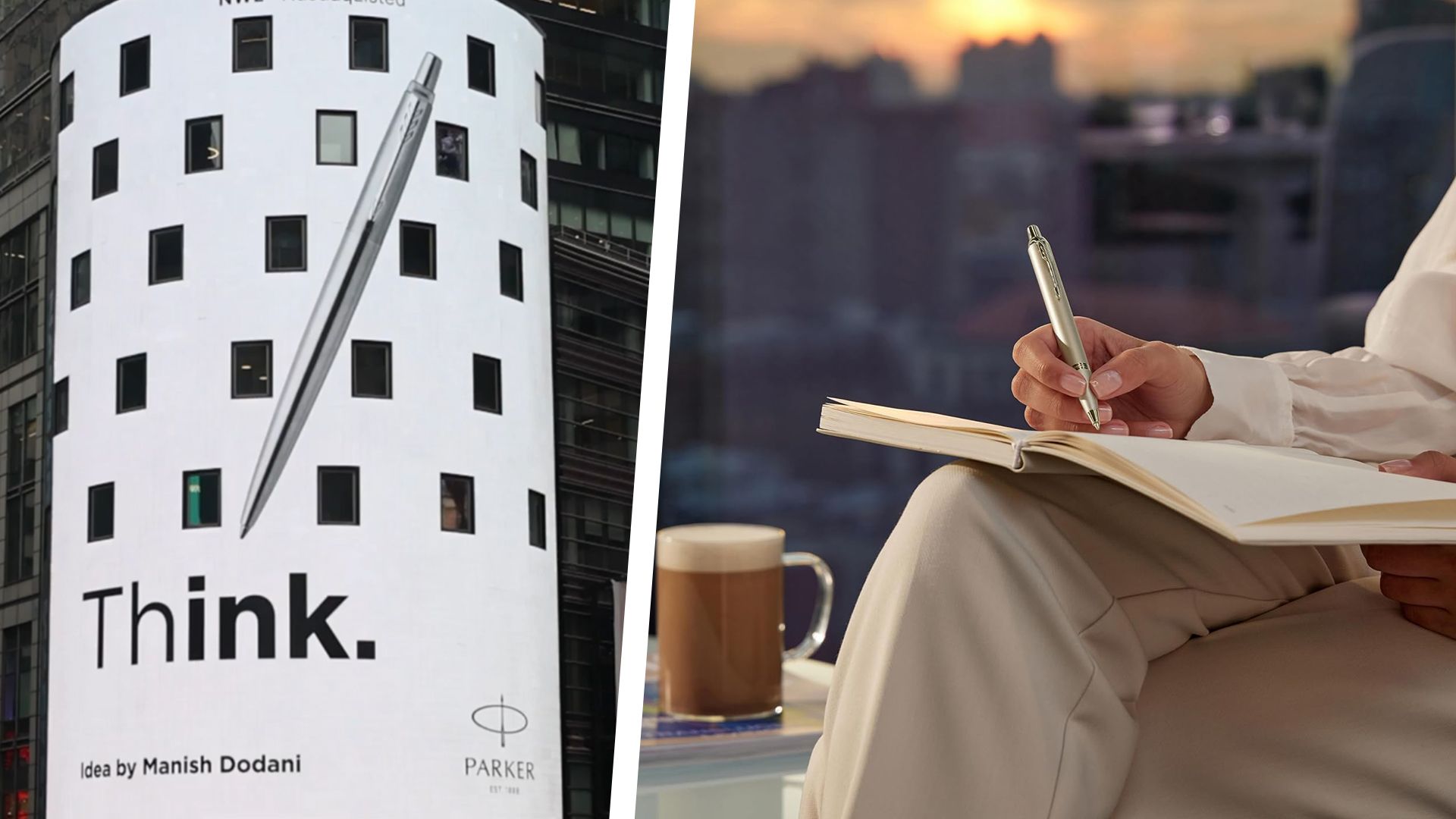
The catalyst for this unexpected resurgence was a viral creative challenge that invited designers to rebrand classic tools for the "AI Age." The prompt struck a chord with a creative community increasingly wary of the "dead internet theory" and the influx of algorithmically generated content. Designers began proposing witty, minimalist advertisements for the Parker Jotter, positioning the ballpoint pen not as a relic of the past, but as a necessary tool for human focus and authentic expression. Recognizing the organic momentum and the cleverness of the messaging, Parker moved with uncharacteristic speed for a heritage brand, transforming these fan-made designs into a reality. The campaign reached its zenith when these "anti-AI" messages appeared on a massive digital billboard in the heart of New York City’s Times Square, a location typically reserved for the world’s most advanced tech giants.
This move by Parker is more than just a savvy marketing play; it is a reflection of a growing counter-movement against the ubiquity of artificial intelligence. While early predictions suggested that AI-driven text generation would signal the final death knell for handwriting, the opposite appears to be occurring. A "handwriting rebellion" is taking root among professionals, students, and creatives who find that the tactile experience of pen on paper offers cognitive benefits that a keyboard cannot replicate. Neurobiological studies have long suggested that the act of writing by hand engages the brain more deeply than typing, aiding in memory retention, conceptual understanding, and the synthesis of complex ideas. In a world where AI can draft a thousand-word essay in seconds, the slow, deliberate nature of handwriting has become a luxury and a method of mindfulness.
The backlash against what critics call "AI slop"—the generic, often uncanny valley-style images and text that have begun to clutter social media feeds—has further fueled this analog revival. On platforms like Instagram, where AI-generated event flyers and marketing copy have become common, some businesses are intentionally pivoting back to hand-drawn and hand-written promotional materials. This "human-first" aesthetic serves as a digital watermark of authenticity, signaling to consumers that there is a person behind the brand. Parker’s recent campaign leans heavily into this sentiment, emphasizing that while AI can simulate thought, the pen remains the primary conduit for genuine human reflection.
Beyond the philosophical and cultural implications, there is a practical, economic dimension to this trend. As many users find themselves locked into various monthly software subscriptions, the cost-effectiveness of a high-quality writing instrument is becoming more apparent. Currently, a premium pen can be acquired for significantly less than the price of a single month’s subscription to a top-tier AI service like ChatGPT Plus. This realization has coincided with a surge in interest for Parker’s most legendary models, many of which are currently seeing significant discounts on major retail platforms like Amazon.
Leading the charge in this retail resurgence is the Parker Jotter, a design icon that has remained largely unchanged since its debut in 1954. The Jotter holds a unique place in popular culture, perhaps most famously known as the "exploding pen" used by James Bond in the film Goldeneye. Beyond its cinematic credentials, the Jotter is celebrated for its durability, its signature "arrow" clip, and the satisfying mechanical click of its deployment button. The classic black and steel model, a staple of offices for seven decades, is currently available at a 30% discount, bringing the price down to approximately $8.34. This entry-level price point for a piece of design history makes the "rebellion" against digital saturation accessible to almost anyone.
For those who prefer a more substantial writing experience, the Parker Jotter XL has also seen price adjustments. The XL model retains the classic silhouette of the original but offers a 7% increase in diameter and length, designed to provide more comfort for those who find the standard Jotter too slender for long writing sessions. The monochrome stainless steel version of the Jotter XL is currently reduced by 18%, retailing for $32.79. These pens are built to last a lifetime, utilizing refillable ink cartridges that stand in stark contrast to the planned obsolescence often found in modern consumer electronics.
The resurgence of interest also extends to the more prestigious tiers of the Parker catalog, specifically the Parker 51. Originally launched in 1941 and marketed as "the world’s most wanted pen," the 51 features a distinctive hooded nib that prevents the ink from drying out, allowing the writer to pause for thought without the pen failing. The Parker 51 has a storied history of its own; it was the preferred writing instrument of the late Queen Elizabeth II, who granted Parker a Royal Warrant in 1962. It also appears in the literary world as the pen used by James Bond in Ian Fleming’s novel Moonraker. The modern iteration of this fountain pen, which blends the classic 1940s aesthetic with contemporary engineering, is currently seeing a price reduction of nearly $25, bringing the cost to $101.25.
The success of Parker’s Times Square campaign and the subsequent interest in their product line suggests a shift in consumer psychology. In the early 2000s, the push was toward total digitization. Today, as digital fatigue sets in, the pendulum is swinging back toward "tactile intentionality." The act of journaling, sketching, or even just taking meeting notes by hand is being rebranded as a premium experience—a way to disconnect from the "noise" of the internet and reconnect with one’s own thoughts.
Parker’s ability to capitalize on this moment is a testament to the brand’s enduring identity. By embracing the unsolicited designs of independent creatives, the company has shown a level of agility often lacking in century-old corporations. They have successfully positioned their products not as anachronisms, but as essential tools for the modern creative professional who needs to think clearly in an environment saturated with automated distractions.
As the holiday season approaches and the conversation around the ethics and utility of AI continues to evolve, the humble ballpoint pen appears to be enjoying a second golden age. Whether it is a student looking to improve their study habits, a professional seeking to stand out in a sea of digital communications, or a collector interested in the heritage of James Bond and the British Royal Family, the appeal of a Parker pen remains as sharp as ever. In the battle between the algorithm and the arrow clip, the latter is proving to be surprisingly resilient.
For consumers outside the United States or those looking for different styles, the market for high-quality writing instruments remains robust, with various deals appearing across international retailers. The message from Parker’s recent viral success is clear: while technology will continue to advance at a breakneck pace, there is an inherent value in the physical, the permanent, and the personal that no software can fully replace. The pen, it seems, is not only mightier than the sword but perhaps more enduring than the processor.
Joe, a veteran journalist and project manager at the design agency Hermana Creatives, notes that this trend toward the analog is something being felt across the creative industries. Managing teams of designers and video editors in London and Buenos Aires, he observes that the most innovative ideas often start with a physical sketch or a handwritten note. His work in branding for the hospitality sector further reinforces the idea that "human touch" is the ultimate luxury in a digital world. When he isn’t tracking the latest developments in creative software or hardware, he can be found practicing Argentine tango, another pursuit that emphasizes physical presence and human connection over digital simulation.