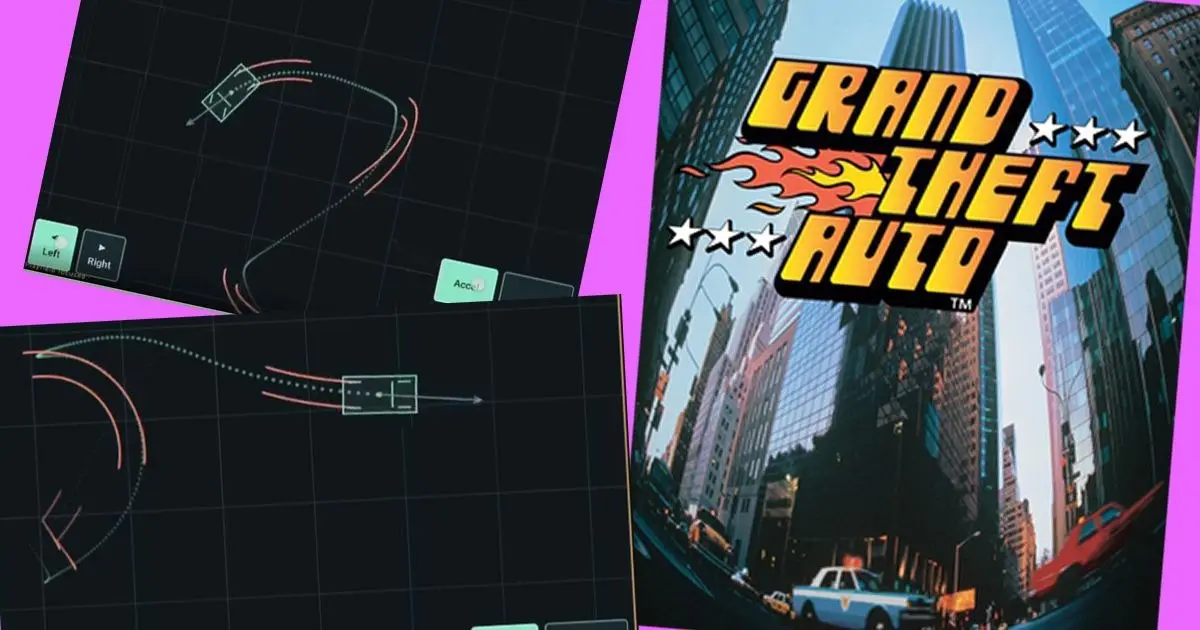
Patrick Kerr, a former programmer at DMA Design—the legendary Scottish studio that would eventually transition into the powerhouse known today as Rockstar North—has recently revisited his contributions to the original Grand Theft Auto. In a move that has delighted both game historians and aspiring developers, Kerr has recreated the original 2D physics simulation that served as the backbone for the game’s vehicle systems. This recreation is not merely a static gallery of code; it is a fully functional, interactive demo that can be played online, offering a direct window into the mechanics that defined a genre-defining masterpiece nearly three decades ago.
The original Grand Theft Auto, released in 1997, was nothing short of a cultural phenomenon and a technical marvel for its time. While modern audiences might view its top-down graphics as simplistic, the game was considered groundbreaking upon its debut. It introduced players to a level of emergent gameplay that was largely unheard of in the mid-90s. Unlike the linear, objective-based games of the era, Grand Theft Auto offered a living, breathing city populated by varied non-player characters (NPCs) and a chaotic ecosystem of traffic. It was a departure from traditional gaming norms because it gave players the freedom to simply exist within its world. One could ignore the mission markers entirely, choosing instead to spend hours driving through the city streets, observing the digital inhabitants, and testing the limits of the game’s physics.
Kerr’s newly released simulation provides a fascinating look at how those early physics were conceived. According to Kerr, the simulation’s journey began as a rudimentary wireframe demo. At the time, he was working on an Atari ST, utilizing GFA BASIC to draft the initial logic for how a vehicle should move, turn, and collide within a 2D space. This early experimentation was eventually ported to the C programming language to be integrated into the final game. For the modern recreation, Kerr has transitioned the logic into JavaScript, pairing the original mathematical precision with a much sleeker, more modern visual presentation that makes the underlying physics easier to visualize.
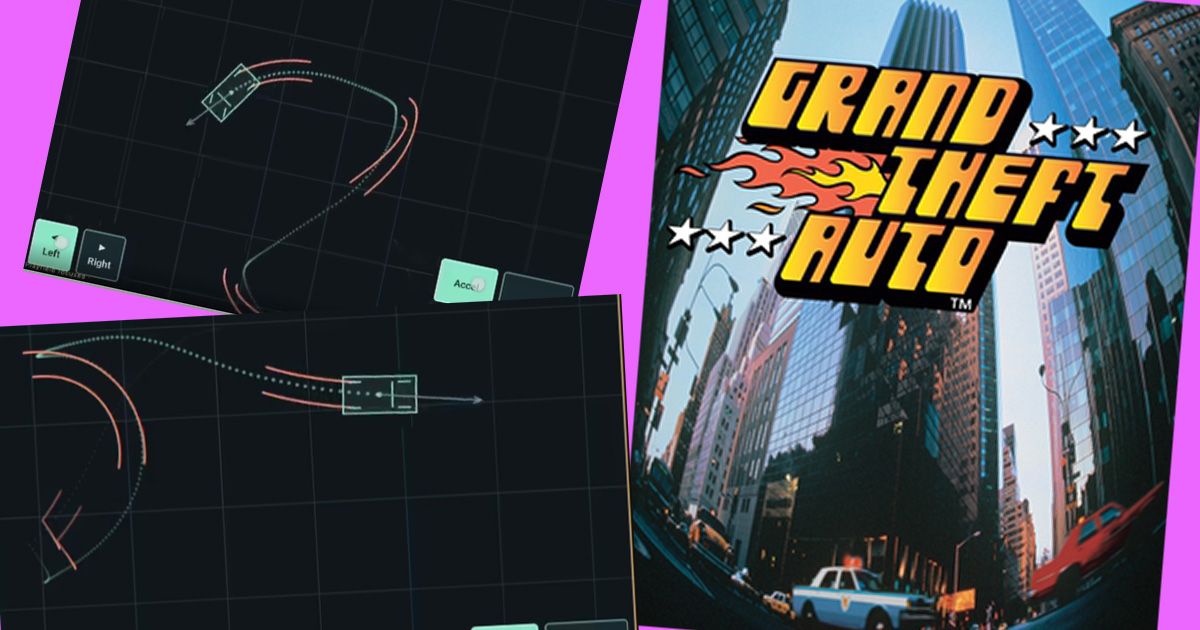
The interactive demo, hosted on Kerr’s "Motion Lab" platform, allows users to toggle between different physical states that illustrate the versatility of the original engine. The default mode, labeled "Car (1)," mimics the handling characteristics that millions of players first experienced on the PC and PlayStation 1. However, the simulation also includes "Ship (2)" and "Brick (3)" modes, which can be activated using numerical keys. These modes demonstrate how the programmers could alter variables like friction, mass, and momentum to create entirely different movement profiles using the same core logic.