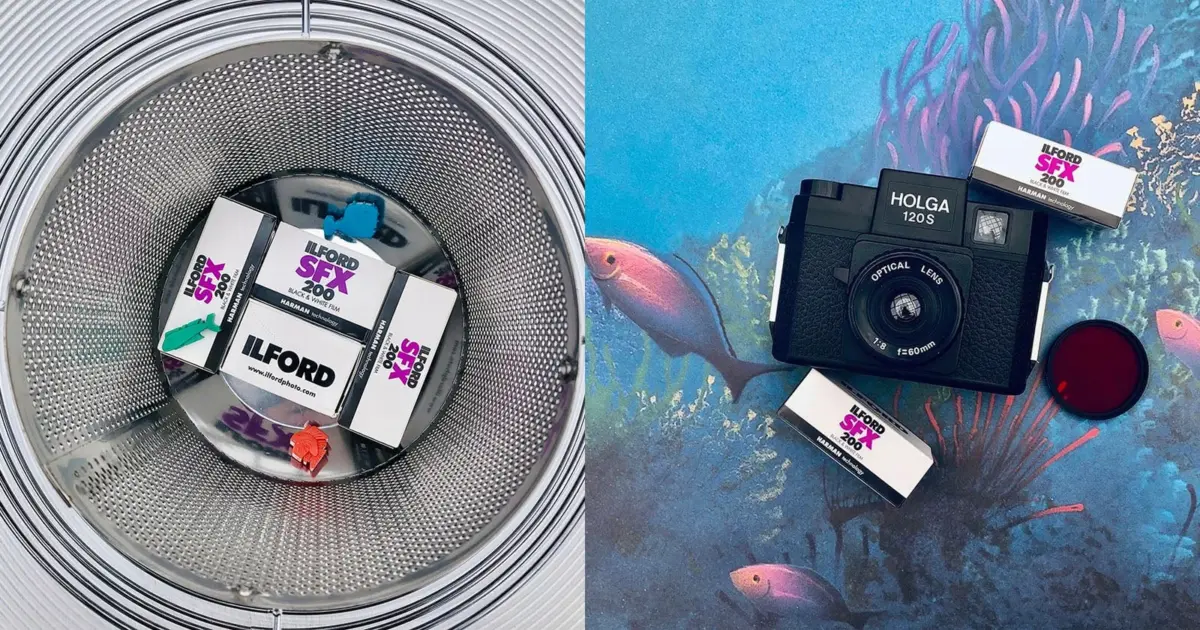
In the specialized world of analog photography, where enthusiasts often seek out tools that can render the world in ways the human eye cannot perceive, few products hold as much mystique as Ilford SFX 200. Often described by seasoned professionals and lab technicians with a mixture of reverence and playful hyperbole, this superpanchromatic film has carved out a unique niche for itself. One staff member at a prominent film laboratory famously joked that pairing a Holga camera with a red filter and a roll of SFX was akin to "shooting fish in a barrel"—a task so inherently rewarding and visually striking that it was almost impossible to miss the mark. While such a statement might lean into the dramatic, it underscores a fundamental truth about the film: when handled with the right accessories, Ilford SFX 200 transforms the mundane into the extraordinary.
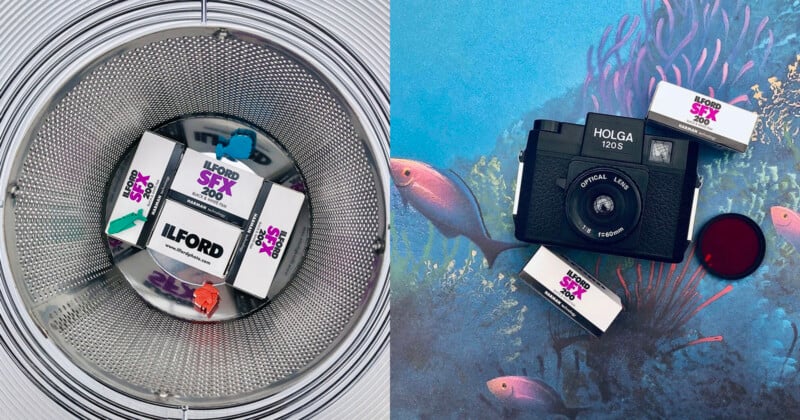
At its core, Ilford SFX is an ISO 200 black-and-white film, but to categorize it alongside standard emulsions like HP5 or FP4 would be to overlook its most significant characteristic. SFX is superpanchromatic, meaning it possesses an extended red sensitivity that reaches into the near-infrared spectrum of light. For the average photographer, this means the film can be loaded into any camera and shot as a standard black-and-white film, producing reliable, high-contrast results. However, the true "magic" of the emulsion remains dormant until the photographer introduces a heavy filter—typically a Red 25 or a dedicated infrared filter. Once the visible light is restricted, the film begins to "see" the world through its infrared sensitivity, leading to the ethereal and often haunting imagery for which it is known.

The history of Ilford SFX is as dramatic as the images it produces. Having been a staple in Ilford’s catalog for decades, the film was briefly considered a casualty of the digital revolution and the financial hardships that hit the film industry in the early 2000s. During a period of significant corporate restructuring, Ilford was forced to discontinue several niche products, and SFX was among those cut from the lineup. Yet, as the company emerged from its financial reorganization and found a stable footing in the modern market, the demand for this unique emulsion remained vocal. In a move that delighted experimental photographers worldwide, Ilford brought the film back from the dead. This resurrection has led many to affectionately refer to SFX as a "zombie film," a title that feels particularly appropriate given its popularity during the autumn months and the Halloween season. Its availability in both 35mm and 120 formats further cements its status as a versatile tool for photographers working across different systems.

The primary appeal of SFX lies in its ability to manipulate tonal values in ways that standard panchromatic films cannot. When paired with a deep red filter, the film begins to eliminate a significant portion of the visible light spectrum, allowing the infrared exposure to dominate the final image. In landscape photography, this results in a dramatic darkening of the sky, often turning a bright blue afternoon into a deep, ominous black that hangs over the scene. Conversely, organic materials like foliage reflect infrared light intensely, causing trees and grass to appear as a brilliant, glowing white. This stark contrast between the "black" sky and "white" trees creates a dreamlike, otherworldly atmosphere. In the realm of portraiture, the effect is equally striking. The film’s infrared sensitivity can render human skin with a luminous, porcelain-like quality, while eyes often appear deeper and darker, resulting in portraits that feel both ghostly and sophisticated.