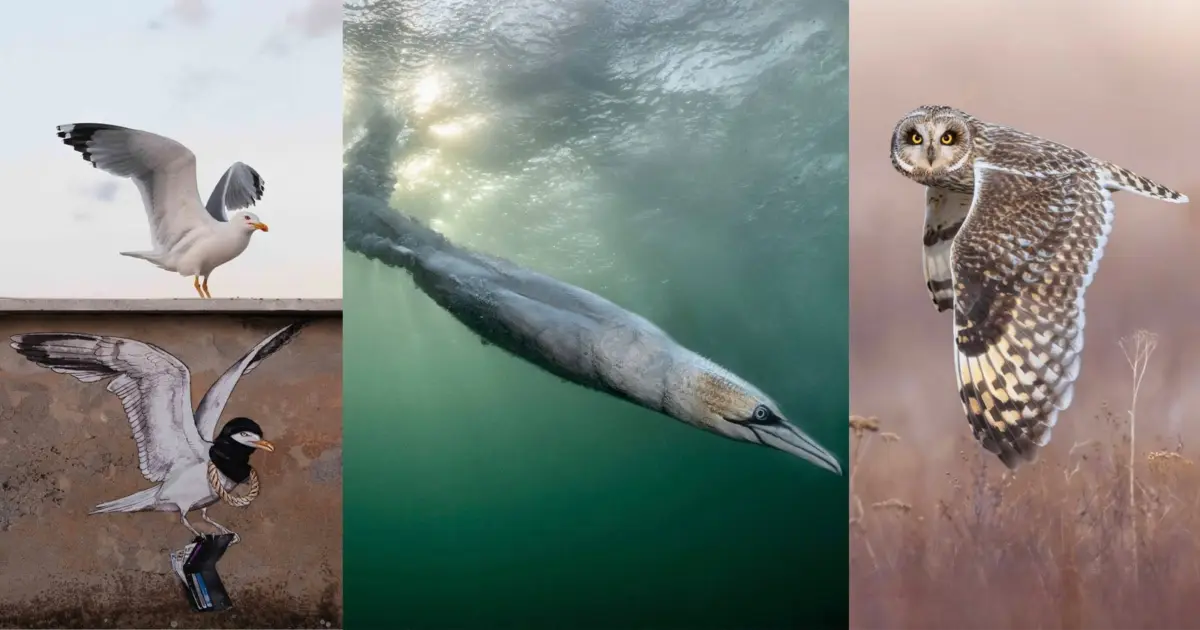
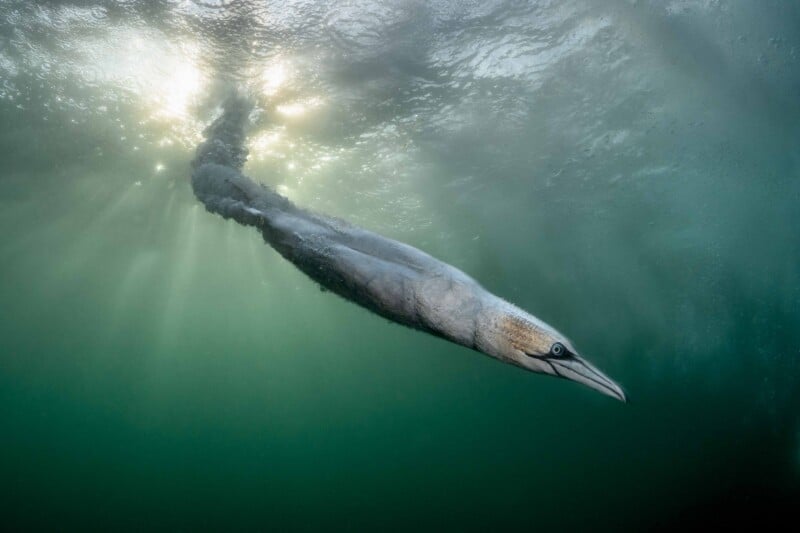
The winners of the Bird Photographer of the Year 2026 have been officially announced, celebrating the most breathtaking and technically accomplished avian imagery from across the globe. Taking the top honor this year is a remarkable underwater photograph of a northern gannet, captured at the precise moment it pierces the ocean’s surface in a high-speed pursuit of prey. The image, titled "Sunball Rocket," was named the overall winner in what has grown to become the world’s largest and most prestigious bird photography competition.
Now in its eleventh year, the competition continues to see an extraordinary rise in both the quality and quantity of submissions. For the 2026 cycle, photographers from every corner of the planet submitted more than 24,000 images, each vying for the title and the £3,000 ($4,000) grand prize. The judging panel, tasked with narrowing down tens of thousands of entries, sought images that combined technical mastery with a profound narrative or emotional connection to the subject matter.
Henley Spiers, a highly regarded photographer based in the United Kingdom, was declared the grand prize winner for his striking composition taken in the frigid, nutrient-rich waters off the coast of Scotland. Spiers’ image also secured the Gold award in the "Birds in the Environment" category. The photograph captures a northern gannet in a state of absolute kinetic energy, its streamlined body surrounded by a shimmering trail of air bubbles as it dives through a "sunball"—a burst of light filtering down from the surface.
Reflecting on the subject of his winning shot, Spiers spoke of the fascinating, dual nature of the northern gannet’s life. "The handsome northern gannets lead a dualistic existence," Spiers noted. "In the nest, their newborn is carefully nurtured, and a couple’s bond is reinforced by pointing sharp beaks to the sky as they tenderly stroke their white necks together. In flight, hunting mode takes over, and piercing yellow eyes, fringed with blue circles, scour the sea for prey."
The mechanics of the hunt are as impressive as the bird’s plumage. Spiers explained that when a gannet spots a fish, it flies into the wind and uses its wings as brakes to adjust its position with pinpoint accuracy. "Moments later, with wings tucked in tightly, the gannet shape-shifts into a pointed torpedo, diving into the water at speeds of up to 86km/h," he added. It is this "shape-shifting" moment that Spiers managed to freeze in time, providing a rare glimpse into the underwater world of one of Britain’s most iconic seabirds.
While Spiers took the top prize, the competition showcased a diverse array of winners across eight distinct adult categories, each highlighting a different facet of avian life and the environments these animals inhabit.
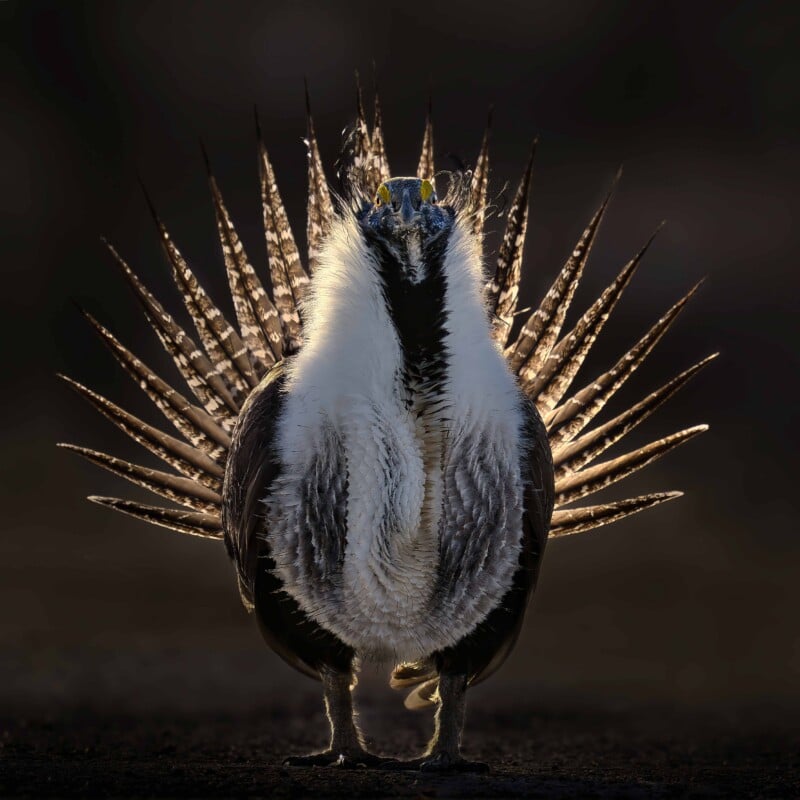
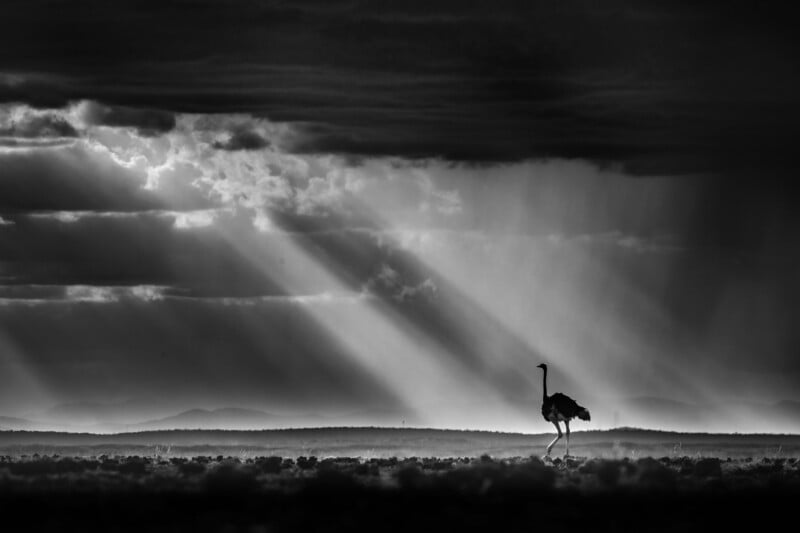
In the Black and White category, the Gold award went to Rahul Sachdev for his evocative image of an ostrich. Captured in the dry lake bed of Amboseli, Kenya, the photograph strips away the distraction of color to focus on the stark, dramatic silhouette of the bird against a moody, cloud-heavy sky. The play of light across the arid landscape emphasizes the isolation and resilience of the species in its natural habitat.