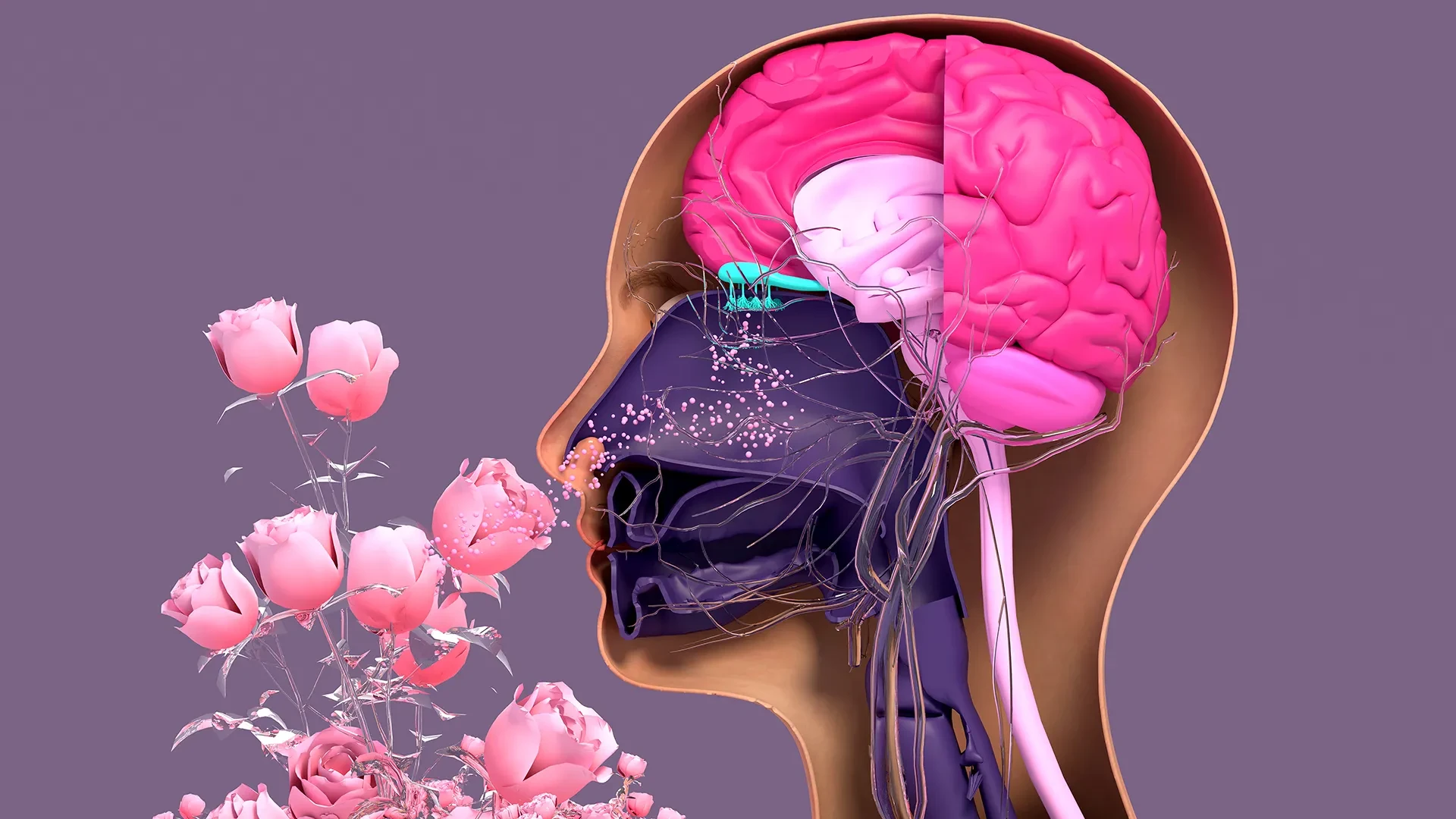
In a significant advancement for sensory biology, researchers at Tufts University School of Medicine and the Graduate School of Biomedical Sciences (GSBS) have developed a sophisticated three-dimensional model to study the regeneration of nerve tissue within the human nose. The study, conducted alongside international colleagues, has led to a surprising discovery regarding the mechanisms of olfactory recovery: a specific type of stem cell, long categorized by the scientific community as largely dormant, appears to play a far more vital role in maintaining and restoring the sense of smell than previously understood.
The human sense of smell is governed by sensory neurons located deep within the nasal cavity. Unlike the delicate neurons of the central nervous system, which are notoriously difficult to repair once damaged, these olfactory neurons possess a unique and robust capacity for regeneration. Throughout a person’s life, these cells are in a constant state of turnover, dying off and being replaced by new ones. This resilience is a biological necessity, as the nasal lining is one of the few places where the nervous system is directly and perpetually exposed to the external environment, including pathogens, pollutants, and physical trauma.
However, this regenerative capability is not invincible. Factors such as severe viral infections—most notably COVID-19—prolonged exposure to environmental toxins, and the natural process of aging can severely hamper the ability of these cells to replicate. When the regenerative cycle is disrupted, the result is often a partial loss of smell, known as hyposmia, or a total loss, known as anosmia. To better understand why this process fails and how it might be jump-started, the Tufts team created a new, accessible three-dimensional olfactory tissue model, or "organoid," using mouse cells. This model allows scientists to observe the birth of neurons in real-time and investigate the cellular breakdown that occurs during disease and senescence.
The findings, recently published in the journal Cell Reports Methods, provide a detailed look at the internal communication system of the nose. The research focuses on two primary types of stem cells found in the olfactory epithelium: horizontal basal cells (HBCs) and globose basal cells (GBCs). Traditionally, GBCs were viewed as the primary workhorses of regeneration, actively dividing to replace lost neurons, while HBCs were seen as a reserve population that remained quiet unless a catastrophic injury occurred. The new study challenges this binary view, suggesting a much more integrated relationship between the two cell types.
Brian Lin, a research assistant professor in the Department of Developmental, Molecular and Chemical Biology and the study’s senior author, notes that the research points toward a complex interdependency. According to Lin, the study suggests that these two stem cells may be fundamentally reliant on one another to function correctly. The HBCs, which were once thought to be passive bystanders in the day-to-day maintenance of the nasal tissue, may actually be providing essential support that allows for the production of new neurons and the successful repair of damaged tissue.
Using the 3D organoid model, the research team was able to isolate and identify a specific subpopulation of HBCs. These particular cells are characterized by their production of a protein known as KRT5. In the controlled environment of the organoid, the researchers observed that these KRT5-producing HBCs were not dormant at all; instead, they were actively facilitating the generation of new olfactory neurons.
To confirm the importance of these cells, the team conducted depletion experiments. When the KRT5-marked HBCs were selectively removed from the organoid cultures, the regenerative process stalled significantly. The generation of new neurons was severely impaired, proving that these "dormant" cells are, in fact, essential players in the biological theater of the nose. This discovery opens new avenues for therapeutic research, as it suggests that targeting HBCs might be a viable way to treat long-term smell loss in patients where the GBC population has been exhausted or damaged.