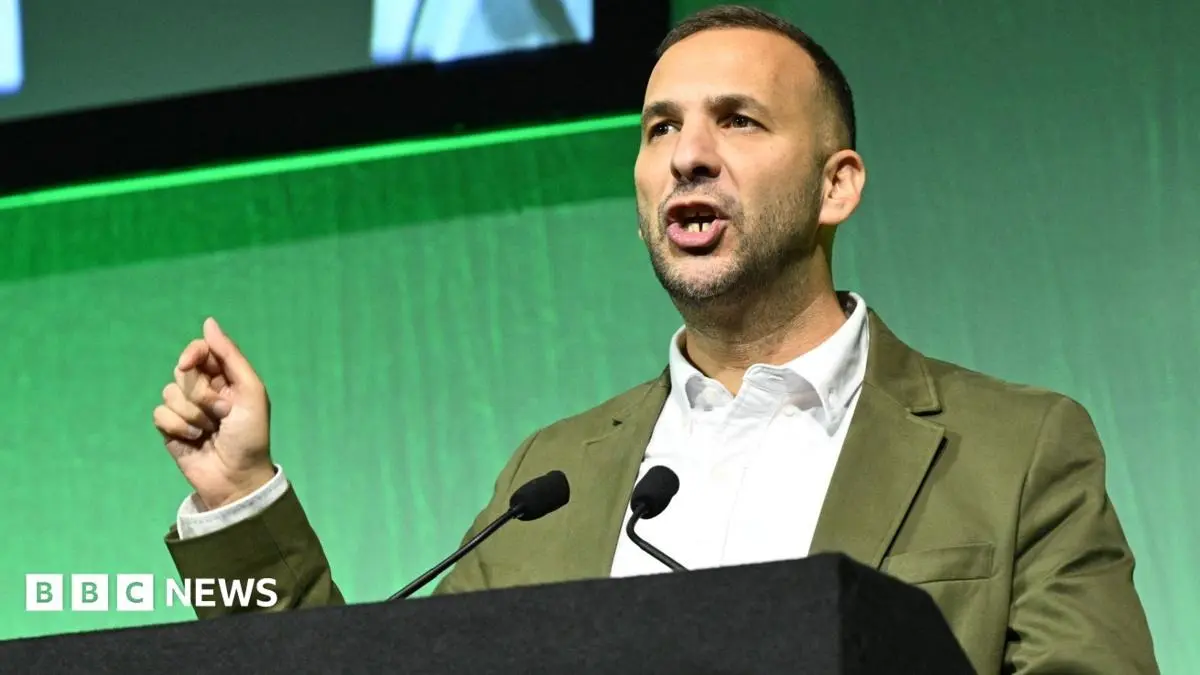
In the immediate aftermath of a parliamentary by-election, the political spotlight almost invariably shines brightest on the newly elected Member of Parliament. The triumph of victory, the celebratory speeches, and the transition of power typically dominate the news cycle. Yet, in the early hours of the morning following the vote in Holborn and St Pancras, the traditional political script was entirely rewritten. The primary focus of the assembled press pack was not on the winner, but on a runner-up whose party is currently embroiled in a deeply divisive national controversy.
To be sure, the victorious candidate, Sagal Abdi-Wali, has an extraordinary and compelling personal history that would normally command the front pages. Arriving in the United Kingdom in the 1990s as a child refugee escaping the civil war in Somalia, Abdi-Wali grew up locally in the London Borough of Camden. Her journey into public service began in earnest when she became a local councillor four years ago. Her political rise was rapid; by May of this year, she had risen to become the leader of Camden Council, and she has now secured a seat in the House of Commons, succeeding no less a figure than the former Prime Minister, Sir Keir Starmer, as the representative for Holborn and St Pancras.
Yet, as journalists, camera crews, and broadcasters gathered in the offices of Camden Council at three o’clock in the morning waiting for the final declarations, the collective attention was firmly fixed elsewhere. The central figure of interest was Zack Polanski, the leader of the Green Party of England and Wales. The intense media scrutiny surrounding Polanski overshadowed what would otherwise have been a night of straightforward local political reporting.
The constituency of Holborn and St Pancras in north London has long been regarded as a safe and reliable Labour stronghold. For decades, it served as the political home of the late Frank Dobson, a former cabinet minister and beloved local figure, before passing to Sir Keir Starmer. Because of this deeply entrenched Labour history, Abdi-Wali’s victory was a foregone conclusion. Consequently, the result was received in Downing Street with a quiet sense of relief rather than the jubilant celebration that accompanies a hard-fought swing seat.
For the Green Party, the by-election was an opportunity to consolidate recent electoral gains. The party had performed exceptionally well in the London local elections in May, riding a wave of political momentum that began shortly after Polanski assumed the leadership just over a year ago. A poor showing in this north London contest would have raised immediate questions from commentators and internal critics about whether the party’s momentum was beginning to stall.
Ultimately, the Green Party’s performance at the polls provided them with a defensible set of statistics. While they did not win the seat, party officials pointed to a significant swing in their direction since the recent general election. The final tally represented, by a wide margin, the second-best result the Green Party has ever achieved in a Westminster by-election.
The by-election also threw up an interesting dynamic on the right of the political spectrum. In finishing third, the Conservatives managed to defeat Reform UK in an English by-election for the first time since the general election. Analysts suggesting reasons for this outcome noted that Reform UK’s campaign was likely hampered by the presence of the Restore Britain party, which managed to secure almost half as many votes as Reform did. In a constituency that is historically and culturally unfavorable to the platforms of both right-leaning parties, this split in the right-of-center vote proved decisive in allowing the Conservatives to edge ahead into third place.