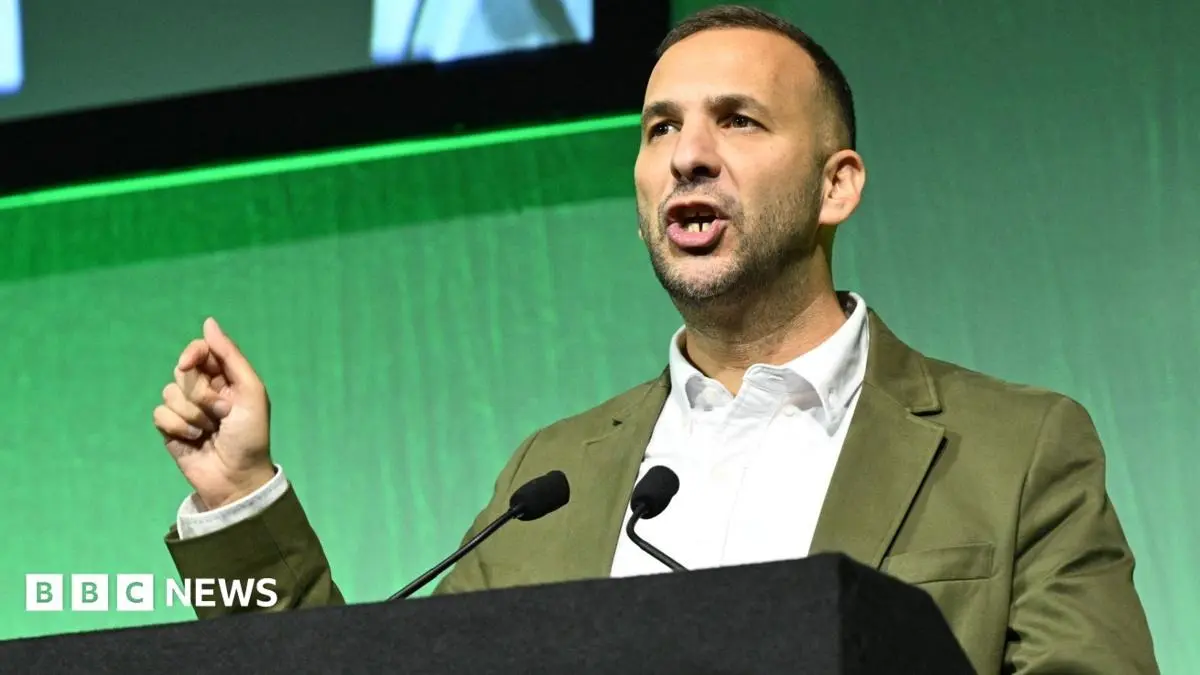
In the immediate aftermath of a parliamentary by-election, the political spotlight almost invariably shines brightest on the newly elected Member of Parliament. The triumph of victory, the celebratory speeches, and the transition of power typically dominate the news cycle. Yet, in the early hours of the morning following the vote in Holborn and St Pancras, the traditional political script was entirely rewritten. The primary focus of the assembled press pack was not on the winner, but on a runner-up whose party is currently embroiled in a deeply divisive national controversy.
To be sure, the victorious candidate, Sagal Abdi-Wali, has an extraordinary and compelling personal history that would normally command the front pages. Arriving in the United Kingdom in the 1990s as a child refugee escaping the civil war in Somalia, Abdi-Wali grew up locally in the London Borough of Camden. Her journey into public service began in earnest when she became a local councillor four years ago. Her political rise was rapid; by May of this year, she had risen to become the leader of Camden Council, and she has now secured a seat in the House of Commons, succeeding no less a figure than the former Prime Minister, Sir Keir Starmer, as the representative for Holborn and St Pancras.
Yet, as journalists, camera crews, and broadcasters gathered in the offices of Camden Council at three o’clock in the morning waiting for the final declarations, the collective attention was firmly fixed elsewhere. The central figure of interest was Zack Polanski, the leader of the Green Party of England and Wales. The intense media scrutiny surrounding Polanski overshadowed what would otherwise have been a night of straightforward local political reporting.
The constituency of Holborn and St Pancras in north London has long been regarded as a safe and reliable Labour stronghold. For decades, it served as the political home of the late Frank Dobson, a former cabinet minister and beloved local figure, before passing to Sir Keir Starmer. Because of this deeply entrenched Labour history, Abdi-Wali’s victory was a foregone conclusion. Consequently, the result was received in Downing Street with a quiet sense of relief rather than the jubilant celebration that accompanies a hard-fought swing seat.
For the Green Party, the by-election was an opportunity to consolidate recent electoral gains. The party had performed exceptionally well in the London local elections in May, riding a wave of political momentum that began shortly after Polanski assumed the leadership just over a year ago. A poor showing in this north London contest would have raised immediate questions from commentators and internal critics about whether the party’s momentum was beginning to stall.
Ultimately, the Green Party’s performance at the polls provided them with a defensible set of statistics. While they did not win the seat, party officials pointed to a significant swing in their direction since the recent general election. The final tally represented, by a wide margin, the second-best result the Green Party has ever achieved in a Westminster by-election.
The by-election also threw up an interesting dynamic on the right of the political spectrum. In finishing third, the Conservatives managed to defeat Reform UK in an English by-election for the first time since the general election. Analysts suggesting reasons for this outcome noted that Reform UK’s campaign was likely hampered by the presence of the Restore Britain party, which managed to secure almost half as many votes as Reform did. In a constituency that is historically and culturally unfavorable to the platforms of both right-leaning parties, this split in the right-of-center vote proved decisive in allowing the Conservatives to edge ahead into third place.
However, the late-night scramble of television cameras, microphones, and aggressive questioning directed at Polanski had very little to do with the local voting patterns of Holborn and St Pancras. Instead, the confrontation was the direct result of a highly controversial vote that took place at the Green Party’s annual conference in Brighton.
During the conference, party activists debated and subsequently passed a highly contentious motion that formally declared Zionism to be a form of racism. The approved motion defined Zionism as an ideology that supports "an ethnonationalist Jewish state." Furthermore, the text of the motion expressed explicit backing for a "single democratic Palestinian state in all of historic Palestine," a geographical definition that encompasses the entirety of the modern-day State of Israel.
Polanski himself did not participate in the conference vote. He explained his absence by stating that he had chosen to remain in London to campaign on the ground in the Holborn and St Pancras by-election. In the days immediately following the conference, as the public and political pressure on his leadership began to intensify, Polanski repeatedly declined requests for media interviews, keeping a low profile as the controversy gathered strength.
That silence was finally broken in the early hours of the morning at the Camden count, where Polanski agreed to address the waiting media, including an interview with BBC Breakfast.
When pressed on how he would have acted had he been present in the conference hall in Brighton, Polanski sought to strike a delicate balance. He stated that if he had been there for the vote, he "would have voted for the amendments." When asked directly whether he would have voted against the motion in its entirety on the conference floor, Polanski clarified his position by saying that he would have voted for the motion as amended, but would not have voted for the motion in its unamended form. He went on to describe the final text as "an imperfect motion," acknowledging that there were parts of it with which he agreed and other parts with which he disagreed.
This attempt to navigate a middle ground has done little to appease his critics, and the internal fallout within the Green Party has become increasingly severe. Some members and officials are reportedly furious about the passage of the motion and the leadership’s handling of the subsequent fallout. One prominent party figure expressed deep frustration, stating of Polanski: "He has created a monster he either can’t or won’t control."
This internal tension comes at a time of unprecedented growth for the organization. The Green Party’s membership has increased more than threefold over the past year. However, internal critics of Polanski’s leadership argue that this rapid influx of new members has fundamentally altered the party’s demographic and political focus. These critics contend that the surge in membership includes a significant number of hard-left campaigners whose primary political focus lies in Middle Eastern geopolitics rather than traditional environmental and ecological concerns.
The dispute has now erupted into a major public row both within and outside the party. The situation is further complicated by Polanski’s personal background; he is himself Jewish, yet his political positions have led to him being banned from entering Israel. The passage of the Brighton motion has drawn sharp condemnation from major representative bodies of the British Jewish community, including the Jewish Leadership Council and the Board of Deputies of British Jews. Furthermore, the decision has strained international relations, drawing criticism from sister Green parties across Europe who have distanced themselves from the stance of the England and Wales party.
Significantly, the controversy has also alienated some of the most respected figures within the domestic Green movement. Caroline Lucas, the former leader of the party and widely regarded as one of the most influential Green politicians of her generation, intervened publicly during an appearance on BBC Newsnight. Lucas stated unequivocally that Polanski had failed to show sufficient leadership over the issue. Crucially, she also declined to offer her support for him to continue in his role as party leader.
Despite this formidable wave of criticism from both internal allies and external organizations, Polanski remained defiant when questioned by reporters at the Camden count about his political future. Asked directly if he could realistically continue to lead the party, Polanski insisted, "Of course I can carry on."
When given the opportunity to do so, Polanski did not explicitly reject the motion passed by his party’s membership. Instead, he pointed to the ongoing conflict in the Middle East, stating that there was an "ongoing genocide and the displacement of the Palestinian people." He added, "I believe that is clearly racist." The State of Israel has repeatedly and vigorously denied all allegations that its military actions in Gaza amount to genocide.
When asked whether he still supported a two-state solution—the long-standing international diplomatic framework that envisions an independent Israeli state and a Palestinian state coexisting peacefully alongside one another—Polanski declined to endorse the concept directly, stating, "I believe it is not our role to decide."
Polanski concluded his remarks by emphasizing his commitment to party unity and inclusivity. He repeated that "it is my job to reassure people and make sure that we bring our party together," before asserting that "no one will be excluded in the Green Party based on faith and religion."
Nevertheless, Polanski now finds himself confronting the most significant crisis of his leadership to date. He is facing an open, highly public insurrection regarding his judgment and authority from senior figures within his own ranks, alongside widespread condemnation from external political and community organizations. The local campaign in Holborn and St Pancras has reached its conclusion, but the difficult questions facing the Green Party leader are far from resolved.