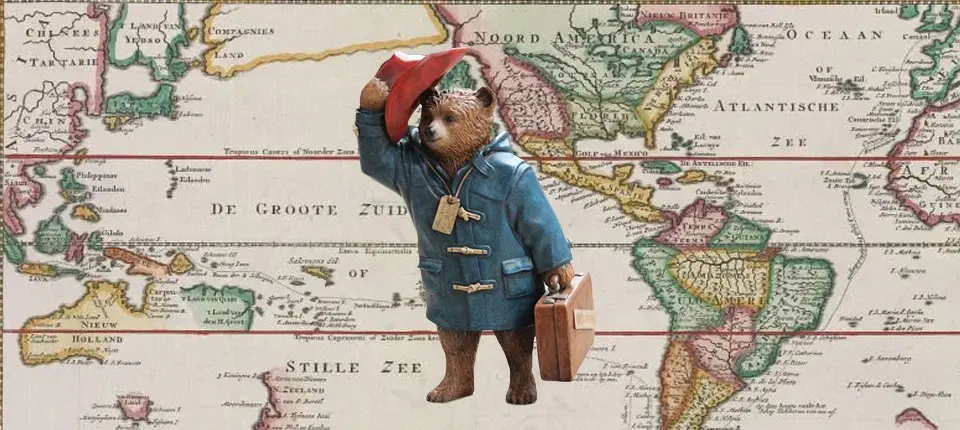
On October 13, 1958, a small, polite, and remarkably determined bear from "Darkest Peru" made his first appearance in the world of British literature. Clad in a distinctive bush hat and carrying a battered suitcase, the character arrived at London’s Paddington Station, forever changing the landscape of children’s storytelling. This date marks the publication of Michael Bond’s A Bear Called Paddington, a book that introduced a character who would eventually transcend the printed page to become a global symbol of kindness, resilience, and the enduring importance of a warm welcome.
The origin of Paddington Bear is a story as charming as the books themselves. It began on a snowy Christmas Eve in 1956, when Michael Bond, then a BBC television cameraman, found himself in a department store near Paddington Station. He noticed a single teddy bear left on a shelf, looking somewhat forlorn. Bond purchased the bear as a gift for his wife, Brenda, and they named him Paddington after the nearby railway terminus. This chance encounter sparked a creative flame; Bond began writing stories about the bear, not initially for publication, but for his own amusement. Within ten days, he had completed the first volume of what would become a legendary series.
When A Bear Called Paddington was released in 1958 by William Collins & Sons, it presented a narrative that resonated deeply with a post-war British public. The story opens with Mr. and Mrs. Brown meeting the bear on a railway platform. He is sitting on his suitcase near the lost property office, wearing a tag around his neck that reads, "Please look after this bear. Thank you." This simple, poignant request established the emotional core of the series. The Browns, a quintessentially middle-class London family, decide to take him home to 32 Windsor Gardens, and thus begins a series of domestic adventures defined by Paddington’s well-meaning but often chaotic attempts to navigate human society.
The literary context of 1958 was one of transition. Britain was emerging from the austerity of the early 1950s, and children’s literature was beginning to embrace a more whimsical yet grounded realism. Paddington fit perfectly into this niche. While he was a talking bear, the world he inhabited was entirely recognizable. He dealt with the complexities of the London Underground, the intricacies of tea shops, and the occasional frustrations of bureaucracy. Michael Bond’s prose was noted for its understated humor and its ability to treat Paddington’s logic with absolute seriousness. To Paddington, it made perfect sense to keep a marmalade sandwich under his hat "in case of emergencies," and the narrative never mocked him for it.
Central to the bear’s identity were the illustrations of Peggy Fortnum. While many artists have since depicted Paddington, Fortnum’s original pen-and-ink sketches established the definitive look of the character. Her work captured a sense of movement and a slightly disheveled dignity that suited a bear who had traveled halfway across the world as a stowaway. Fortnum’s Paddington was not overly sentimental or "cutesy"; he was a character with weight and personality, a visual style that allowed the stories to appeal to both children and adults.