In the top-right corner of Vincent van Gogh’s 1890 masterpiece Almond Blossoms, there is a specific branch that, upon close inspection, appears to belong to a different tree than the one dominating the rest of the canvas. For most viewers, it is a minor detail of composition; for the development team at thatgamecompany, it was a structural crisis.
While developing the "Dear Van Gogh" season for their social adventure game Sky: Children of the Light, the team had built an entire interactive level around a single, gargantuan version of that blossoming tree. However, they quickly realized the environment could not support a second trunk without looking cluttered and losing its poetic focus. After "many, many rounds of testing," the artists found a characteristically creative solution: they placed the branch in the middle of the digital sky, cleverly hiding its severed end within a cluster of clouds.
This meticulous attention to detail is the hallmark of "Dear Van Gogh," a seasonal event that transforms some of the world’s most iconic Post-Impressionist paintings into three-dimensional spaces that players can walk, climb, and fly through. Currently available across PlayStation 5, Nintendo Switch, PC, and mobile platforms, the season represents a landmark fusion of art history and interactive entertainment. Yingxian Lu, Content Producer at thatgamecompany, recently detailed the exhaustive process of bringing the Dutch master’s vision to life, from the initial technical hurdles of recreating a brushstroke to the emotional resonance of the season’s multiplayer finale.
Which paintings can be levels?
The transition from a two-dimensional canvas to a 3D gaming environment is rarely a 1:1 conversion. As Lu explains, the team had to be selective about which of Van Gogh’s works could serve as the foundation for gameplay. While a somber, interior-focused work like The Potato Eaters might have presented narrative or spatial difficulties, Van Gogh’s vast catalog of landscapes offered a more natural fit for the soaring mechanics of Sky.
"If the painting is a natural landscape, it’s more straightforward to translate into a 3D environment," Lu notes. However, the team was determined not to limit themselves solely to fields and forests. Van Gogh’s oeuvre is famously diverse, encompassing intricate floral studies, character portraits, and deeply personal self-portraits. The developers refused to discard these elements simply because they were technically challenging to navigate.
In the case of Almond Blossoms, the solution was a matter of scale. The painting was reimagined as an enormous, sprawling tree. By shrinking the player’s avatars to the size of the individual blossoms, the team turned the branches into a platforming playground. "It feels surreal but also very dreamy and poetic," Lu says of the result.
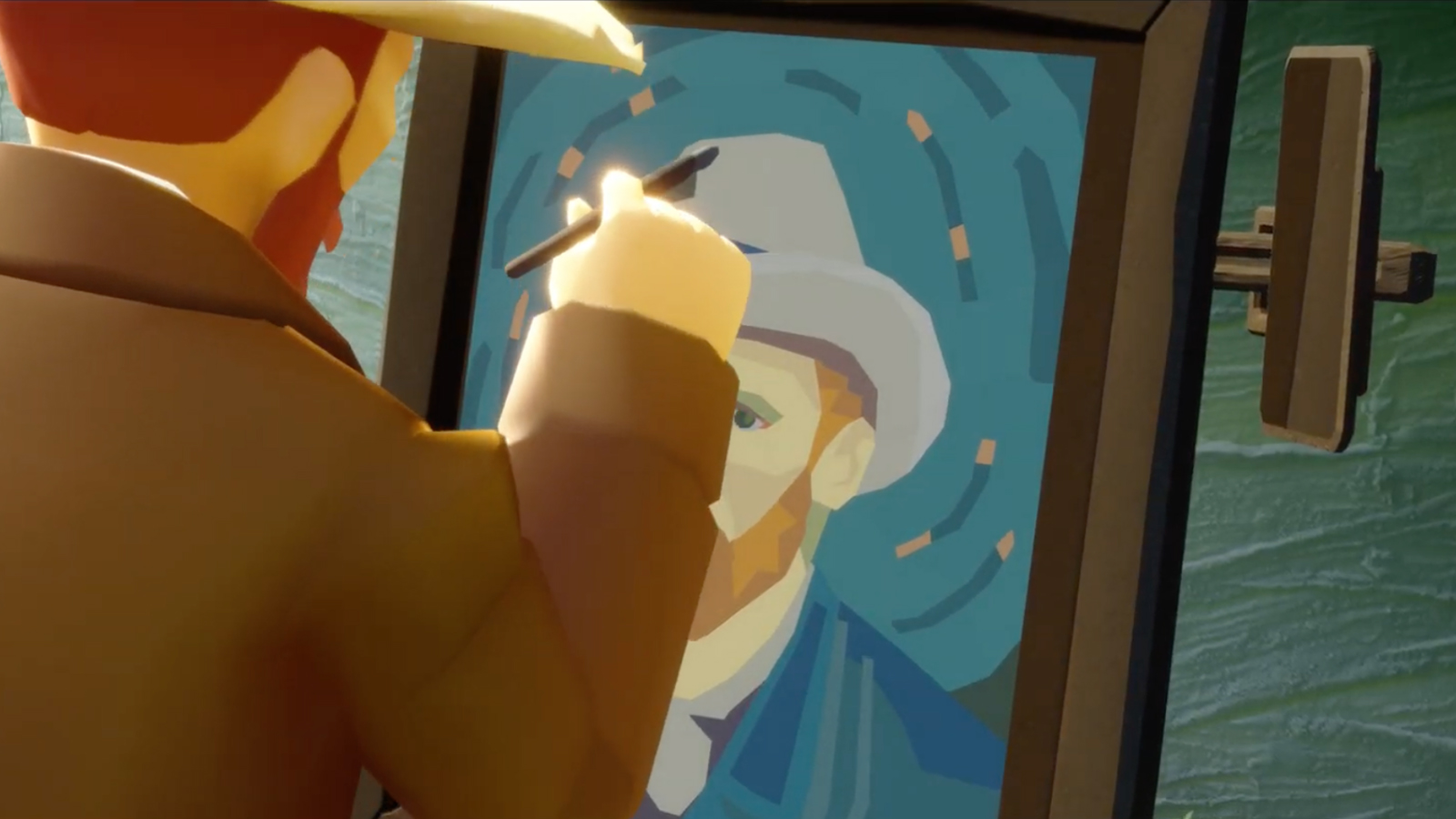
The artist’s self-portraits required a more reverent approach. The team felt that having players jump across the digital face of the artist would be inappropriate. Instead, they integrated the portraits into the narrative. In one sequence, a character representing Van Gogh is seen painting himself while looking into a mirror placed on the canvas. The game’s camera pushes into the work-in-progress and pulls back to reveal the finished portrait, effectively turning the act of creation into a cinematic moment.
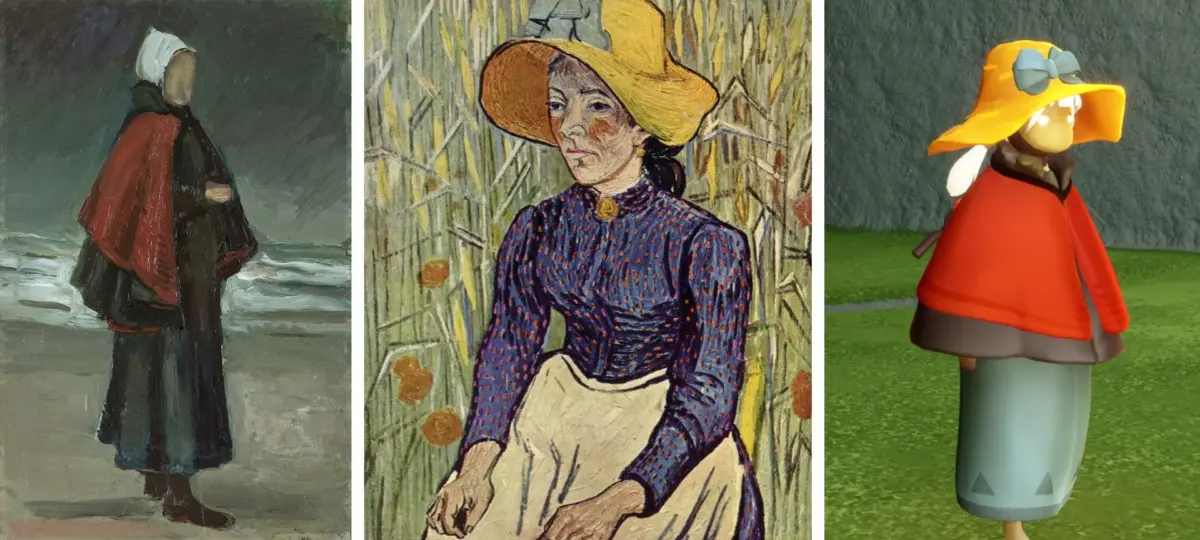
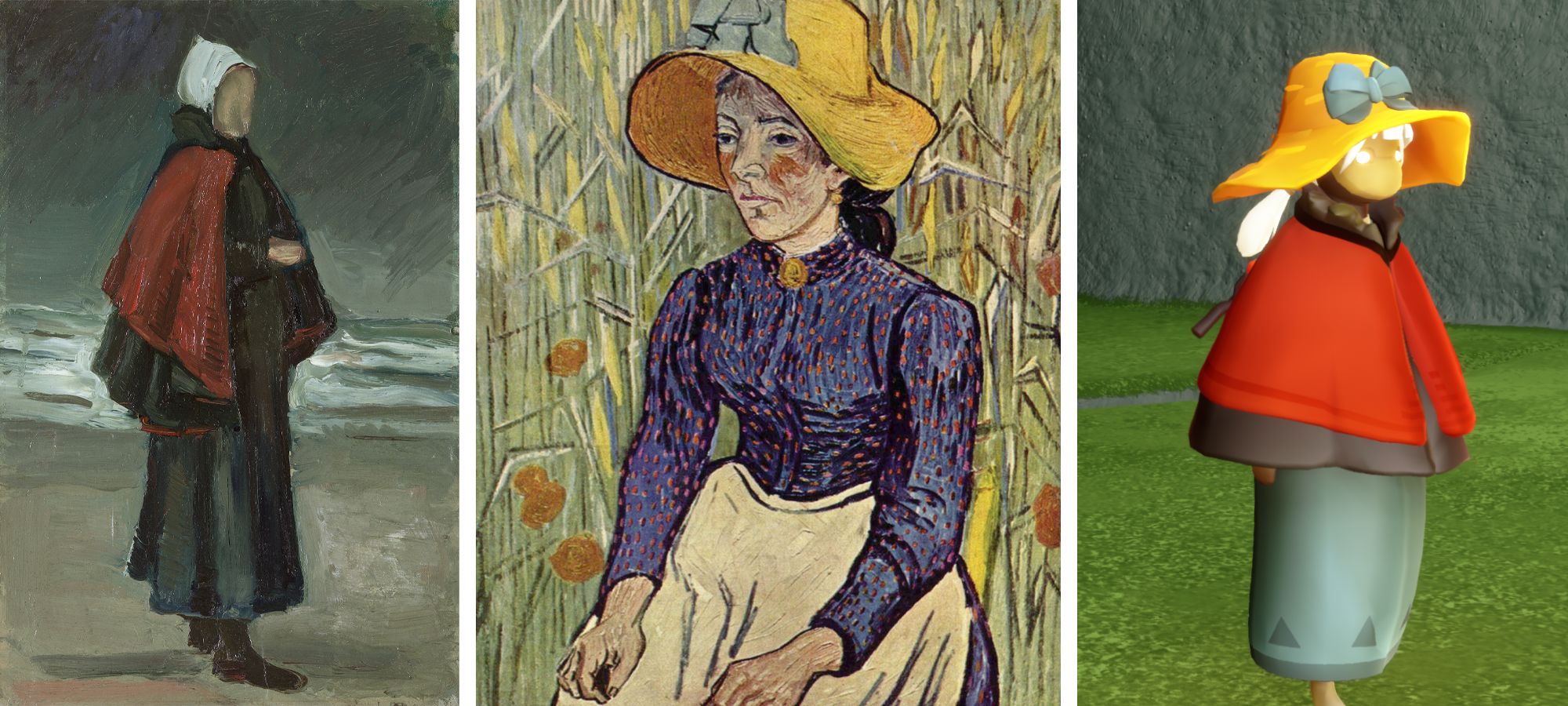
Even the people who populated Van Gogh’s world found a new life within the game’s "cosmetics" system. Players can earn outfits inspired by the subjects of his paintings, such as the postman’s distinctive hat and suit, or clothing drawn from Fisherman’s Wife on the Beach and Peasant Woman Against a Background of Wheat. These allow the community to inhabit the aesthetic of the 19th century as they explore the world.
Brushstrokes first, story later
Before a single line of dialogue was written or a quest was designed, thatgamecompany focused on a singular technical goal: the brushstroke. The visual identity of Van Gogh’s work—the thick, impasto application of paint and the rhythmic, swirling lines—was so vital that the project could not proceed without a guarantee that it could be replicated in a real-time engine.
"The visual identity of the project was so crucial that we wanted to make sure we could achieve the look we were aiming for before committing to the project," Lu says. "And we did!"
The heavy lifting fell to the studio’s graphics engineers and 3D environment artists. Lu’s role was to define the visual North Star and coordinate the various departments to ensure they never drifted from it. The team eventually developed a custom tool that allowed artists to adjust the color, thickness, and size of individual strokes, applying them directly onto 3D models.
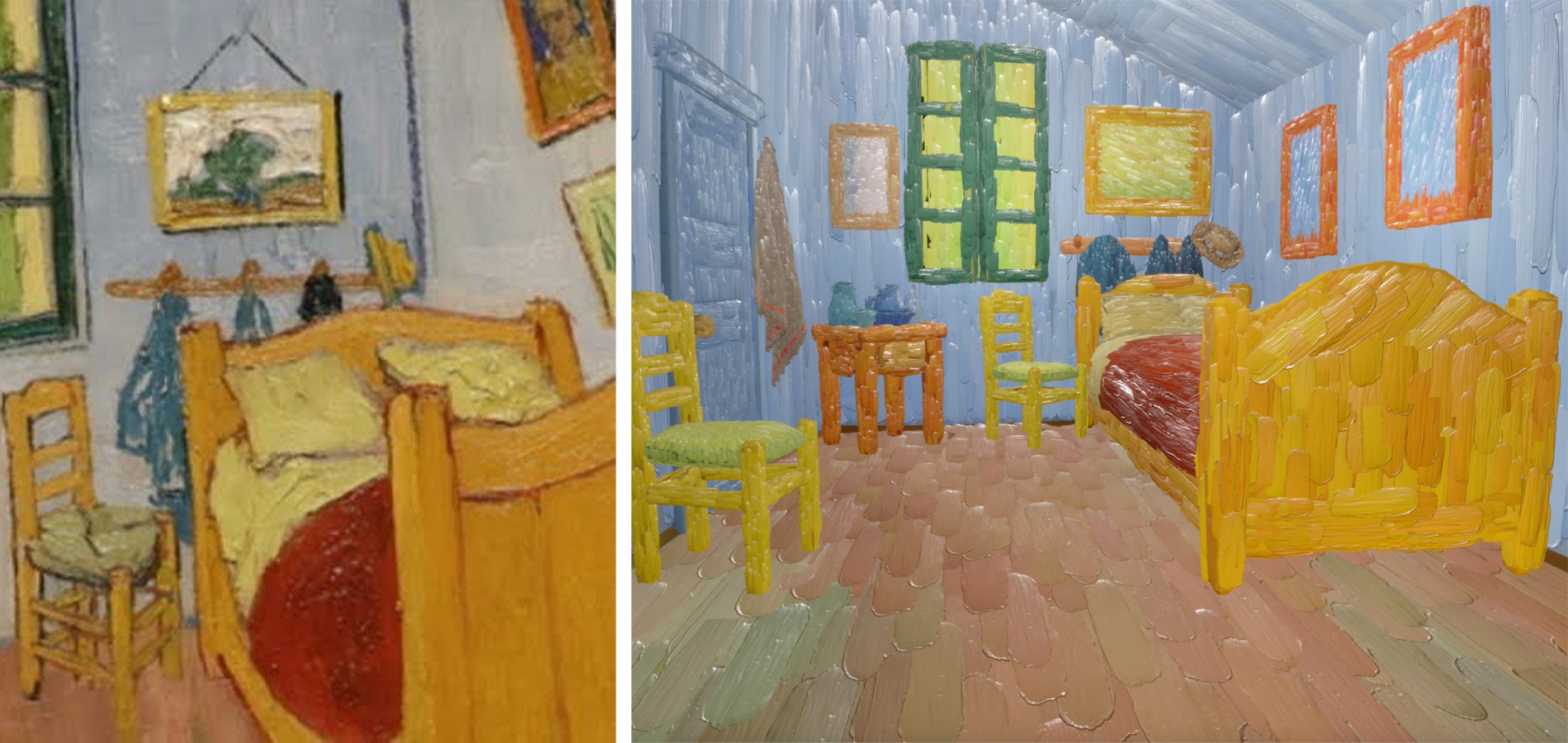
The system was refined through constant iteration, leading to the development of "museum light." This feature, added by a graphics engineer, simulates the uneven surface of a physical painting. As light hits the digital brushstrokes, it creates highlights and shadows, mimicking the experience of viewing a canvas in a gallery. To further the immersion, the team implemented a gyro effect for mobile players; as they tilt their devices, the highlights on the paint shift in real-time. "It’s just a really cool feature and something that can only really be experienced in the medium of games," Lu adds.