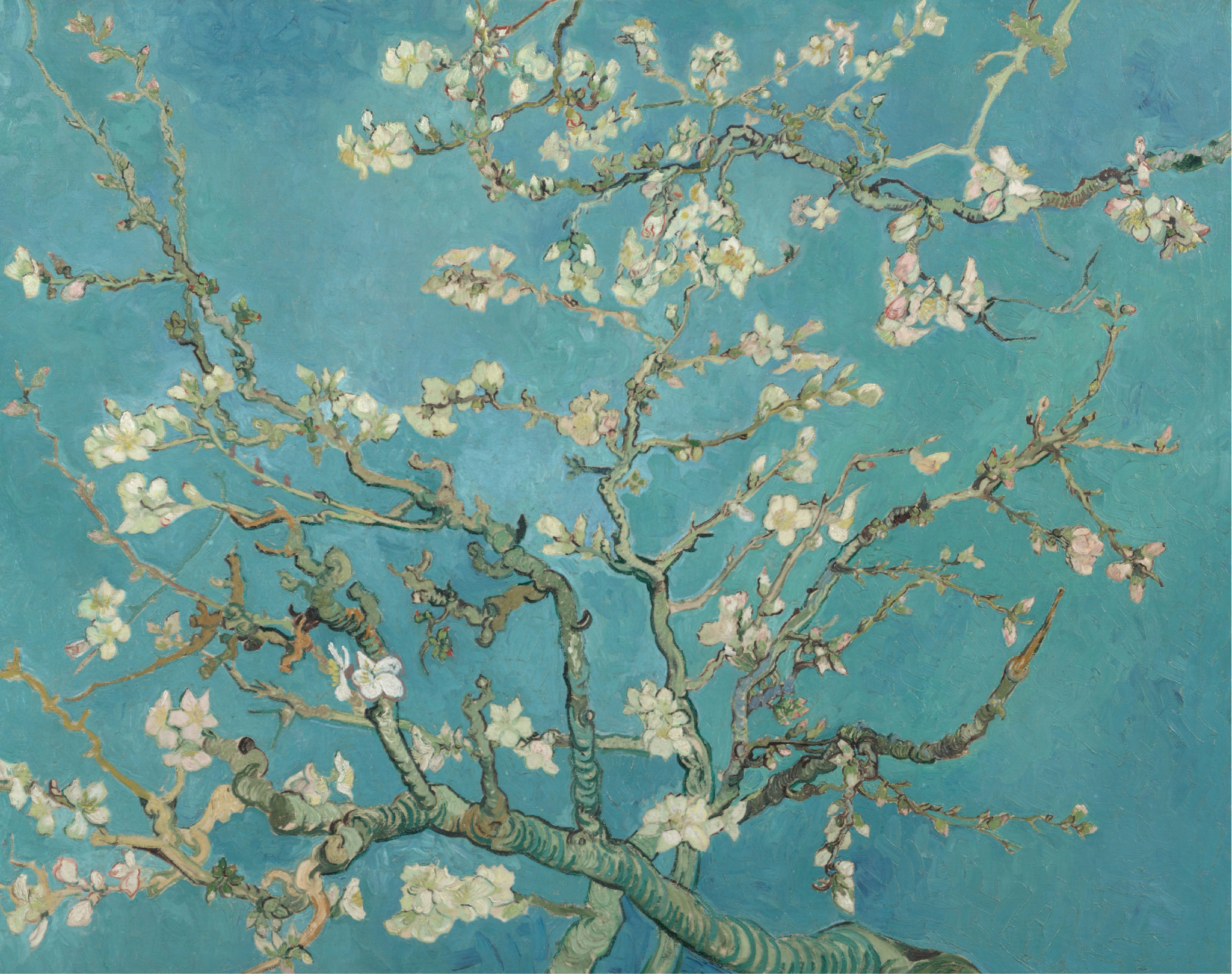
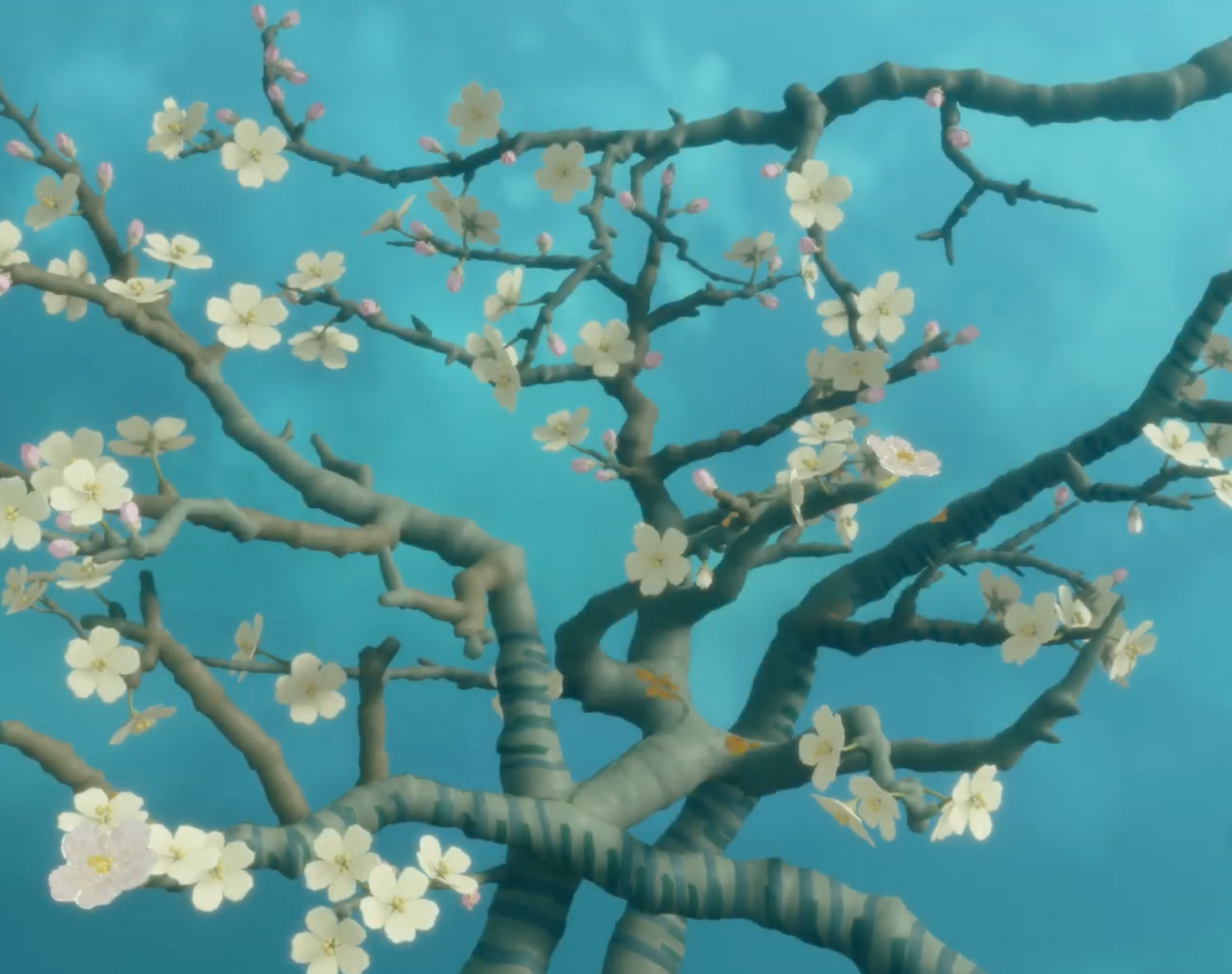
In the top-right corner of Vincent van Gogh’s 1890 masterpiece Almond Blossoms, there is a specific branch that, upon close inspection, appears to belong to a different tree than the one dominating the rest of the canvas. For most viewers, it is a minor detail of composition; for the development team at thatgamecompany, it was a structural crisis.
While developing the "Dear Van Gogh" season for their social adventure game Sky: Children of the Light, the team had built an entire interactive level around a single, gargantuan version of that blossoming tree. However, they quickly realized the environment could not support a second trunk without looking cluttered and losing its poetic focus. After "many, many rounds of testing," the artists found a characteristically creative solution: they placed the branch in the middle of the digital sky, cleverly hiding its severed end within a cluster of clouds.
This meticulous attention to detail is the hallmark of "Dear Van Gogh," a seasonal event that transforms some of the world’s most iconic Post-Impressionist paintings into three-dimensional spaces that players can walk, climb, and fly through. Currently available across PlayStation 5, Nintendo Switch, PC, and mobile platforms, the season represents a landmark fusion of art history and interactive entertainment. Yingxian Lu, Content Producer at thatgamecompany, recently detailed the exhaustive process of bringing the Dutch master’s vision to life, from the initial technical hurdles of recreating a brushstroke to the emotional resonance of the season’s multiplayer finale.
Which paintings can be levels?
The transition from a two-dimensional canvas to a 3D gaming environment is rarely a 1:1 conversion. As Lu explains, the team had to be selective about which of Van Gogh’s works could serve as the foundation for gameplay. While a somber, interior-focused work like The Potato Eaters might have presented narrative or spatial difficulties, Van Gogh’s vast catalog of landscapes offered a more natural fit for the soaring mechanics of Sky.
"If the painting is a natural landscape, it’s more straightforward to translate into a 3D environment," Lu notes. However, the team was determined not to limit themselves solely to fields and forests. Van Gogh’s oeuvre is famously diverse, encompassing intricate floral studies, character portraits, and deeply personal self-portraits. The developers refused to discard these elements simply because they were technically challenging to navigate.
In the case of Almond Blossoms, the solution was a matter of scale. The painting was reimagined as an enormous, sprawling tree. By shrinking the player’s avatars to the size of the individual blossoms, the team turned the branches into a platforming playground. "It feels surreal but also very dreamy and poetic," Lu says of the result.
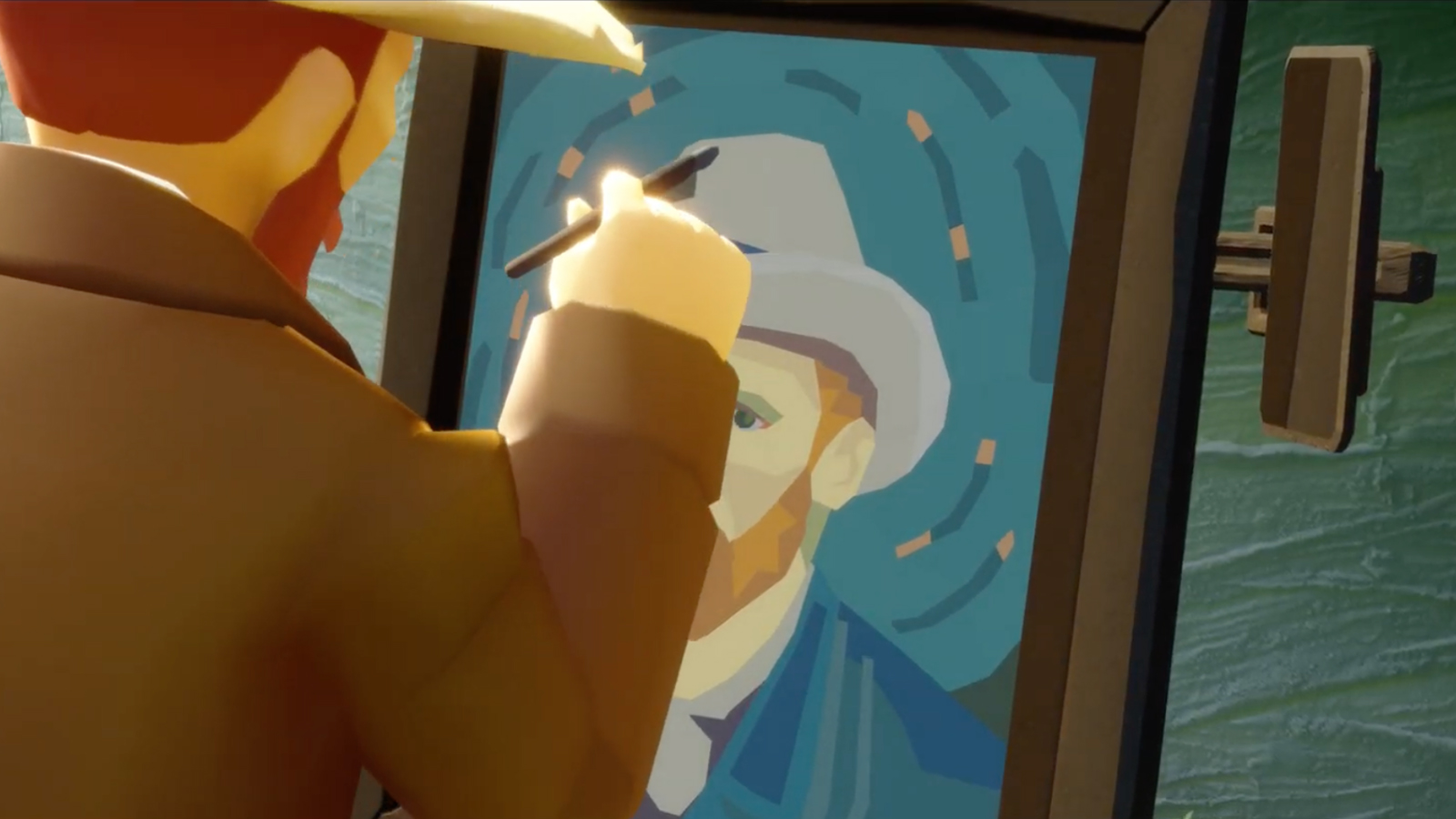
The artist’s self-portraits required a more reverent approach. The team felt that having players jump across the digital face of the artist would be inappropriate. Instead, they integrated the portraits into the narrative. In one sequence, a character representing Van Gogh is seen painting himself while looking into a mirror placed on the canvas. The game’s camera pushes into the work-in-progress and pulls back to reveal the finished portrait, effectively turning the act of creation into a cinematic moment.
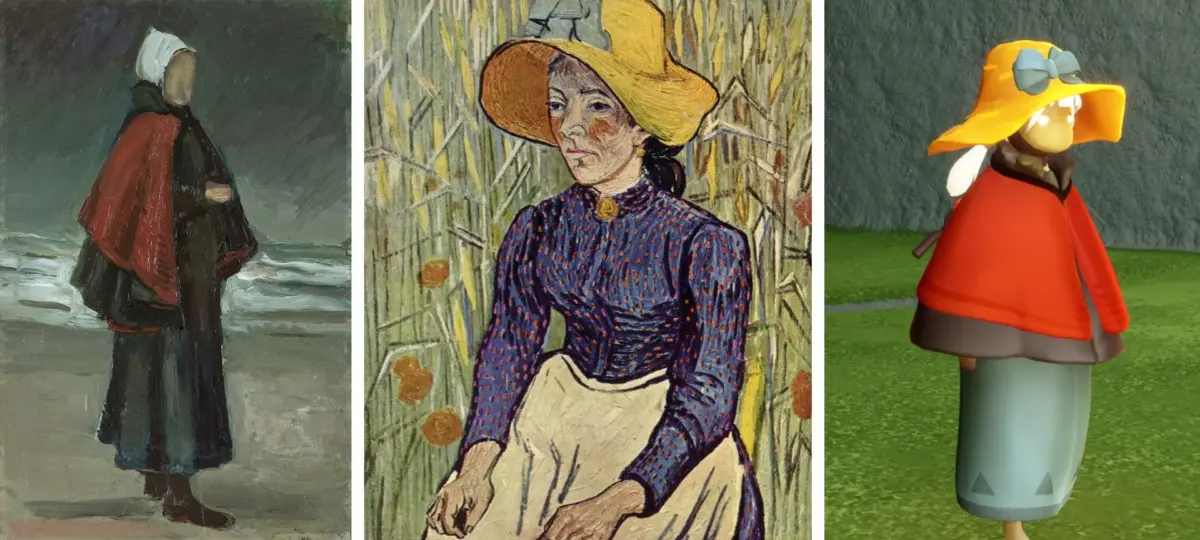
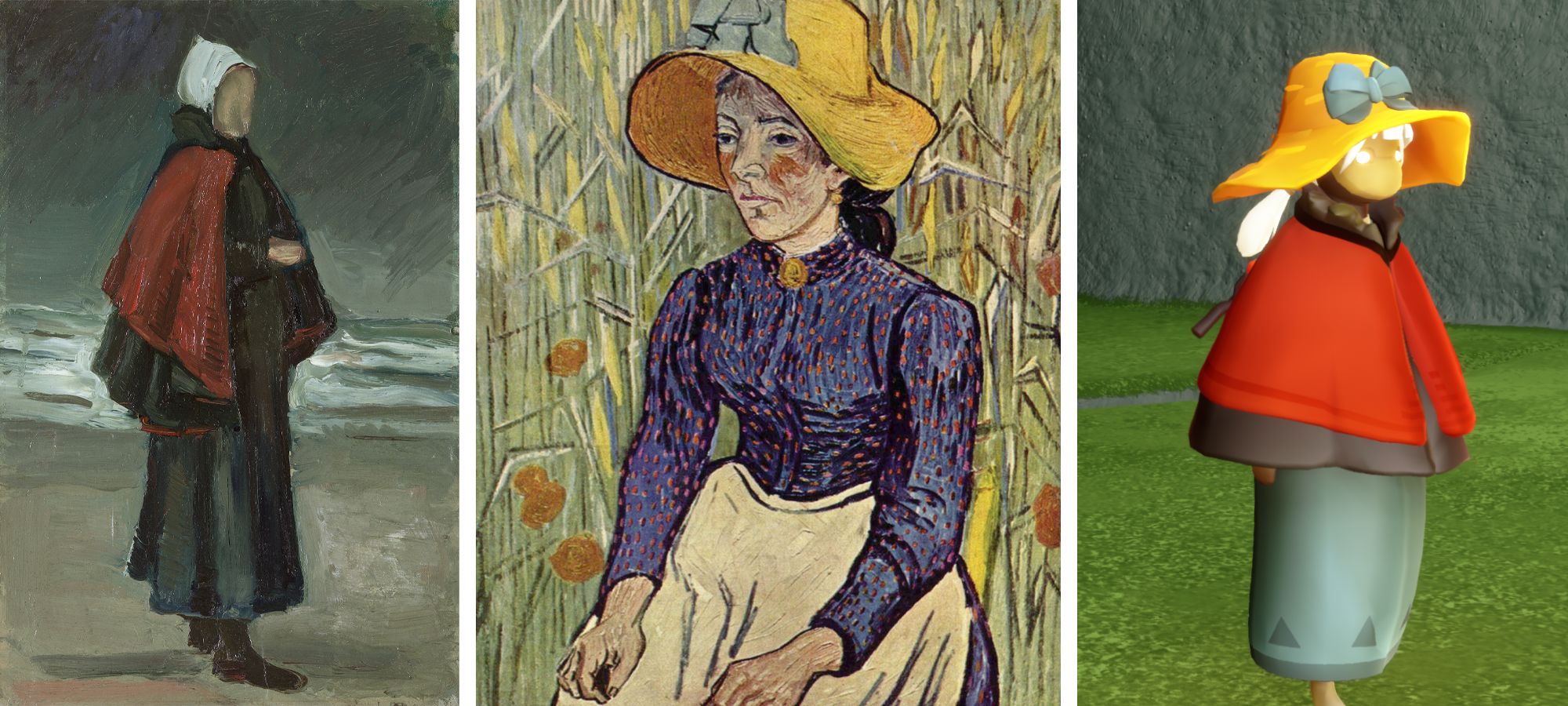
Even the people who populated Van Gogh’s world found a new life within the game’s "cosmetics" system. Players can earn outfits inspired by the subjects of his paintings, such as the postman’s distinctive hat and suit, or clothing drawn from Fisherman’s Wife on the Beach and Peasant Woman Against a Background of Wheat. These allow the community to inhabit the aesthetic of the 19th century as they explore the world.
Brushstrokes first, story later
Before a single line of dialogue was written or a quest was designed, thatgamecompany focused on a singular technical goal: the brushstroke. The visual identity of Van Gogh’s work—the thick, impasto application of paint and the rhythmic, swirling lines—was so vital that the project could not proceed without a guarantee that it could be replicated in a real-time engine.
"The visual identity of the project was so crucial that we wanted to make sure we could achieve the look we were aiming for before committing to the project," Lu says. "And we did!"
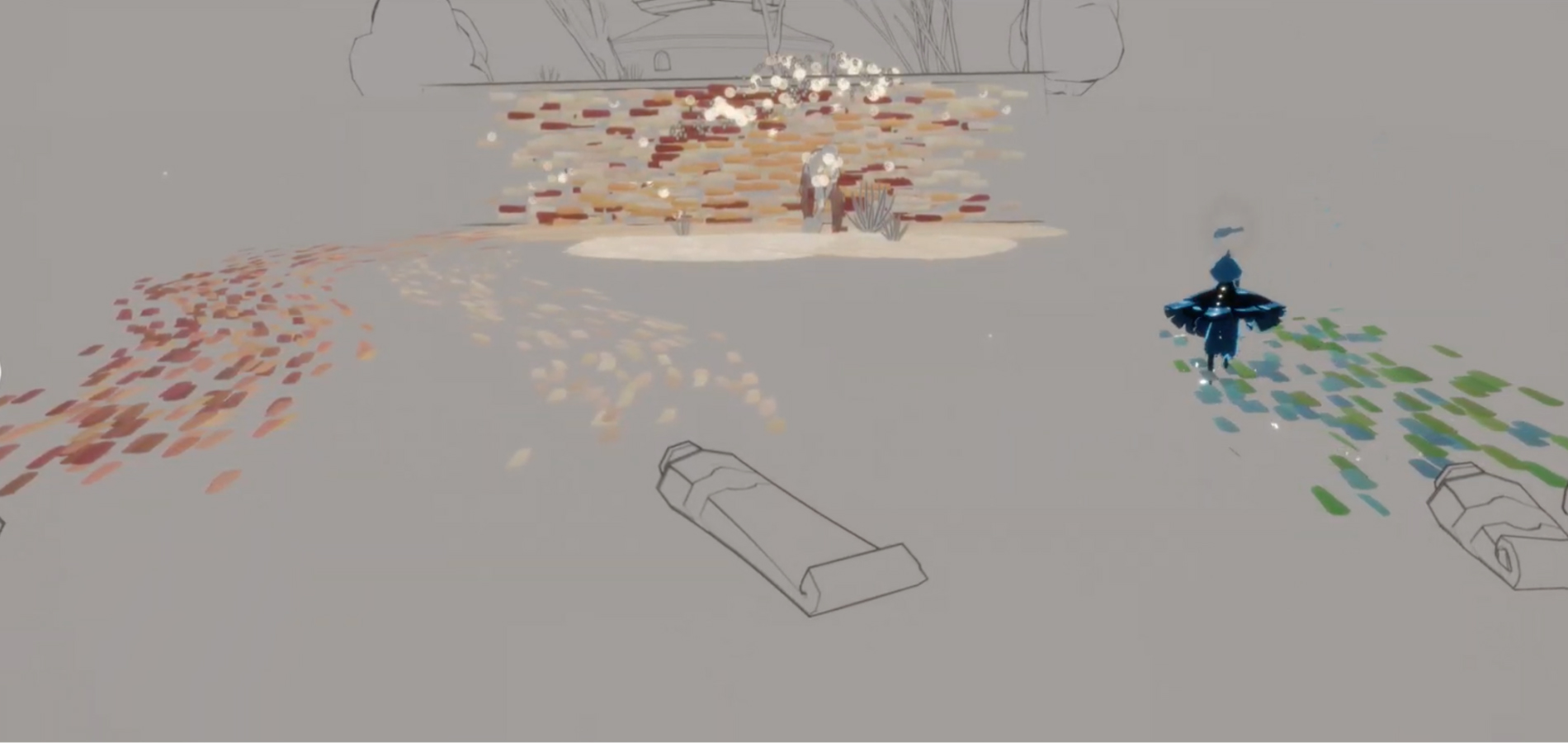
The heavy lifting fell to the studio’s graphics engineers and 3D environment artists. Lu’s role was to define the visual North Star and coordinate the various departments to ensure they never drifted from it. The team eventually developed a custom tool that allowed artists to adjust the color, thickness, and size of individual strokes, applying them directly onto 3D models.
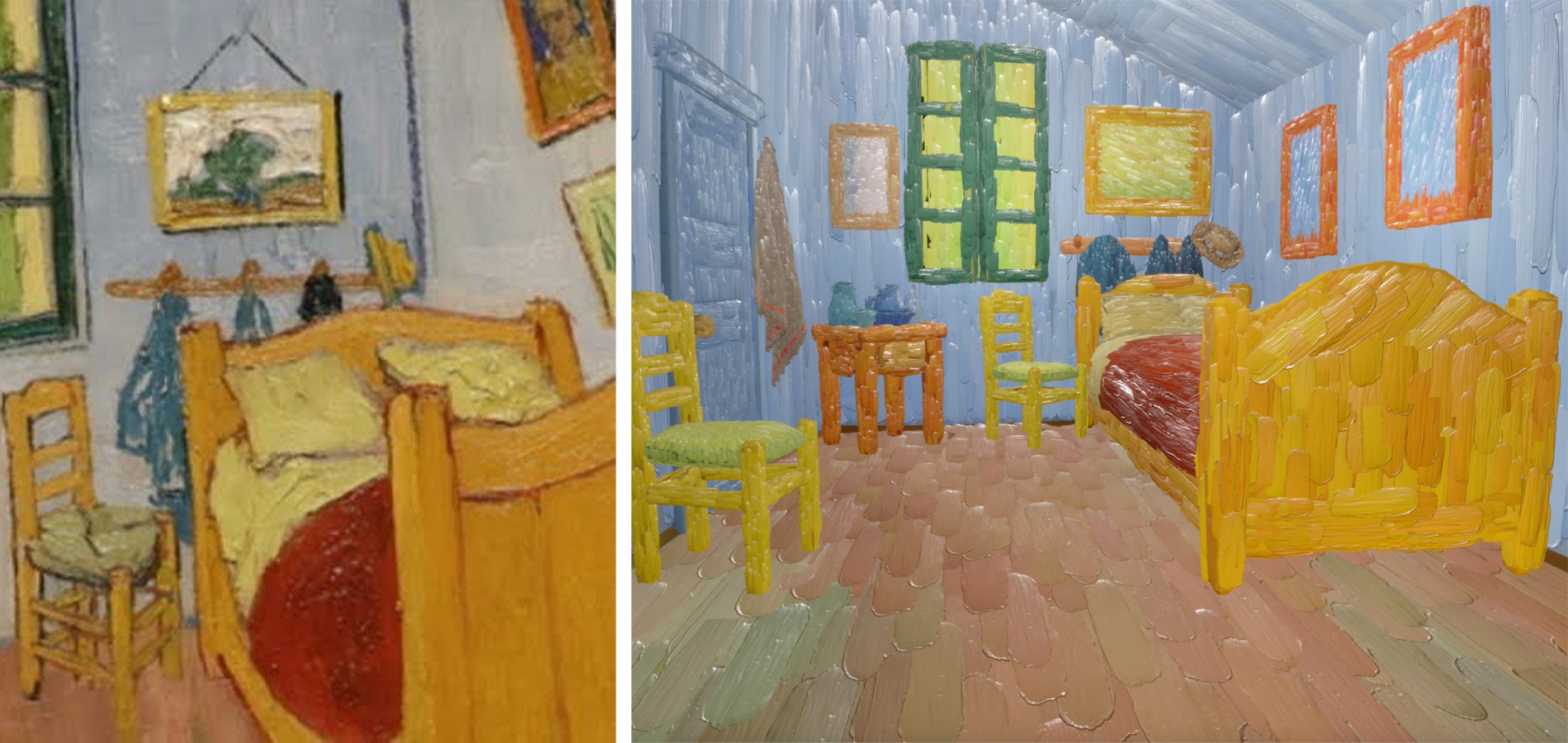
The system was refined through constant iteration, leading to the development of "museum light." This feature, added by a graphics engineer, simulates the uneven surface of a physical painting. As light hits the digital brushstrokes, it creates highlights and shadows, mimicking the experience of viewing a canvas in a gallery. To further the immersion, the team implemented a gyro effect for mobile players; as they tilt their devices, the highlights on the paint shift in real-time. "It’s just a really cool feature and something that can only really be experienced in the medium of games," Lu adds.
When the painting is the concept art
In a typical development cycle, concept artists create 2D sketches that are then translated into 3D models. For this season, the traditional workflow was reversed. The paintings themselves served as the primary concept art, acting as the ultimate reference for every environmental asset.
However, relying on digital versions of these paintings proved difficult. The team found that digital images of Van Gogh’s work varied wildly in color and tone depending on the source. To achieve true accuracy, the team dispatched representatives to museums across Europe and the Museum of Modern Art (MoMA) in New York to photograph the original works in person. These high-fidelity photos allowed the concept team to color-correct their digital assets, providing a stable reference for the 3D artists.
The commitment to authenticity extended to the architectural design. The team researched period-accurate Dutch and French architecture, particularly for the recreation of Van Gogh’s famous room in Arles. They didn’t just look at the painting; they studied the actual building’s structure to rebuild it as it existed in the late 1800s.
To make the town of Arles feel like a living, breathing community, the concept artists had to imagine what lay beyond the landmarks of the Yellow House and the local café. They designed additional streets and buildings that adhered to the aesthetic of the era, ensuring that the environment felt like a place where other people—not just the artist—actually lived.
Lighting also presented a unique challenge. In The Bedroom, the lighting is bright and uniform, defying the way a single window would naturally illuminate a room. To capture that specific atmosphere, the team had to use an unusually high number of light sources within the game engine. "We also had to think about what created the particular atmosphere of the painting, and then figure out how to recreate that atmosphere with the tools and limitations of a real-time game," Lu explains.
Almond Blossoms and the limits of the tree
Turning Almond Blossoms into a playable level was perhaps the most ambitious undertaking of the season. The goal was to create an intuitive navigation path through the branches while maintaining a composition that looked like the original painting from specific angles.
This required a tight collaboration between quest designers and environment artists. They had to simplify the complex network of branches to ensure players wouldn’t get lost, yet they needed to preserve the primary structure that makes the painting recognizable. The decision to hide the "stray" branch in the clouds was born from this balance; it allowed the team to include a key visual element without cluttering the 3D space or ruining the "poetic quality" of the scene.
Throughout this process, the team remained dedicated to two pillars: Van Gogh’s subjects and his history. Lu points out that the artist’s focus on laborers and farmers was a defining characteristic of his work. To honor this, the team ensured that the farmer in Le Moulin de la Galette remained a permanent fixture of the digital environment.
Narrative and the weight of history
Maintaining historical accuracy while providing an interactive experience is a delicate balancing act. Lu worked closely with the design and art teams to ensure the game felt respectful of real events. "We didn’t want to add a character or create a story that would change what actually happened in Van Gogh’s life," she says.
This philosophy led to the decision to have players enter the experience as "spirit-shaded" entities. By appearing as silhouettes rather than their usual, brightly colored avatars, players are reminded that they are observers rather than participants. They are witnessing the artist’s life, but they remain separate from the historical timeline.
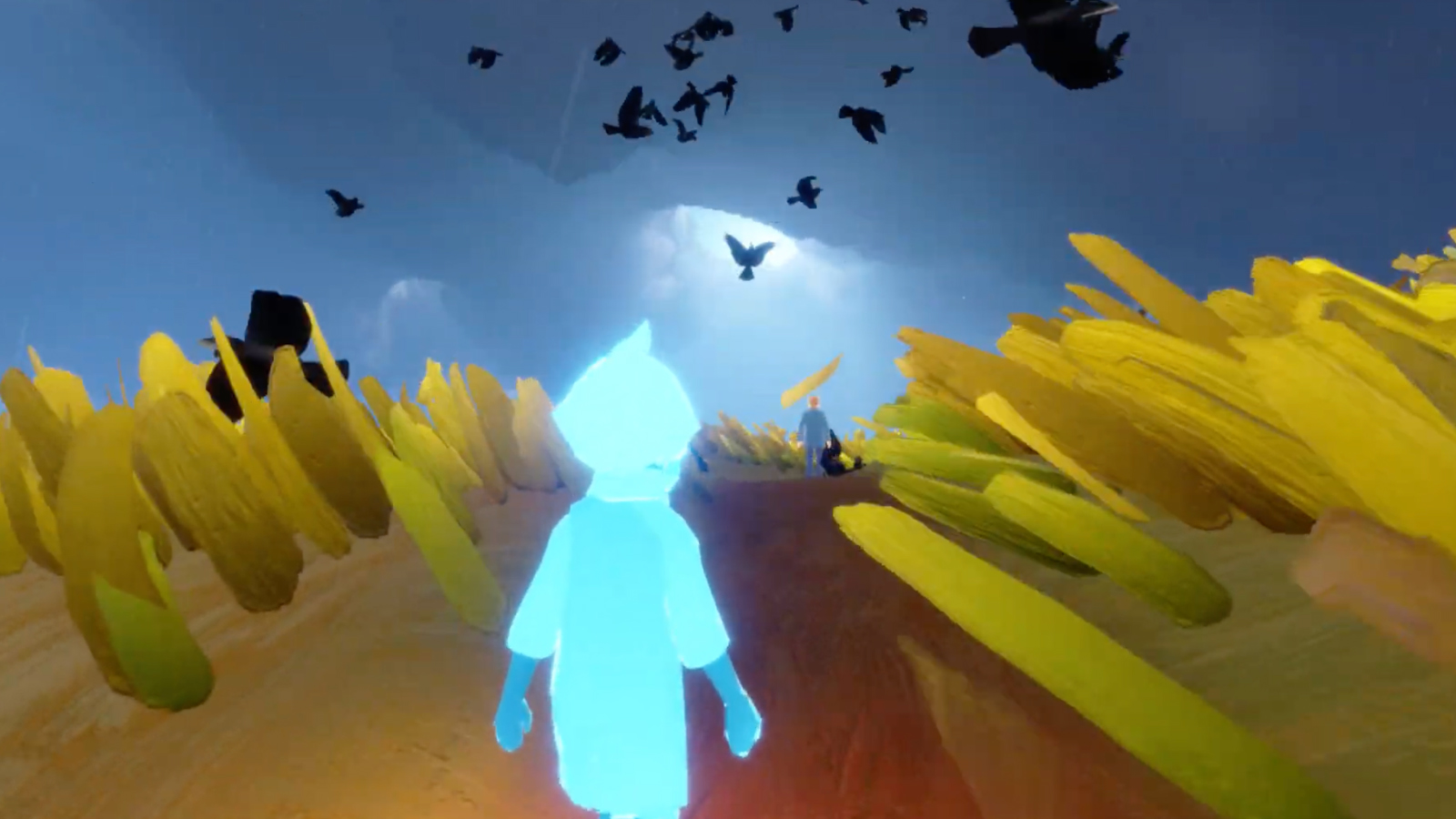
While the facts of his life were set in stone, the team had to interpret Van Gogh’s inner world. Since Sky uses very little dialogue, they relied on his extensive correspondence with his brother, Theo, to understand his emotional state. They then translated these feelings into visual symbolism. In the game, sunflowers are used to represent hope and love, often found in "safe" spaces like Theo’s gallery. Conversely, crows symbolize the darker, more turbulent periods of Vincent’s life.
When addressing the artist’s death by suicide, the team opted for an abstract approach to avoid being overly graphic or triggering. They depicted a crow attack to symbolize the tragic event, aiming to keep the moment "artistic and beautiful" while acknowledging the gravity of the loss.
Two ways to play Vincent’s story
To solve the problem of making a historical biography interactive, the team devised two distinct gameplay roles: the Postman and the Brush.
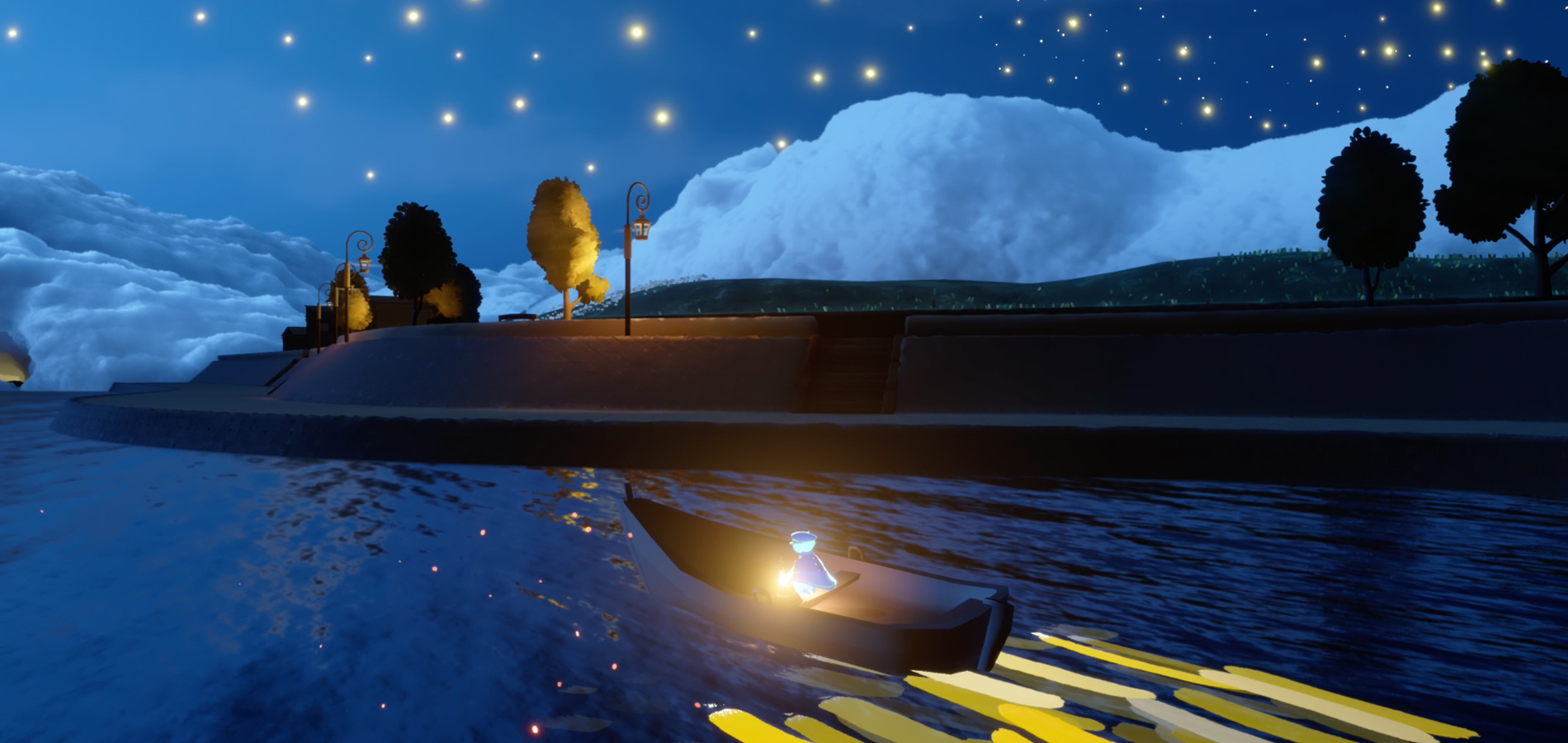
In the role of the Postman, players are tasked with delivering the letters exchanged between Vincent and Theo. This mechanic allows players to feel the weight of the emotional and financial support Theo provided. The nature of these deliveries changes to reflect the artist’s mental state; in the Arles chapter, the delivery takes place on a peaceful river, reflecting his joy during that time. In the Saint-Rémy chapter, the player must struggle against a dark, howling wind, evoking the hardships of his later years.
As the Brush, players become an extension of the artist’s hand. They are tasked with completing sketches, adding color to black-and-white scenes, or transforming basic textures into the season’s signature brushstrokes. This allows players to feel like they are helping Vincent realize his vision without altering the historical outcome of the paintings themselves.
The Letters and the Legacy of Johanna
The research process revealed surprising insights into the brothers’ relationship. Lu notes that Vincent was a prolific writer—estimated to have sent and received over 2,000 letters—and was often blunt in his requests for financial aid. "I hope you will be able to send money soon," was a recurring sentiment.
While many of Vincent’s letters survived because Theo kept them, only about 40 of Theo’s replies remain. These rare glimpses into Theo’s mind were incredibly moving for the developers. One line in particular—"the courage for work is far from abandoning you"—became a rallying cry for the team and served as the inspiration for the season’s finale.
Lu also emphasized the importance of Johanna van Gogh-Bonger, Theo’s wife. Following the deaths of both brothers within six months of each other, Johanna was left to raise an infant son alone. Recognizing the genius of her brother-in-law, she spent decades organizing exhibitions and editing the brothers’ correspondence for publication.
"She’s one of the reasons we know Vincent van Gogh today," Lu says. In the game, Johanna serves as a guide, staying in the gallery to help players navigate the stages of Vincent’s life. By the end of the season, players stand alongside her to witness the global recognition she helped secure.
Making Starry Night
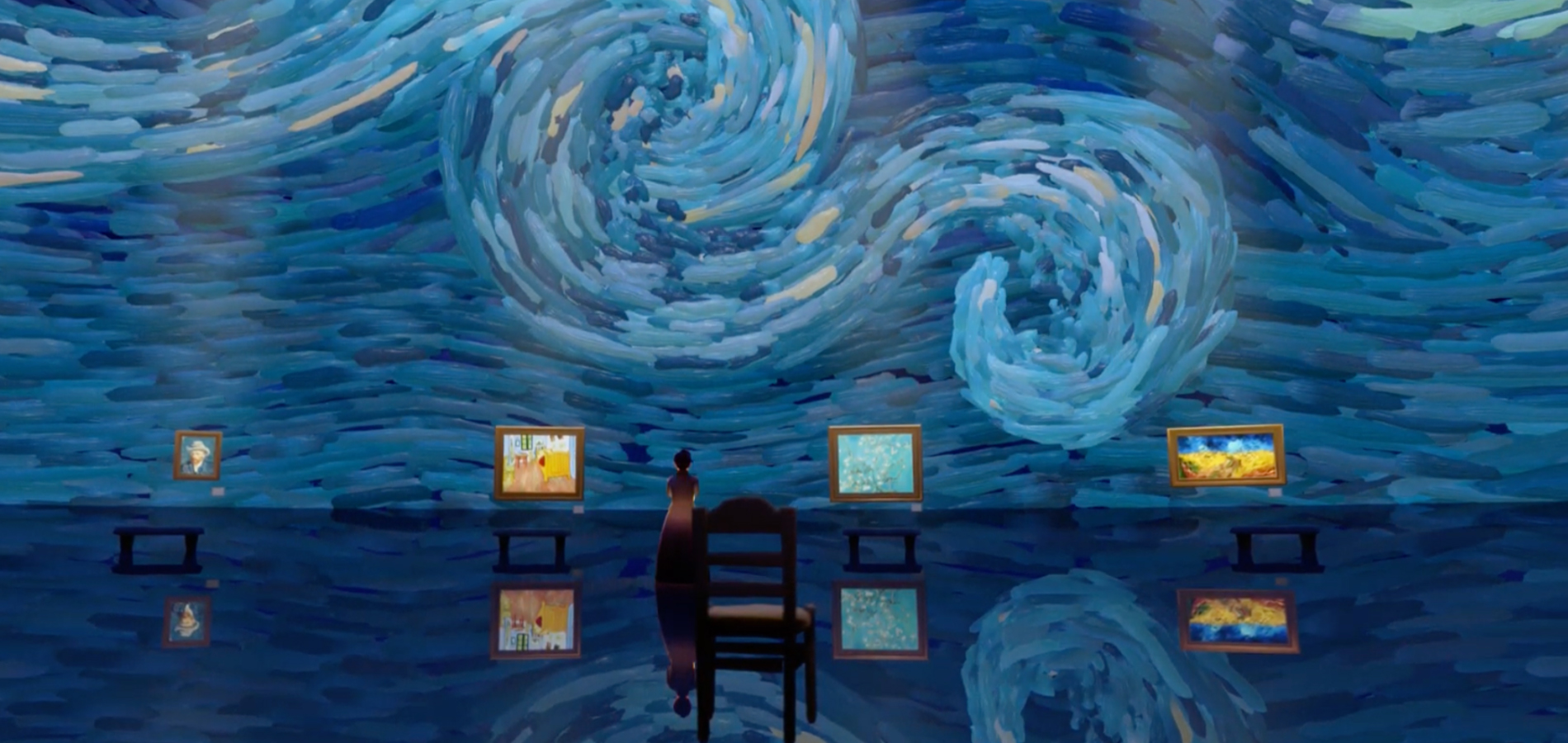
The culmination of the season is a multiplayer recreation of Starry Night. In this finale, millions of players from around the world fly into the sky together, lighting up the darkness to form the swirling patterns of the famous painting. "So you become part of the beauty that you are witnessing," Lu says.
For Lu, the scene is the perfect marriage of visuals, narrative, and music. It is a moment of profound emotion, offering a sense of catharsis for an artist who received so little recognition during his lifetime. "I tear up for Vincent," she admits, while also feeling a sense of gratitude for the people like Theo and Johanna who supported him.
The "Dear Van Gogh" season also marked a significant shift in how thatgamecompany produces content. Traditionally, seasonal quests are released gradually over several weeks. For this project, creative director Jenova Chen suggested delivering the entire experience in a single version.
To achieve this, Lu had to overhaul the studio’s workflow, creating parallel production milestones and managing resources more efficiently. The gamble paid off; Lu reports that quest completion rates were higher than in previous seasons, as players were able to experience the emotional arc of Van Gogh’s life in a single, movie-like sitting or at their own pace.
Through "Dear Van Gogh," thatgamecompany has created more than just a game level; they have built a digital monument to the persistence of the human spirit and the enduring power of art. As players fly through the stars of Saint-Rémy, they aren’t just playing a game—they are participating in a global appreciation of a legacy that was almost lost to time.