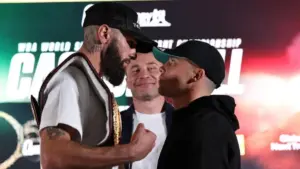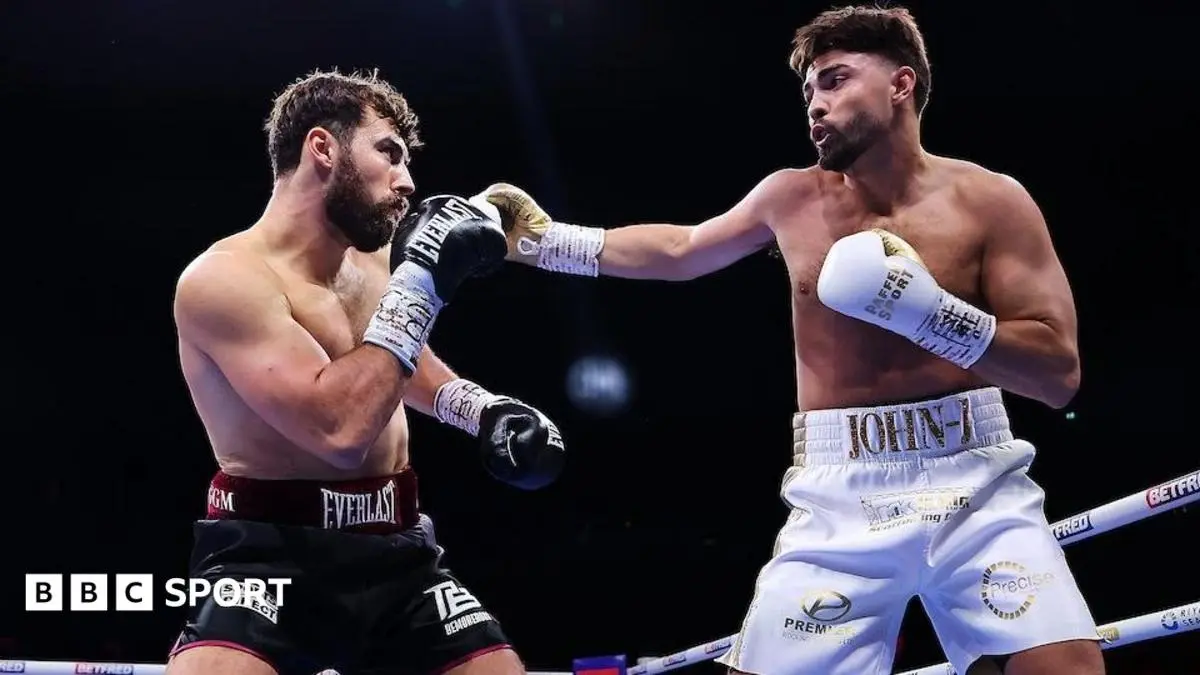
In the high-stakes world of professional boxing, the transition from prospect to legitimate contender is often marked by a single night where temperament, talent, and timing converge. For Pat Brown, that night arrived in spectacular fashion in the heart of East Manchester. In a performance that balanced tactical patience with concussive finishing power, Brown secured the British and Commonwealth cruiserweight titles, stopping a resilient but ultimately outmatched Hedges in a bout that resonated far beyond the confines of the ring.
The event itself was a testament to Brown’s burgeoning star power. Originally slated to take place in the more modest surroundings of Altrincham, the sheer volume of ticket demands forced Matchroom Boxing to pivot, relocating the card to the state-of-the-art Co-op Live arena. It was a gamble that paid dividends. A boisterous, 5,000-strong crowd packed into the venue, creating an atmosphere that felt more akin to a world title fight than a domestic championship clash. The energy was palpable from the moment the lights dimmed, reaching a crescendo as the local favorite made his entrance.
As the fighters emerged, the tribal nature of British boxing was on full display. Brown, the local hero, was greeted by a wall of sound—a rhythmic chorus of "Oh Patrick the Bomber" and chants of "Sale" that echoed throughout the cavernous arena. In stark contrast, Essex-based fighter Hedges was met with a chorus of boos, the quintessential "away" fighter entering a lion’s den. Despite the hostile reception, Hedges appeared unfazed in the early stages, clearly intent on spoiling the party and upsetting the narrative that had been carefully constructed around Brown’s rise.
The opening rounds were a study in stylistic friction. Hedges, known for his unorthodox and often frustrating approach, sought to disrupt Brown’s rhythm from the opening bell. Utilizing sharp footwork and an awkward defensive posture, Hedges succeeded in nullifying Brown’s primary weapons. Whenever Brown looked to plant his feet and unload the heavy power-punches that have become his trademark, Hedges was either gone or clinching. This tactical holding at opportune moments prevented Brown from finding his range, and for the first few frames, it appeared that the underdog might be capable of dragging the favorite into a grueling, ugly affair.
Brown, however, remained composed. Rather than succumbing to frustration as Hedges circled and parried, the 29-year-old began to showcase the technical evolution that has characterized his recent camp. He stayed disciplined, refusing to over-commit and leave himself vulnerable to Hedges’ counter-attacks. The first four rounds were competitive, perhaps even tilting slightly in Hedges’ favor due to his activity and success in making the fight a scrappy, disjointed contest.
The momentum began to shift decisively in the fifth round. Recognizing that he needed to pierce Hedges’ guard with more than just singular power shots, Brown began to lean heavily on his jab. It was a classic boxing adjustment: using the lead hand to measure the distance and freeze the opponent before following up with more complex sequences. The jab acted as a precursor to a series of sharp combinations that began to find their mark. A particularly crisp right uppercut punctuated the fifth round, a clear signal that Brown had finally decoded the puzzle presented by Hedges’ awkwardness.