In the high-stakes world of professional boxing, the transition from prospect to legitimate contender is often marked by a single night where temperament, talent, and timing converge. For Pat Brown, that night arrived in spectacular fashion in the heart of East Manchester. In a performance that balanced tactical patience with concussive finishing power, Brown secured the British and Commonwealth cruiserweight titles, stopping a resilient but ultimately outmatched Hedges in a bout that resonated far beyond the confines of the ring.
The event itself was a testament to Brown’s burgeoning star power. Originally slated to take place in the more modest surroundings of Altrincham, the sheer volume of ticket demands forced Matchroom Boxing to pivot, relocating the card to the state-of-the-art Co-op Live arena. It was a gamble that paid dividends. A boisterous, 5,000-strong crowd packed into the venue, creating an atmosphere that felt more akin to a world title fight than a domestic championship clash. The energy was palpable from the moment the lights dimmed, reaching a crescendo as the local favorite made his entrance.
As the fighters emerged, the tribal nature of British boxing was on full display. Brown, the local hero, was greeted by a wall of sound—a rhythmic chorus of "Oh Patrick the Bomber" and chants of "Sale" that echoed throughout the cavernous arena. In stark contrast, Essex-based fighter Hedges was met with a chorus of boos, the quintessential "away" fighter entering a lion’s den. Despite the hostile reception, Hedges appeared unfazed in the early stages, clearly intent on spoiling the party and upsetting the narrative that had been carefully constructed around Brown’s rise.
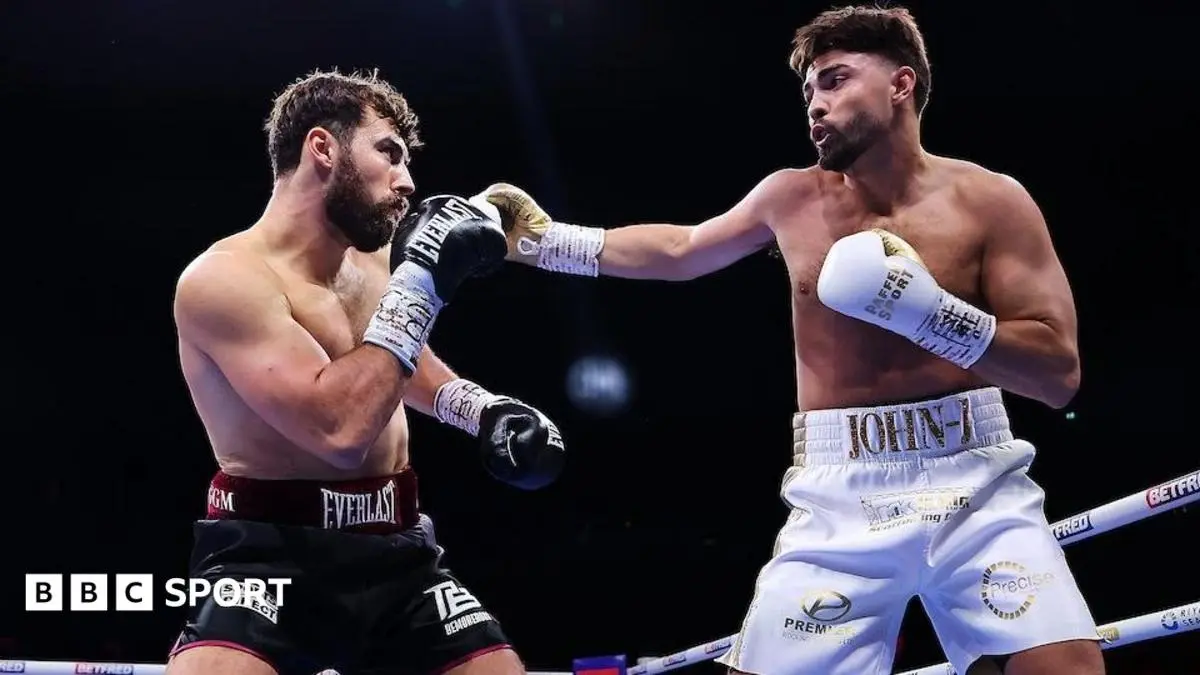
The opening rounds were a study in stylistic friction. Hedges, known for his unorthodox and often frustrating approach, sought to disrupt Brown’s rhythm from the opening bell. Utilizing sharp footwork and an awkward defensive posture, Hedges succeeded in nullifying Brown’s primary weapons. Whenever Brown looked to plant his feet and unload the heavy power-punches that have become his trademark, Hedges was either gone or clinching. This tactical holding at opportune moments prevented Brown from finding his range, and for the first few frames, it appeared that the underdog might be capable of dragging the favorite into a grueling, ugly affair.
Brown, however, remained composed. Rather than succumbing to frustration as Hedges circled and parried, the 29-year-old began to showcase the technical evolution that has characterized his recent camp. He stayed disciplined, refusing to over-commit and leave himself vulnerable to Hedges’ counter-attacks. The first four rounds were competitive, perhaps even tilting slightly in Hedges’ favor due to his activity and success in making the fight a scrappy, disjointed contest.
The momentum began to shift decisively in the fifth round. Recognizing that he needed to pierce Hedges’ guard with more than just singular power shots, Brown began to lean heavily on his jab. It was a classic boxing adjustment: using the lead hand to measure the distance and freeze the opponent before following up with more complex sequences. The jab acted as a precursor to a series of sharp combinations that began to find their mark. A particularly crisp right uppercut punctuated the fifth round, a clear signal that Brown had finally decoded the puzzle presented by Hedges’ awkwardness.
There was a poetic symmetry to the fight’s conclusion, rooted in the rich history of Manchester boxing. During the pre-fight weigh-in, Hedges had paid a poignant tribute to the city’s most famous boxing son, Ricky Hatton. The gesture came shortly after the first anniversary of a significant date in the Hatton legacy, September 14, and served as a reminder of the standards set by the "Hitman" during his legendary run.
In a twist of irony, it was a maneuver straight out of the Ricky Hatton playbook that ultimately ended the night for Hedges. In the heat of the exchange, Brown unleashed a rippling left hook to the body—a punch so reminiscent of Hatton’s signature move that it drew an immediate roar of recognition from the crowd. The blow was perfectly placed, sinking deep into Hedges’ midsection and sending him crashing to his knees.
To his credit, Hedges showed immense heart to beat the initial count, but the damage was terminal. Sensing the end was near, Brown wasted no time. He moved back into range and delivered another punishing blow to the midsection. This second assault was the final act; Hedges tumbled back down to the canvas, and this time, the spirit was willing but the body was broken. He was unable to pull himself back to his feet, leaving the referee with no choice but to wave off the contest.
The victory was more than just a statistical addition to Brown’s record; it was a deeply personal triumph. Brown has long been vocal about his motivations, often describing himself as a "family man" first and a fighter second. He made his walk to the ring accompanied by his father, a figure who has been central to his journey through the amateur ranks and into the professional spotlight. Brown has previously stated that "putting belts on his dad’s shoulders" was the ultimate goal of his career. As he stood in the center of the ring, draped in the British and Commonwealth straps, that mission was emphatically accomplished.
In the aftermath of the victory, the conversation quickly turned to Brown’s future trajectory. In an era where many young prospects are tempted by the allure of "fast-tracking" toward world titles, Brown’s philosophy is one of calculated progression. He pointed to the experiences of other high-profile fighters like Moses Itauma and Conor Benn, both of whom encountered significant setbacks when attempting to skip the traditional domestic route in favor of immediate world-level glory.
Brown expressed a firm desire to embrace the "journey," viewing the British title not as a hurdle to be cleared, but as a vital apprenticeship. He noted the examples of Chris Billam-Smith and Lawrence Okolie—two elite cruiserweights who used the British title as a foundation before going on to capture world honors. By securing the domestic and Commonwealth crowns, Brown has positioned himself perfectly within that proven framework.
The logical next step for the new champion appears to be a showdown with the reigning European title holder, Viddal Riley. The potential matchup is a tantalizing prospect for British fight fans, pitting two of the division’s most articulate and talented performers against one another. Riley, 29, is coming off a significant victory in April, where he secured a unanimous points decision over the seasoned world title challenger Mateusz Masternak. A clash between Brown and Riley would likely be a major attraction, potentially headlining another large-scale arena show.
However, Brown’s ultimate ambition lies even closer to home. A lifelong supporter of Manchester United, the fighter has never hidden his desire to bring big-time boxing back to Old Trafford. During an interview with BBC Sport earlier in the week, the iconic stadium—often referred to as the "Theatre of Dreams"—sat prominently in the background, a constant reminder of his long-term goal.
The history of boxing at Old Trafford is prestigious but sparse. It has been over three decades since the stadium hosted a major fight—the legendary 1993 unification bout between Chris Eubank and Nigel Benn, which famously ended in a draw. For Brown, headlining at the home of his beloved football club would be the pinnacle of his career, a feat he claims would mean even more to him than the world titles themselves.
It is a vision that is shared by his promoter, Eddie Hearn. The Matchroom chief, never one to shy away from a grand narrative, seems fully bought into the prospect of a stadium show for his newest champion. "Pat Brown, world championship, Old Trafford. I see it," Hearn remarked, signaling his intent to build Brown into a household name capable of filling a 74,000-seat venue.
While Brown acknowledges he still has a significant distance to travel before he can be mentioned in the same breath as a legend like Ricky Hatton, his performance at Co-op Live was a definitive statement of intent. He did not just win; he dominated, adjusted to adversity, and finished the fight with the kind of clinical precision that marks a true champion.
By choosing the "traditional route," Brown is building a rapport with the British public that cannot be manufactured through social media hype or protected matchmaking. He is earning his stripes in the toughest domestic division in the country, and with the British and Commonwealth titles now firmly in his possession, the path to the European and World stages is clearly illuminated. For now, the "Bomber" can celebrate a job well done, having turned a potential banana skin into a career-defining showcase in front of his own people. The journey continues, but after tonight, the destination of Old Trafford feels less like a dream and more like an impending reality.