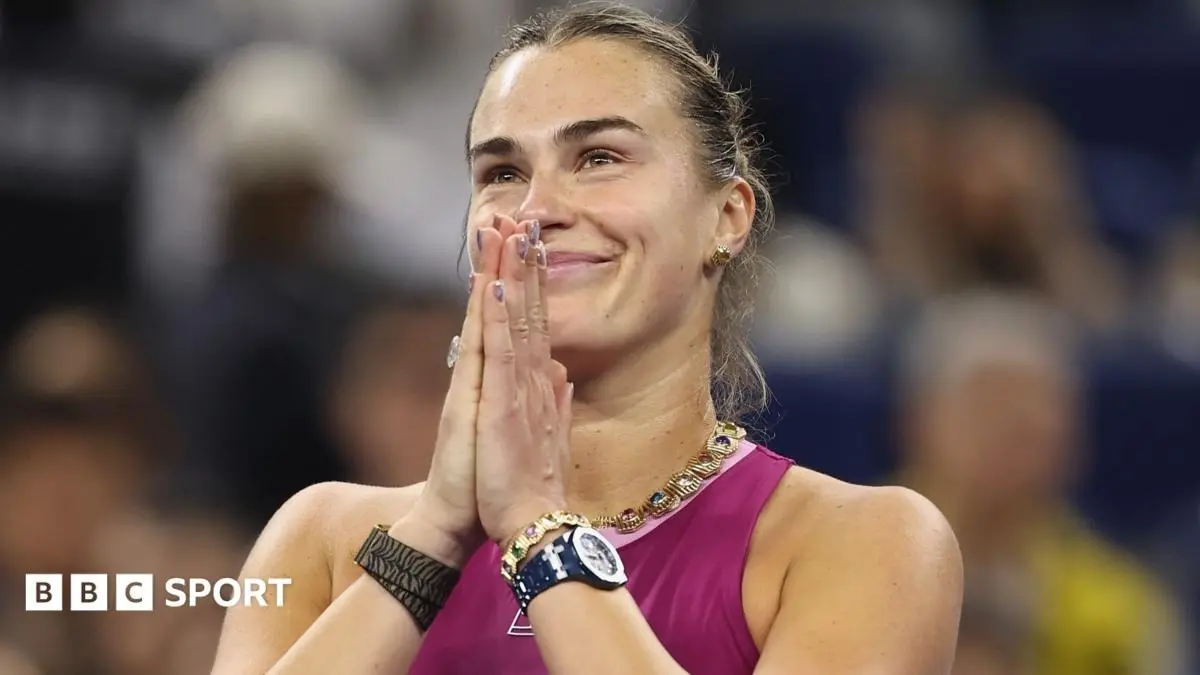
The match itself was a showcase of the raw athleticism and serving prowess that have become Sabalenka’s trademarks. From the opening point, she established a rhythm that Zarazua simply could not disrupt. Sabalenka fired 11 aces throughout the contest, a statistic that underscored her dominance on serve. Perhaps more impressively, she did not face a single break point during the entire match, a rarity in the modern women’s game that speaks to her focus and clinical execution. For Zarazua, the challenge proved insurmountable; the Mexican player struggled to find answers for the depth and velocity of Sabalenka’s groundstrokes, which consistently pushed her behind the baseline and forced errors.
Despite the efficiency of the win, the context surrounding Sabalenka’s return to the court is complex. This was her first competitive appearance since a disappointing stretch in September, where she saw both her world number one ranking and her US Open crown slip away to Elena Rybakina. The loss of the top spot and the failure to defend her title in New York were significant blows for a player who had started the year with such momentum. For Sabalenka, the China Open represents not just another WTA 1000 event, but a crucial opportunity to recalibrate and reclaim the form that saw her dominate the early stages of the season.
The 28-year-old’s 2024 campaign has been a narrative of two halves. In March, she achieved the rare and prestigious ‘Sunshine Double,’ winning the Indian Wells and Miami Open titles back-to-back. At that moment, she appeared nearly invincible, combining her natural power with a newfound tactical maturity. However, the months following that peak have been uncharacteristically mixed by her own lofty standards. For the first time since 2022, Sabalenka will finish a calendar year without a Grand Slam trophy, a reality that clearly weighs on her. Throughout the season, spectators have often seen her struggle to contain her frustrations on the court, with visible displays of anger and self-reproach following missed shots or lost momentum.
When questioned about this self-critical nature in Beijing, Sabalenka provided a candid assessment of her personality. She acknowledged that her tendency to demand perfection is a double-edged sword. On one hand, it is the engine that has driven her to multiple major titles and the top of the rankings. On the other, it can become a self-defeating cycle of negativity. She described this as both a "good and a bad side" of her character, noting that while it can drive her forward and push her to improve, it can also "really drain my energy." The admission that she is "trying so hard" to be kinder to herself suggests a player in a state of transition, recognizing that her greatest opponent is often the voice in her own head.