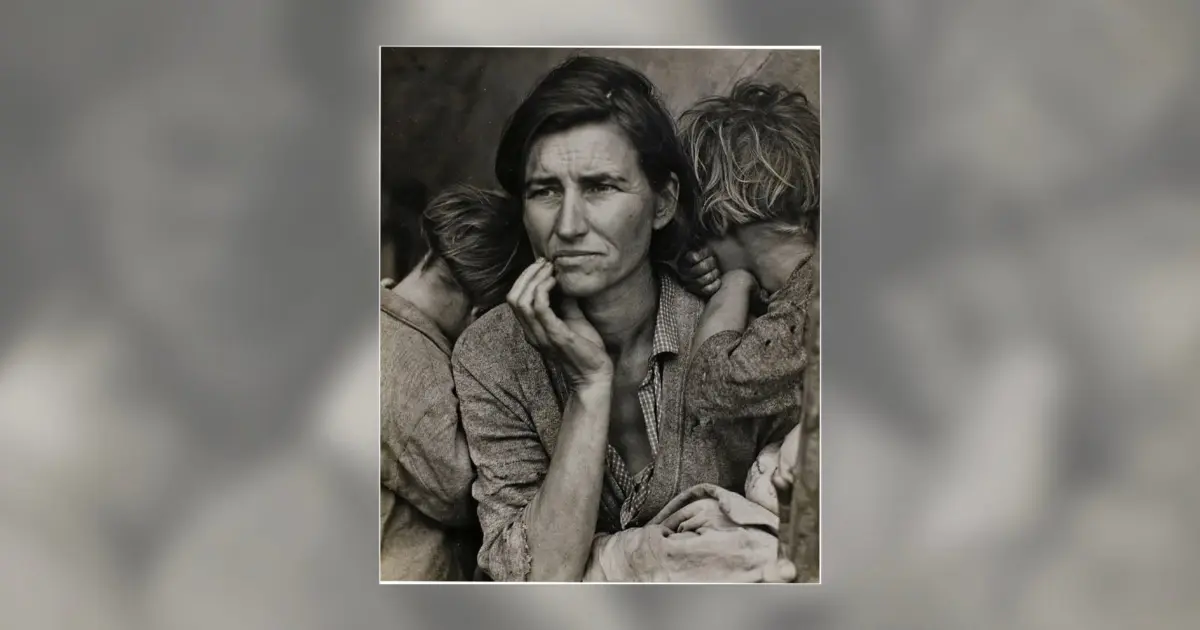
The Sotheby’s prints and photographs auction for October has officially commenced, drawing significant attention from the international art community as two particular lots emerge as the centerpieces of the sale. While the auction features a diverse array of works from various eras and movements, an "exceptionally early" print of Dorothea Lange’s Migrant Mother and a rare, large-format work by Hiroshi Sugimoto have captured the spotlight, not only for their substantial valuations but for their unique places within the history of the photographic medium.
The online auction, which serves as a major event in the autumn art calendar, is anchored by what many historians consider to be one of the most important photographs ever captured on American soil. Dorothea Lange’s Migrant Mother is more than a mere historical record; it is a global icon of human resilience and suffering. Often cited alongside Steve McCurry’s Afghan Girl as one of the two most recognizable portraits in the history of photography, the image of Florence Owens Thompson has become the definitive visual shorthand for the Great Depression. However, the specific print currently offered by Sotheby’s carries a level of historical purity that is rarely seen on the open market.
Lange captured the image in March 1936 while she was working as a field photographer for the Resettlement Administration, a New Deal agency established to provide aid to struggling farmers and migrant workers. The agency would eventually be absorbed into the more famous Farm Security Administration (FSA), but this print dates back to that early, transitional period. According to Sotheby’s, the work was executed in 1936 and was likely printed between 1936 and 1937. This makes it an incredibly rare artifact from the immediate aftermath of the photograph’s creation. Appearing at auction for the first time, the print is expected to command a price between $100,000 and $150,000.
What distinguishes this particular print from later iterations is its raw, unedited state. In subsequent years, as the photograph achieved legendary status, Lange and her editors made various adjustments to the composition for publication and exhibition. Most notably, in later versions, a thumb belonging to Thompson—which was visible in the lower right corner of the original negative—was retouched out to create a cleaner, more focused composition. The Sotheby’s print, however, retains that thumb, serving as a "pre-edit" window into the moment the shutter was pressed. Furthermore, the print features the original credit stamp of the Resettlement Administration, a detail that anchors the physical object to the specific government mission that birthed it.
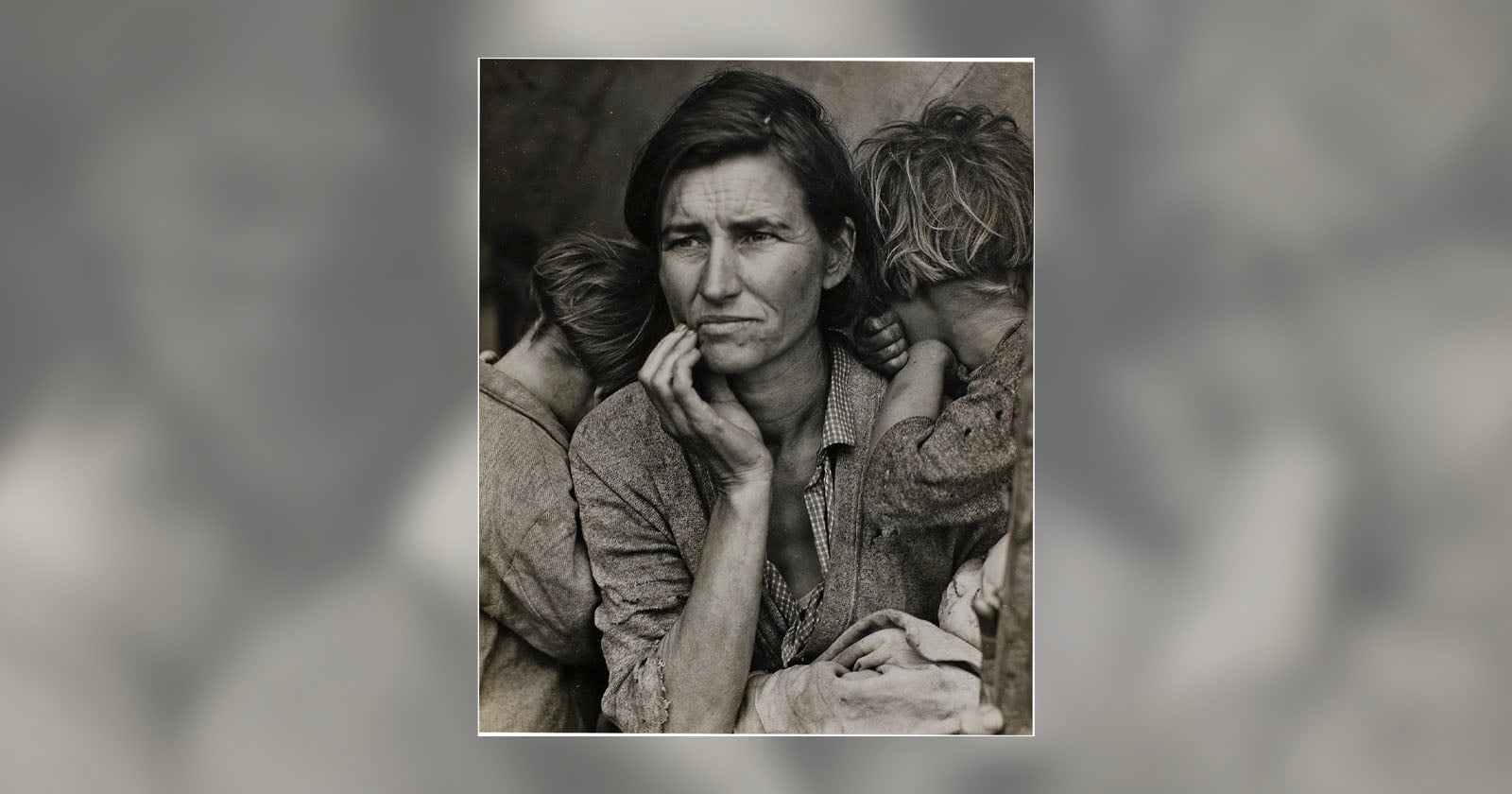
The story behind the photograph is as compelling as the image itself. Lange had spent nearly a month traveling through California, documenting the harrowing conditions of migrant laborers. She was on her way home to Berkeley in March 1936 when she passed a sign for a camp of pea pickers near Nipomo. Although she initially continued driving, a nagging instinct forced her to turn her car around and enter the camp. It was there that she encountered Florence Owens Thompson and her children, who were living in a lean-to tent after the pea crop had frozen, leaving them with no work and no food.
Using her 4×5-inch Graflex camera, Lange worked methodically, moving closer to her subject with each frame. She produced a sequence of six negatives, each one more intimate than the last. The final shot—the one now known as Migrant Mother—captured Thompson with a weathered face, her gaze fixed on a distant, uncertain future, while two of her children lean into her shoulders, their faces turned away as if seeking shelter from the world.